 Bird Album
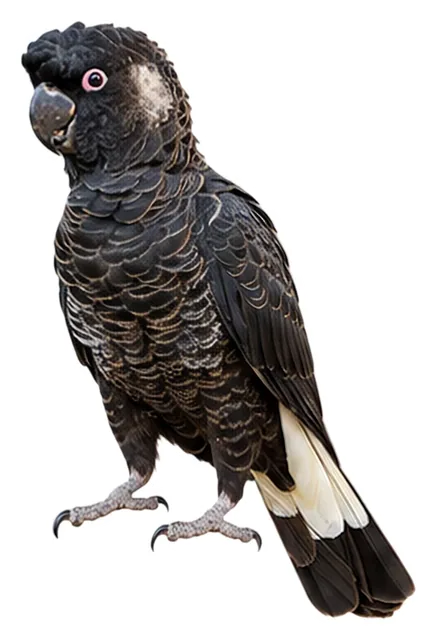
Carnaby's Black Cockatoo
Zanda latirostris (Carnaby, 1948)
612 gWeight
Carnaby's black cockatoo (Zanda latirostris), also known as the short-billed black cockatoo, is a large black cockatoo endemic to southwest Australia.
Busiest months: January · Most records: Australia
Where and when it's recorded

Carnaby's Black Cockatoo has been recorded at 7 of the 8,171 birding hotspots we track, in 1 country or region.
Records by month Southern Hemisphere
Where it's recorded most
- North LakeAustralia360 records
- Herdsman LakeAustralia290 records
- Bibra LakeAustralia195 records
More places
- Victoria Dam – Access road, track and picnic areaAustralia151 records
- Lake Monger ReserveAustralia70 records
- Lake McLarty Nature ReserveAustralia68 records
- Alfred Cove Nature ReserveAustralia31 records
Countries and regions with the most records
eBird records via GBIF up to 2024-12-31. A record means someone listed it; more records partly mean more birders, not more birds.
About
Carnaby's black cockatoo (Zanda latirostris), also known as the short-billed black cockatoo, is a large black cockatoo endemic to southwest Australia. It was described in 1948 by naturalist Ivan Carnaby. Measuring 53–58 cm (21–23 in) in length, it has a short crest on the top of its head.
Excerpt from Wikipedia, CC BY-SA 4.0 · authors · Read more on Wikipedia
Questions
How big is the Carnaby's Black Cockatoo?
The Carnaby's Black Cockatoo weighs around 612 g.
Where does the Carnaby's Black Cockatoo live?
Its breeding range: Australasia: southwestern Western Australia (southwestern Australia). It is most often recorded in Australia.
When is the best time to see the Carnaby's Black Cockatoo?
At the hotspots we track, it is recorded most in January (Southern Hemisphere).
Is the Carnaby's Black Cockatoo endangered?
The IUCN Red List classifies the Carnaby's Black Cockatoo as Endangered.
What does the Carnaby's Black Cockatoo eat?
Main food: Seeds.
What family is the Carnaby's Black Cockatoo in?
It belongs to the family Cockatoos (Cacatuidae), order Parrot (Psittaciformes).
At a glance
- Weight
- 612 g
- Habitat
- Shrubland
- Diet
- Seeds
- Lifestyle
- Perches in trees
- Migration
- Resident (barely migrates)
- Conservation
- Endangered
More measurements
- Wing
- 361 mm
- Tail
- 270 mm
- Bill
- 46 mm
- Tarsus
- 30 mm
Averages from the AVONET dataset; length from field guides where available.
Range
Australasia: southwestern Western Australia (southwestern Australia)
Breeding range, IOC World Bird List 15.2
Classification
Other birds in the genus Zanda
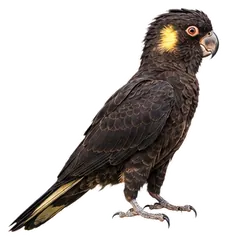 Yellow-tailed Black CockatooZanda funerea
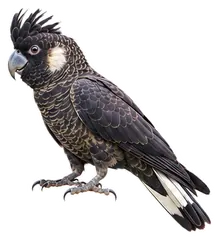 Baudin's Black CockatooZanda baudinii
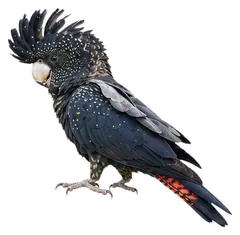 Red-tailed Black CockatooCalyptorhynchus banksii
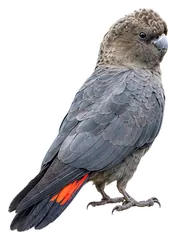 Glossy Black CockatooCalyptorhynchus lathami
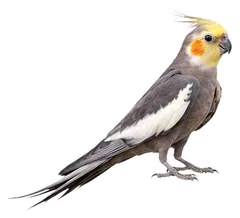 CockatielNymphicus hollandicus
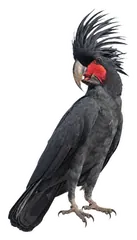 Palm CockatooProbosciger aterrimus
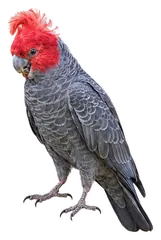 Gang-gang CockatooCallocephalon fimbriatum
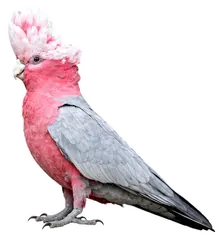 GalahEolophus roseicapilla
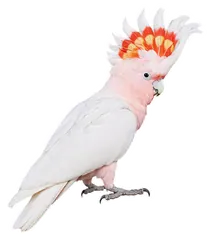 Pink CockatooCacatua leadbeateri
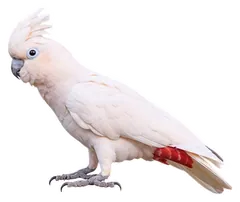 Red-vented CockatooCacatua haematuropygia
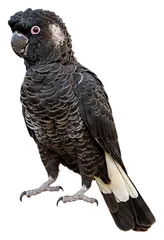
Download illustration
Free to use with credit: “Illustration: Bird Album (birdalbum.com)”. Drawn by AI from reference photos. ↗
Heard it but can't see it? Mingji identifies birds by sound and photo, on your phone.
In other languages
- EnglishCarnaby's Black Cockatoo
- 简体中文短嘴黑凤头鹦鹉
- 繁體中文細嘴黑鳳頭鸚鵡
- 日本語キミミクロオウム
- DeutschWeißschwanz-Rabenkakadu
- FrançaisCacatoès à rectrices blanches
- EspañolCacatúa fúnebre piquicorta
- Portuguêscatatua-rabalva-do-méli
- ItalianoCacatua nero beccocorto
- NederlandsKortsnavelraafkaketoe
- РусскийБелохвостый траурный какаду
- Svenskakortnäbbad sotkakadua
- DanskSmalnæbbet Ravnekakadu
- Polskiżałobnica eukaliptusowa