 Bird Album
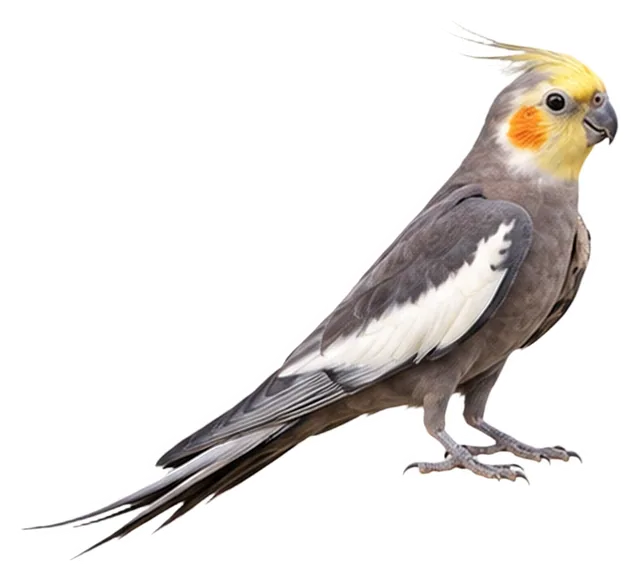
Cockatiel
Nymphicus hollandicus (Kerr, 1792)
30 cmLength95 gWeight
The wild type has orange cheeks and a long tail, with a crest that rises and falls with its mood.
Busiest months: September–October · Most records: Australia, United States, Israel
How to identify
Field marks
- Wild type has gray feathers and white outer wing edges
- Wild type has a round orange patch on each cheek
- Crest on head can be raised
- Long tail accounts for about half the total length
Male, female and young
In adults of the wild gray form, males have a creamy-yellow head; females have a gray head tinged yellow, yellowish-white spots on the underwing and barring on the tail feathers.
Voice
Adult males usually have louder and more complex vocalizations than females.
Where and when it's recorded

Cockatiel has been recorded at 290 of the 8,276 birding hotspots we track, in 43 countries and regions.
Records by month Southern Hemisphere
Where it's recorded most
- Bowra Wildlife SanctuaryAustralia1,853 records
- Lake Cargelligo Wastewater Treatment PlantAustralia416 records
- Lake ClarendonAustralia392 records
More places
- Goschen Bushland ReserveAustralia344 records
- Katherine Wastewater Treatment PlantAustralia306 records
- Taylors LagoonAustralia281 records
- Mosquito Creek RdAustralia239 records
- DanthoniaAustralia178 records
- Lake GalletlyAustralia122 records
- Broome Bird ObservatoryAustralia116 records
Countries and regions with the most records
eBird records via GBIF up to 2024-12-31. A record means someone listed it; more records partly mean more birders, not more birds.
About
The cockatiel (Nymphicus hollandicus), also known as the weero/weiro or quarrion, is a species of small- to medium-sized parrot belonging to the cockatoo family (Cacatuidae), of which it is the smallest member. Native to Australia, it is the sole member of the genus Nymphicus.
Excerpt from Wikipedia, CC BY-SA 4.0 · authors · Read more on Wikipedia
Questions
How big is the Cockatiel?
The Cockatiel is about 30 cm long and weighs around 95 g.
Where does the Cockatiel live?
Its breeding range: Australasia: Australia (except northern, southern, Tasmania). It is most often recorded in Australia, United States and Israel.
When is the best time to see the Cockatiel?
At the hotspots we track, it is recorded most in September and October (Southern Hemisphere).
Is the Cockatiel endangered?
The IUCN Red List classifies the Cockatiel as Least Concern.
What does the Cockatiel eat?
Main food: Seeds.
What family is the Cockatiel in?
It belongs to the family Cockatoos (Cacatuidae), order Parrot (Psittaciformes).
At a glance
- Length
- 30 cm
- Weight
- 95 g
- Habitat
- Grassland
- Diet
- Seeds
- Lifestyle
- Active on the ground
- Migration
- Partial migrant
- Conservation
- Least Concern
More measurements
- Wing
- 167 mm
- Tail
- 166 mm
- Bill
- 18 mm
- Tarsus
- 15 mm
Averages from the AVONET dataset; length from field guides where available.
Range
Australasia: Australia (except northern, southern, Tasmania)
Breeding range, IOC World Bird List 15.2
Classification
More from the family Cockatoos
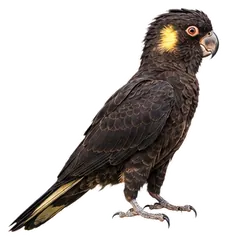 Yellow-tailed Black CockatooZanda funerea
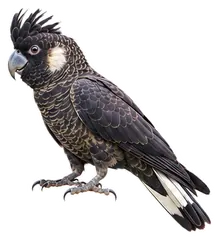 Baudin's Black CockatooZanda baudinii
 Carnaby's Black CockatooZanda latirostris
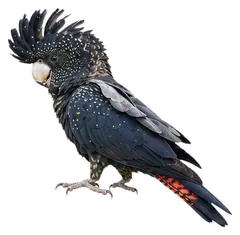 Red-tailed Black CockatooCalyptorhynchus banksii
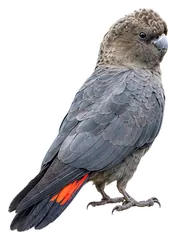 Glossy Black CockatooCalyptorhynchus lathami
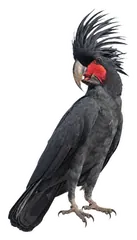 Palm CockatooProbosciger aterrimus
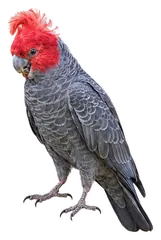 Gang-gang CockatooCallocephalon fimbriatum
 GalahEolophus roseicapilla
 Pink CockatooCacatua leadbeateri
 Red-vented CockatooCacatua haematuropygia
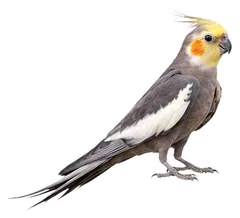
Download illustration
Free to use with credit: “Illustration: Bird Album (birdalbum.com)”. Drawn by AI from a reference photo by ptrbyrnes. ↗
Heard it but can't see it? Mingji identifies birds by sound and photo, on your phone.