 Bird Album
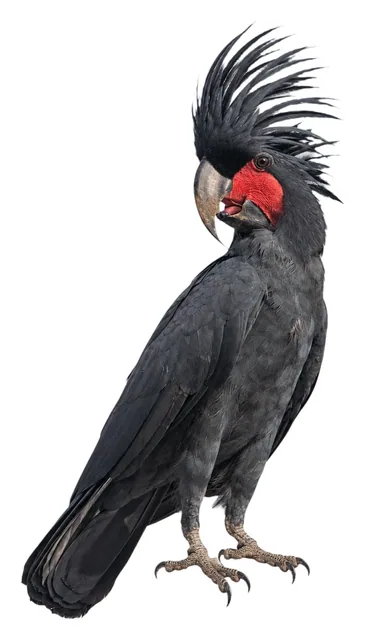
Palm Cockatoo
Probosciger aterrimus (Gmelin, JF, 1788)
51–64 cmLength841 gWeight
It has black feathers, red cheeks and a tuft of long crest feathers on the crown.
Busiest months: July–August · Most records: Papua New Guinea, Singapore, Thailand
How to identify
Field marks
- Bright red patches on cheeks
- Long crest on crown
- Large black bill with strongly downhooked tip
- Mainly black overall
Male, female and young
Males have larger bills than females.
Voice
Males string together many types of syllables into long, complex vocal sequences.
Where and when it's recorded

Palm Cockatoo has been recorded at 26 of the 8,171 birding hotspots we track, in 4 countries and regions.
Records by month Southern Hemisphere
Where it's recorded most
- Kwatu LodgePapua New Guinea149 records
- Fly River – between Kiunga and Elevala RiverPapua New Guinea77 records
- Elevala River – between Fly River and Ketu RiverPapua New Guinea71 records
More places
- Elevala and Ketu RiversPapua New Guinea49 records
- Elevala RiverPapua New Guinea47 records
- Tabubil-Kiunga Rd – Km 17Papua New Guinea45 records
- Drimgas Road, KiungaPapua New Guinea40 records
- Boystown Road – Bowerbird HillPapua New Guinea38 records
- Sera (formerly Crater Mountain) Biological Research StationPapua New Guinea27 records
- Boys Town Road, KiungaPapua New Guinea16 records
Countries and regions with the most records
eBird records via GBIF up to 2024-12-31. A record means someone listed it; more records partly mean more birders, not more birds.
About
The palm cockatoo (Probosciger aterrimus), also known as the goliath cockatoo or great black cockatoo, is a large, smoky-grey/black parrot of the cockatoo family native to New Guinea, the Aru Islands and the Cape York Peninsula in Queensland, Australia.
Excerpt from Wikipedia, CC BY-SA 4.0 · authors · Read more on Wikipedia
Questions
How big is the Palm Cockatoo?
The Palm Cockatoo is about 51–64 cm long and weighs around 841 g.
Where does the Palm Cockatoo live?
Its breeding range: Australasia: New Guinea and satellites, and far northern Australia. It is most often recorded in Papua New Guinea, Singapore and Thailand.
When is the best time to see the Palm Cockatoo?
At the hotspots we track, it is recorded most in July and August (Southern Hemisphere).
Is the Palm Cockatoo endangered?
The IUCN Red List classifies the Palm Cockatoo as Near Threatened.
What does the Palm Cockatoo eat?
Main food: Omnivore.
What family is the Palm Cockatoo in?
It belongs to the family Cockatoos (Cacatuidae), order Parrot (Psittaciformes).
At a glance
- Length
- 51–64 cm
- Weight
- 841 g
- Habitat
- Forest
- Diet
- Omnivore
- Lifestyle
- Perches in trees
- Migration
- Resident (barely migrates)
- Conservation
- Near Threatened
More measurements
- Wing
- 344 mm
- Tail
- 229 mm
- Bill
- 91 mm
- Tarsus
- 30 mm
Averages from the AVONET dataset; length from field guides where available.
Range
Australasia: New Guinea and satellites, and far northern Australia
Breeding range, IOC World Bird List 15.2
Classification
More from the family Cockatoos
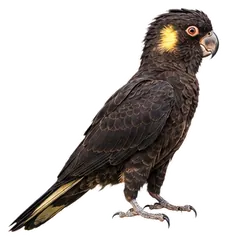 Yellow-tailed Black CockatooZanda funerea
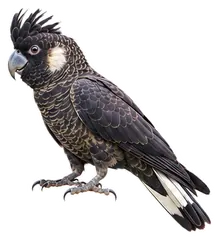 Baudin's Black CockatooZanda baudinii
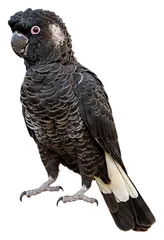 Carnaby's Black CockatooZanda latirostris
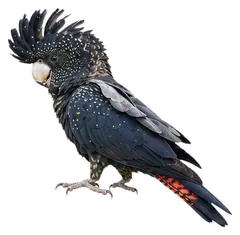 Red-tailed Black CockatooCalyptorhynchus banksii
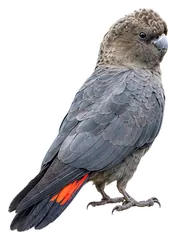 Glossy Black CockatooCalyptorhynchus lathami
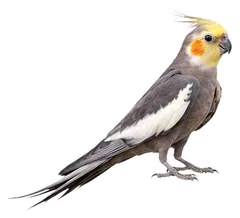 CockatielNymphicus hollandicus
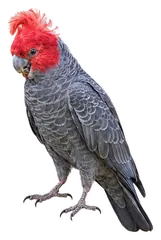 Gang-gang CockatooCallocephalon fimbriatum
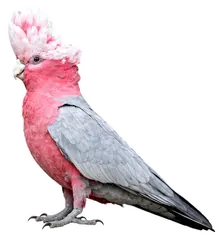 GalahEolophus roseicapilla
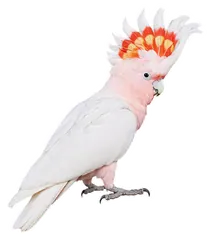 Pink CockatooCacatua leadbeateri
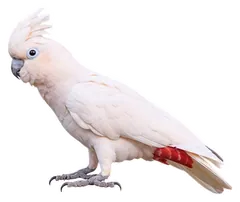 Red-vented CockatooCacatua haematuropygia
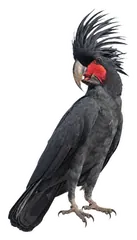
Download illustration
Free to use with credit: “Illustration: Bird Album (birdalbum.com)”. Drawn by AI from a reference photo by Mark Simpson. ↗
Heard it but can't see it? Mingji identifies birds by sound and photo, on your phone.