 Bird Album
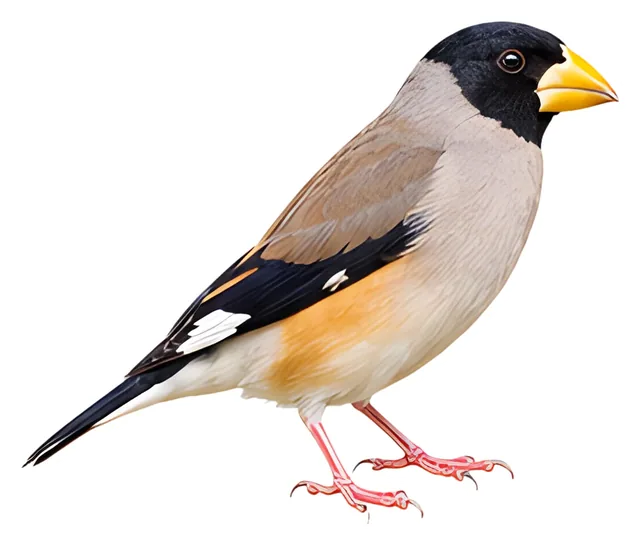
Chinese Grosbeak
Eophona migratoria Hartert, EJO, 1903
≈20 cmLength47 gWeight
It has a stout, wax-yellow bill and, in the male, a black hood, and can be seen in tall trees in city parks.
Busiest months: May and December · Most records: China, South Korea, Japan
How to identify
Field marks
- Stout conical bill, wax-yellow
- Male has a solid black head
- Male has purplish-black flight feathers with broad white tips
- Male has entirely black tail feathers
Male, female and young
Male has a black hood; female lacks it, with a gray-brown crown, lores and cheeks, and chestnut-brown flanks that are less vivid than the male's.
Where and when it's recorded
Busiest months: May and December · Most records: China, South Korea, Japan

Chinese Grosbeak has been recorded at 881 of the 8,276 birding hotspots we track, in 6 countries and regions.
Records by month Northern Hemisphere
Where it's recorded most
- Century ParkChina848 records
- Kinmen – Agricultural Research InstituteChina712 records
- Kinmen – Botanical GardenChina676 records
More places
- Seoul – Olympic ParkSouth Korea551 records
- Peking UniversityChina540 records
- Kinmen – Lake Ci Shuangli Wetlands Nature CenterChina534 records
- Nanhui DongtanChina522 records
- Temple of HeavenChina443 records
- Kinmen – Lake Ci WusatouChina374 records
- Beijing Botanical GardenChina363 records
Countries and regions with the most records
eBird records via GBIF up to 2024-12-31. A record means someone listed it; more records partly mean more birders, not more birds.
About
The Chinese grosbeak, yellow-billed grosbeak, or black-tailed hawfinch (Eophona migratoria) is a species of finch in the family Fringillidae.
Excerpt from Wikipedia, CC BY-SA 4.0 · authors · Read more on Wikipedia
Questions
How big is the Chinese Grosbeak?
The Chinese Grosbeak is about ≈20 cm long and weighs around 47 g.
Where does the Chinese Grosbeak live?
Its breeding range: Palearctic: eastern. It is most often recorded in China, South Korea and Japan.
When is the best time to see the Chinese Grosbeak?
At the hotspots we track, it is recorded most in May and December (Northern Hemisphere).
Is the Chinese Grosbeak endangered?
The IUCN Red List classifies the Chinese Grosbeak as Least Concern.
What does the Chinese Grosbeak eat?
Main food: Omnivore.
What family is the Chinese Grosbeak in?
It belongs to the family Finches, Euphonias (Fringillidae), order Passerines (Passeriformes).
At a glance
- Length
- ≈20 cm
- Weight
- 47 g
- Habitat
- Forest
- Diet
- Omnivore
- Lifestyle
- Perches in trees
- Migration
- Resident (barely migrates)
- Conservation
- Least Concern
More measurements
- Wing
- 97 mm
- Tail
- 76 mm
- Bill
- 22 mm
- Tarsus
- 21 mm
Averages from the AVONET dataset; length from field guides where available.
Range
Palearctic: eastern
Breeding range, IOC World Bird List 15.2
Subspecies · 2
- Eophona migratoria migratoria se Siberia, ne China and Korea | non-breeding: se Asia
- Eophona migratoria sowerbyi c, ec China | non-breeding: s China
Classification
- Order
- Passerines Passeriformes
- Family
- Finches, Euphonias Fringillidae
- Genus
- Eophona
Other birds in the genus Eophona
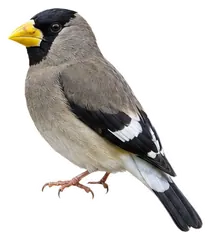 Japanese GrosbeakEophona personata
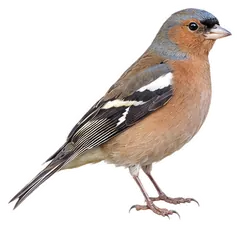 Eurasian ChaffinchFringilla coelebs
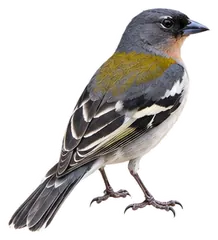 African ChaffinchFringilla spodiogenys
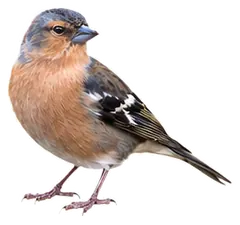 Azores ChaffinchFringilla moreletti
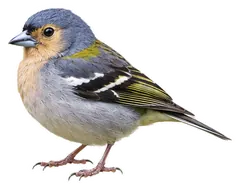 Madeira ChaffinchFringilla maderensis
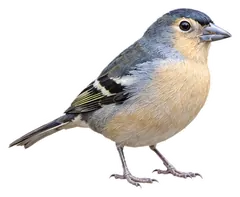 Canary Islands ChaffinchFringilla canariensis
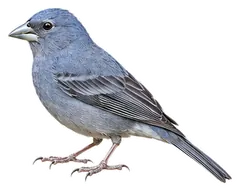 Tenerife Blue ChaffinchFringilla teydea
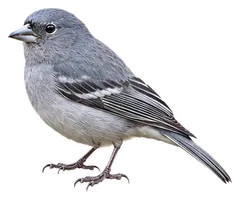 Gran Canaria Blue ChaffinchFringilla polatzeki
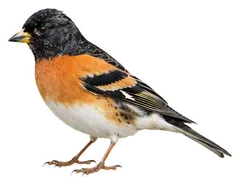 BramblingFringilla montifringilla
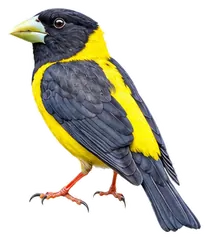 Black-and-yellow GrosbeakMycerobas icterioides
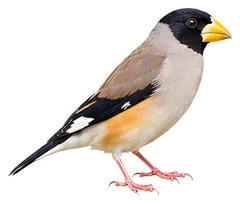
Download illustration
Free to use with credit: “Illustration: Bird Album (birdalbum.com)”. Drawn by AI from a reference photo by Zinogre. ↗

Heard it but can't see it? Mingji identifies birds by sound and photo, on your phone.
In other languages
- EnglishChinese Grosbeak
- 简体中文黑尾蜡嘴雀
- 繁體中文小桑鳲
- 日本語コイカル
- 한국어밀화부리
- DeutschWeißhand-Kernbeißer
- FrançaisGros-bec migrateur
- EspañolPicogordo chino
- Portuguêsbico-grossudo-chinês
- ItalianoBeccogrosso beccogiallo
- NederlandsWitvleugeldikbek
- РусскийМалый черноголовый дубонос
- Svenskamindre maskstenknäck
- DanskGulnæbbet Kernebider
- Polskigrubodziób chiński