 Bird Album
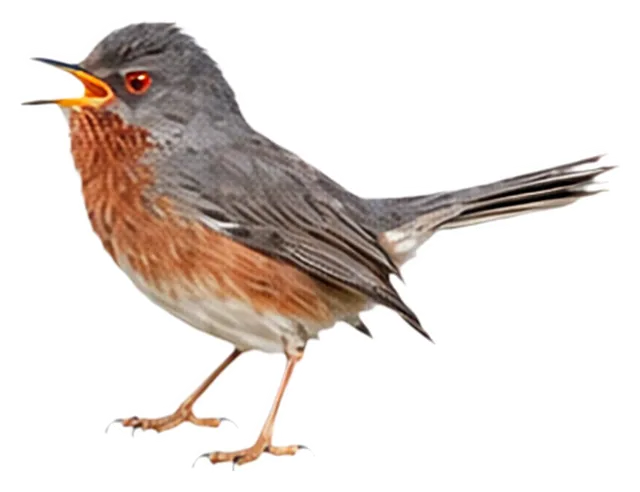
Dartford Warbler
Curruca undata (Boddaert, 1783)
11 gWeight
The Dartford warbler (Curruca undata) is a Sylviid warbler from the warmer parts of western Europe and northwestern Africa.
Busiest months: October–November · Most records: Spain, Portugal, France
Where and when it's recorded

Dartford Warbler has been recorded at 218 of the 8,171 birding hotspots we track, in 13 countries and regions.
Records by month Northern Hemisphere
Where it's recorded most
- Perímetro Florestal do Barão de São JoãoPortugal743 records
- MiotoPortugal646 records
- Estaca de Bares – Observatorio de aves y entornoSpain570 records
More places
- PN Sudoeste Alentejano e Costa Vicentina – CabranosaPortugal438 records
- Laguna de Pitillas RN – AreaSpain335 records
- Balsa de Zolina/EzkorizSpain282 records
- Doñana PN – Centro de Visitantes La RocinaSpain189 records
- Marjal dels Moros – ÁreaSpain188 records
- Monfragüe PNSpain183 records
- Desembocadura del Guadalhorce – ÁreaSpain178 records
Countries and regions with the most records
eBird records via GBIF up to 2024-12-31. A record means someone listed it; more records partly mean more birders, not more birds.
About
The Dartford warbler (Curruca undata) is a Sylviid warbler from the warmer parts of western Europe and northwestern Africa. It is a small warbler with a long thin tail and a thin pointed bill. The adult male has grey-brown upperparts and is dull reddish-brown below except for the centre of the belly which has a dirty white patch.
Excerpt from Wikipedia, CC BY-SA 4.0 · authors · Read more on Wikipedia
Questions
How big is the Dartford Warbler?
The Dartford Warbler weighs around 11 g.
Where does the Dartford Warbler live?
Its breeding range: Palearctic: southwestern. It is most often recorded in Spain, Portugal and France.
When is the best time to see the Dartford Warbler?
At the hotspots we track, it is recorded most in October and November (Northern Hemisphere).
Is the Dartford Warbler endangered?
The IUCN Red List classifies the Dartford Warbler as Near Threatened.
What does the Dartford Warbler eat?
Main food: Insects & other invertebrates.
What family is the Dartford Warbler in?
It belongs to the family Sylviid Babblers (Sylviidae), order Passerines (Passeriformes).
At a glance
- Weight
- 11 g
- Habitat
- Shrubland
- Diet
- Insects & other invertebrates
- Lifestyle
- Perches in trees
- Migration
- Resident (barely migrates)
- Conservation
- Near Threatened
More measurements
- Wing
- 54 mm
- Tail
- 63 mm
- Bill
- 13 mm
- Tarsus
- 19 mm
Averages from the AVONET dataset; length from field guides where available.
Range
Palearctic: southwestern
Breeding range, IOC World Bird List 15.2
Classification
- Order
- Passerines Passeriformes
- Family
- Sylviid Babblers Sylviidae
- Genus
- Curruca
Other birds in the genus Curruca
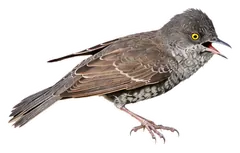 Barred WarblerCurruca nisoria
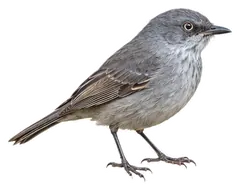 Layard's WarblerCurruca layardi
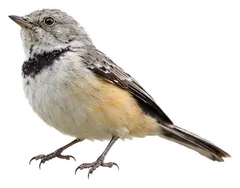 Banded ParisomaCurruca boehmi
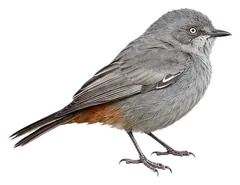 Chestnut-vented WarblerCurruca subcoerulea
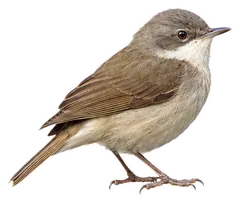 Lesser WhitethroatCurruca curruca
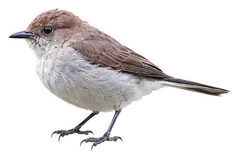 Brown ParisomaCurruca lugens
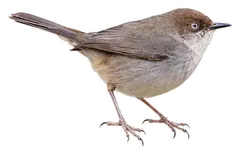 Yemen WarblerCurruca buryi
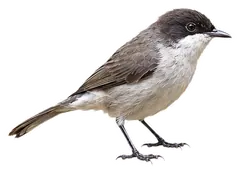 Arabian WarblerCurruca leucomelaena
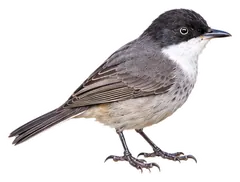 Western Orphean WarblerCurruca hortensis
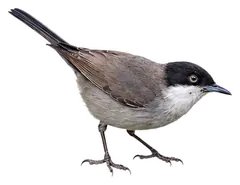 Eastern Orphean WarblerCurruca crassirostris
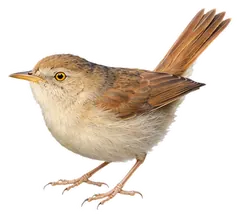 African Desert WarblerCurruca deserti
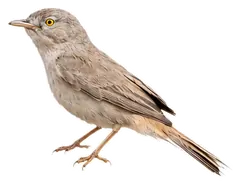 Asian Desert WarblerCurruca nana
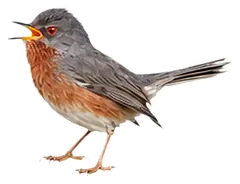
Download illustration
Free to use with credit: “Illustration: Bird Album (birdalbum.com)”. Drawn by AI from a reference photo by Carlos N. G. Bocos. ↗
Heard it but can't see it? Mingji identifies birds by sound and photo, on your phone.