 Bird Album
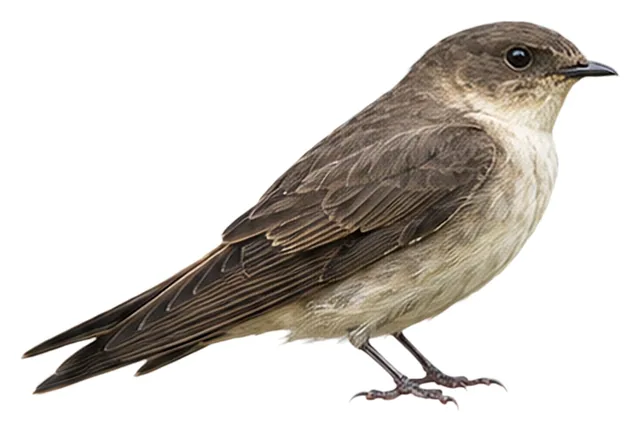
Eurasian Crag Martin
Ptyonoprogne rupestris (Scopoli, 1769)
14–15 cmLength32 cmWingspan20 gWeight
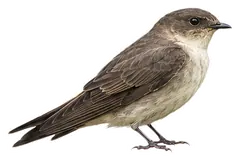
This gray-brown martin does not fly particularly fast around mountain cliffs and shows white patches when it spreads its tail.
Busiest months: November–March · Most records: Spain, Portugal, China
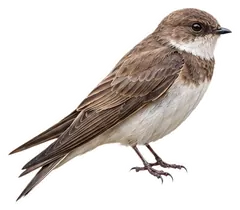
Looks like Dusky Crag Martin, Sand Martin
How to identify
Field marks
- Upperparts gray-brown, underparts pale
- Tail short and square, with white patches near the tail tip
- Undertail-coverts and underwing coverts blackish
- Bill small and mainly black; legs and feet brownish-pink
Male, female and young
Sexes similar; juvenile has yellowish-brown tips to the feathers of the head, upperparts and upperwing coverts.
Voice
A short, high-pitched “pli”, as well as “piieh” and “tshir”.
Similar species
Where and when it's recorded

Eurasian Crag Martin has been recorded at 691 of the 8,171 birding hotspots we track, in 58 countries and regions.
Records by month Northern Hemisphere
Where it's recorded most
- Monfragüe PN – Peña Falcón/Salto del GitanoSpain2,613 records
- Desembocadura del Guadalhorce – ÁreaSpain1,796 records
- Monfragüe PN – Portilla del TiétarSpain1,647 records
More places
- Casares – CastilloSpain1,469 records
- PN Sudoeste Alentejano e Costa Vicentina – CabranosaPortugal1,005 records
- Zamora – Río DueroSpain866 records
- Monfragüe PNSpain848 records
- Marjal dels Moros – ÁreaSpain842 records
- PN Vale do Guadiana – MértolaPortugal662 records
- Hoces Ebro Rudrón PNat – Molino del CantoSpain617 records
Countries and regions with the most records
eBird records via GBIF up to 2024-12-31. A record means someone listed it; more records partly mean more birders, not more birds.
About
The Eurasian crag martin or just crag martin (Ptyonoprogne rupestris) is a small passerine bird in the swallow family. It breeds in the mountains of southern Europe, northwestern Africa and across the Palearctic.
Excerpt from Wikipedia, CC BY-SA 4.0 · authors · Read more on Wikipedia
Questions
How big is the Eurasian Crag Martin?
The Eurasian Crag Martin is about 14–15 cm long, with a wingspan of 32 cm and weighs around 20 g.
Where does the Eurasian Crag Martin live?
Its breeding range: Palearctic: Mediterranean region through South Asia to Mongolia and eastern China. It is most often recorded in Spain, Portugal and China.
When is the best time to see the Eurasian Crag Martin?
At the hotspots we track, it is recorded most in January, February, March, November and December (Northern Hemisphere).
Is the Eurasian Crag Martin endangered?
The IUCN Red List classifies the Eurasian Crag Martin as Least Concern.
What does the Eurasian Crag Martin eat?
Main food: Insects & other invertebrates.
What family is the Eurasian Crag Martin in?
It belongs to the family Swallows, Martins (Hirundinidae), order Passerines (Passeriformes).
At a glance
- Length
- 14–15 cm
- Wingspan
- 32 cm
- Weight
- 20 g
- Habitat
- Rocky terrain
- Diet
- Insects & other invertebrates
- Lifestyle
- Feeds in the air
- Migration
- Partial migrant
- Conservation
- Least Concern
More measurements
- Wing
- 130 mm
- Tail
- 59 mm
- Bill
- 12 mm
- Tarsus
- 12 mm
Averages from the AVONET dataset; length from field guides where available.
Range
Palearctic: Mediterranean region through South Asia to Mongolia and eastern China
Breeding range, IOC World Bird List 15.2
Classification
- Order
- Passerines Passeriformes
- Family
- Swallows, Martins Hirundinidae
- Genus
- Ptyonoprogne
Other birds in the genus Ptyonoprogne
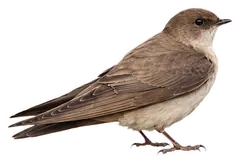 Pale Crag MartinPtyonoprogne obsoleta
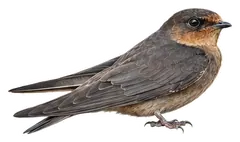 Red-throated Rock MartinPtyonoprogne rufigula
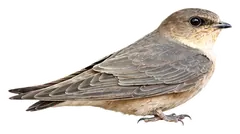 Large Rock MartinPtyonoprogne fuligula
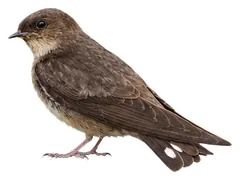 Dusky Crag MartinPtyonoprogne concolor
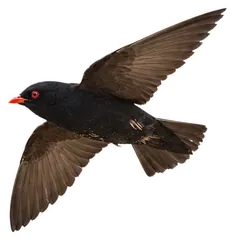 African River MartinPseudochelidon eurystomina
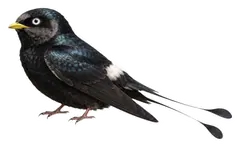 White-eyed River MartinPseudochelidon sirintarae
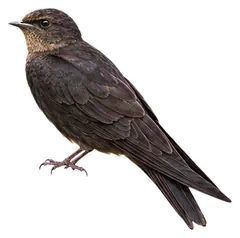 Square-tailed Saw-wingPsalidoprocne nitens
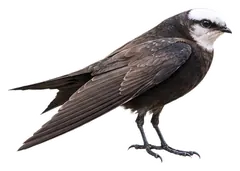 White-headed Saw-wingPsalidoprocne albiceps
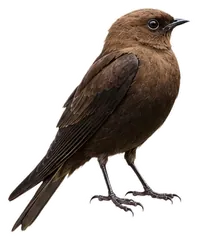 Mountain Saw-wingPsalidoprocne fuliginosa
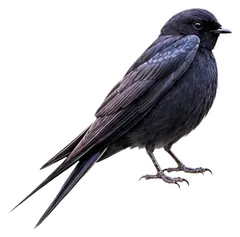 Black Saw-wingPsalidoprocne pristoptera
Download illustration
Free to use with credit: “Illustration: Bird Album (birdalbum.com)”. Drawn by AI from a reference photo by Francesco Veronesi. ↗

Heard it but can't see it? Mingji identifies birds by sound and photo, on your phone.