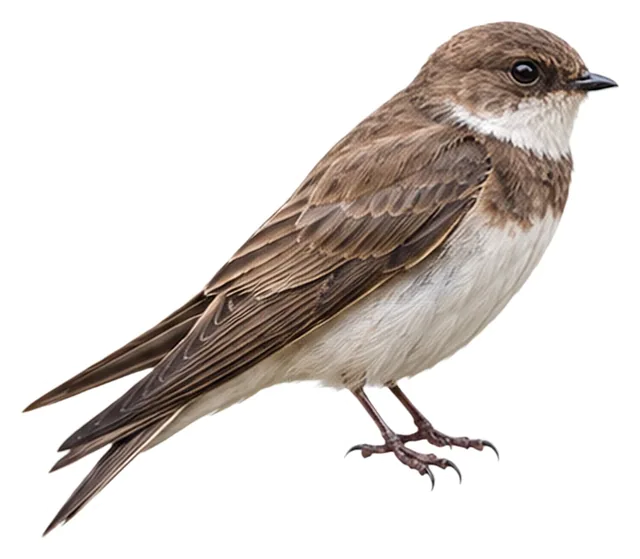
Sand Martin
Riparia riparia (Linnaeus, 1758)
≈13 cmLength27 cmWingspan13 gWeight
This small martin has rufous-brown upperparts, white underparts and a single narrow rufous band across the breast.
Busiest months: May · Most records: United States, Canada, United Kingdom
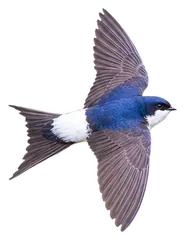
Looks like Pale Martin, Western House Martin
How to identify
Field marks
- A single narrow rufous band across the breast
- Upperparts rufous, underparts white
- Bill black, legs and feet rufous
- Flight fast, hurried and jerky
Male, female and young
Juvenile has rufous tips to the coverts and rufous feather edges on the secondaries.
Voice
Gives continuous harsh twitters in flight, becoming a quiet, conversational sound after landing.
Similar species
Where and when it's recorded
Busiest months: May · Most records: United States, Canada, United Kingdom

Sand Martin has been recorded at 3,906 of the 8,276 birding hotspots we track, in 189 countries and regions.
Records by month Northern Hemisphere
Where it's recorded most
- Montrose Point Bird Sanctuary, Lincoln Park, ChicagoUnited States11,030 records
- Point Pelee National ParkCanada5,749 records
- Minsmere RSPB ReserveUnited Kingdom3,719 records
More places
- Tommy Thompson ParkCanada3,512 records
- International Birding and Research Center Eilat (IBRCE)Israel3,310 records
- Pte. Mouillee SGAUnited States3,032 records
- Parker River NWRUnited States2,866 records
- Edwin B. Forsythe NWRUnited States2,856 records
- Bombay Hook National Wildlife RefugeUnited States2,703 records
- Long Point – LPBO Old Cut Field StationCanada2,575 records
Countries and regions with the most records
eBird records via GBIF up to 2024-12-31. A record means someone listed it; more records partly mean more birders, not more birds.
About
The sand martin (Riparia riparia), also known as the collared sand martin or common sand martin, and in the Americas as the bank swallow, is a migratory passerine bird in the swallow family Hirundinidae. It has a wide range in summer, embracing practically the whole Holarctic area, from Europe, across Asia to the Pacific Ocean, and throughout North America. It winters in eastern and southern Africa, southern Asia, and South America.
Excerpt from Wikipedia, CC BY-SA 4.0 · authors · Read more on Wikipedia
Questions
How big is the Sand Martin?
The Sand Martin is about ≈13 cm long, with a wingspan of 27 cm and weighs around 13 g.
Where does the Sand Martin live?
Its breeding range: Worldwide: widespread. It is most often recorded in United States, Canada and United Kingdom.
When is the best time to see the Sand Martin?
At the hotspots we track, it is recorded most in May (Northern Hemisphere).
Is the Sand Martin endangered?
The IUCN Red List classifies the Sand Martin as Least Concern.
What does the Sand Martin eat?
Main food: Insects & other invertebrates.
What family is the Sand Martin in?
It belongs to the family Swallows, Martins (Hirundinidae), order Passerines (Passeriformes).
At a glance
- Length
- ≈13 cm
- Wingspan
- 27 cm
- Weight
- 13 g
- Habitat
- Rivers & streams
- Diet
- Insects & other invertebrates
- Lifestyle
- Feeds in the air
- Migration
- Migratory
- Conservation
- Least Concern
More measurements
- Wing
- 102 mm
- Tail
- 47 mm
- Bill
- 9 mm
- Tarsus
- 10 mm
Averages from the AVONET dataset; length from field guides where available.
Range
Worldwide: widespread
Breeding range, IOC World Bird List 15.2
Classification
- Order
- Passerines Passeriformes
- Family
- Swallows, Martins Hirundinidae
- Genus
- Riparia
Other birds in the genus Riparia
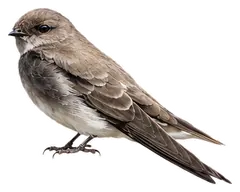 Brown-throated MartinRiparia paludicola
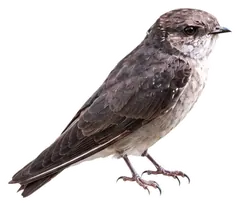 Madagascar MartinRiparia cowani
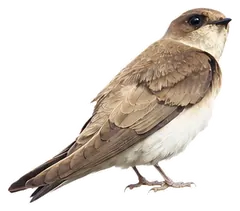 Grey-throated MartinRiparia chinensis
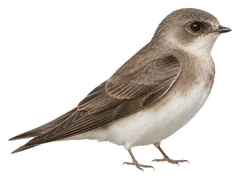 Congo MartinRiparia congica
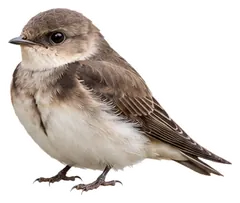 Pale MartinRiparia diluta
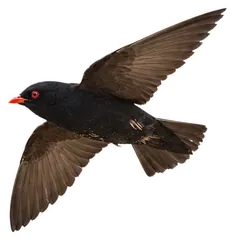 African River MartinPseudochelidon eurystomina
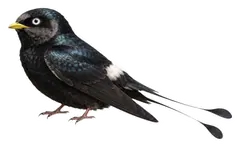 White-eyed River MartinPseudochelidon sirintarae
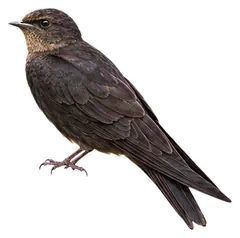 Square-tailed Saw-wingPsalidoprocne nitens
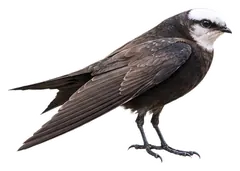 White-headed Saw-wingPsalidoprocne albiceps
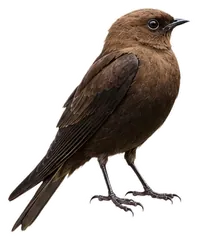 Mountain Saw-wingPsalidoprocne fuliginosa
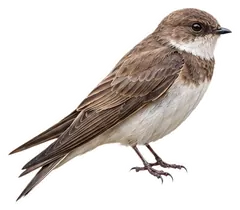
Download illustration
Free to use with credit: “Illustration: Bird Album (birdalbum.com)”. Drawn by AI from a reference photo by Frank Vassen. ↗

Heard it but can't see it? Mingji identifies birds by sound and photo, on your phone.