 Bird Album
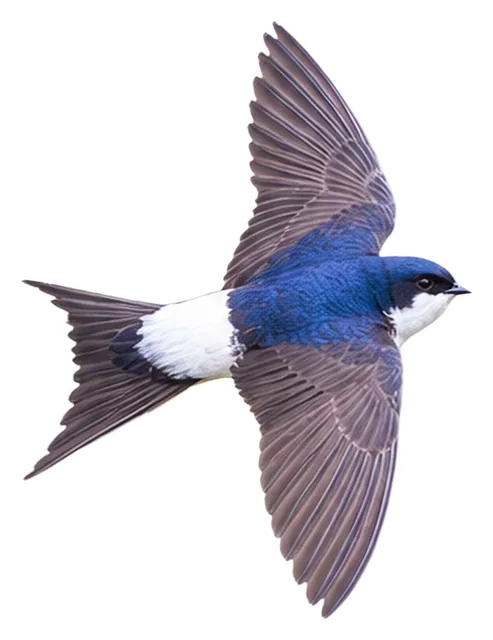
Western House Martin
Delichon urbicum (Linnaeus, 1758)
13 cmLength29 cmWingspan14 gWeight
It has steel-blue upperparts and a pure white rump and underparts, with white down even on the legs and feet.
Busiest months: May · Most records: United Kingdom, Spain, Portugal
Looks like Barn Swallow, Sand Martin, Eastern Red-rumped Swallow
How to identify
Field marks
- White rump conspicuous in flight
- Head and upperparts steel-blue
- Underparts pure white, underwing also white
- Bill small and black; legs and feet with white down, toes pink
Male, female and young
Sexes similar; juvenile is smoky-black, with white tips to some wing coverts and flight feathers.
Voice
Male sings softly throughout the year, giving a melodious twitter; contact call is a hard “chirrrp”, alarm call a sharp “tseep”.
Similar species
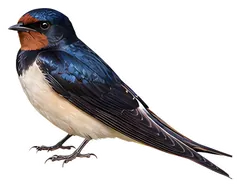
Western House Martin is distinguished by its white rump, conspicuous in flight, and pure white underparts.
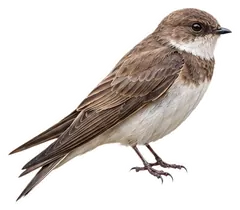
Western House Martin is distinguished by its white rump, conspicuous in flight, and pure white underparts.
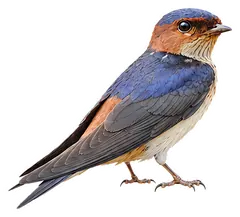
Western House Martin is distinguished by its white rump, conspicuous in flight, and pure white underparts.
Where and when it's recorded

Western House Martin has been recorded at 1,906 of the 8,171 birding hotspots we track, in 124 countries and regions.
Records by month Northern Hemisphere
Where it's recorded most
- Desembocadura del Guadalhorce – ÁreaSpain3,437 records
- International Birding and Research Center Eilat (IBRCE)Israel2,449 records
- Titchwell Marsh RSPB ReserveUnited Kingdom1,857 records
More places
- Spurn Bird Observatory Recording AreaUnited Kingdom1,852 records
- Brent ReservoirUnited Kingdom1,845 records
- Cley & Salthouse Marshes NWT NR – Cley Marshes including Hides and Visitor CentreUnited Kingdom1,498 records
- Amwell HMWT NRUnited Kingdom1,347 records
- Doñana PN – Marisma de El RocíoSpain1,296 records
- Marjal dels Moros – ÁreaSpain1,263 records
- Walthamstow WetlandsUnited Kingdom1,220 records
Countries and regions with the most records
eBird records via GBIF up to 2024-12-31. A record means someone listed it; more records partly mean more birders, not more birds.
About
The western house martin (Delichon urbicum), sometimes called the common house martin, northern house martin or, particularly in Europe, just house martin, is a migratory passerine bird of the swallow family which breeds in Europe, north Africa and west-central Asia; and winters in sub-Saharan Africa and southwestern Asia. It feeds on insects which are caught in flight, and it migrates to climates where flying insects are plentiful.
Excerpt from Wikipedia, CC BY-SA 4.0 · authors · Read more on Wikipedia
Questions
How big is the Western House Martin?
The Western House Martin is about 13 cm long, with a wingspan of 29 cm and weighs around 14 g.
Where does the Western House Martin live?
Its breeding range: Palearctic: widespread. It is most often recorded in United Kingdom, Spain and Portugal.
When is the best time to see the Western House Martin?
At the hotspots we track, it is recorded most in May (Northern Hemisphere).
Is the Western House Martin endangered?
The IUCN Red List classifies the Western House Martin as Least Concern.
What does the Western House Martin eat?
Main food: Insects & other invertebrates.
What family is the Western House Martin in?
It belongs to the family Swallows, Martins (Hirundinidae), order Passerines (Passeriformes).
At a glance
- Length
- 13 cm
- Wingspan
- 29 cm
- Weight
- 14 g
- Habitat
- Towns & farmland
- Diet
- Insects & other invertebrates
- Lifestyle
- Feeds in the air
- Migration
- Migratory
- Conservation
- Least Concern
More measurements
- Wing
- 108 mm
- Tail
- 61 mm
- Bill
- 11 mm
- Tarsus
- 11 mm
Averages from the AVONET dataset; length from field guides where available.
Range
Palearctic: widespread
Breeding range, IOC World Bird List 15.2
Classification
- Order
- Passerines Passeriformes
- Family
- Swallows, Martins Hirundinidae
- Genus
- Delichon
Other birds in the genus Delichon
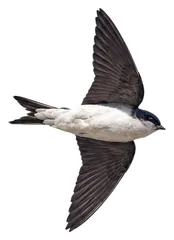 Siberian House MartinDelichon lagopodum
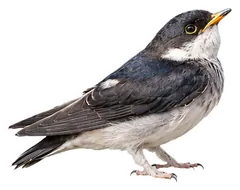 Asian House MartinDelichon dasypus
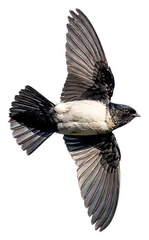 Nepal House MartinDelichon nipalense
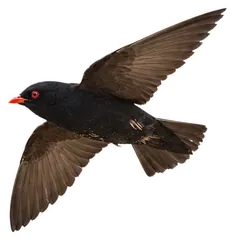 African River MartinPseudochelidon eurystomina
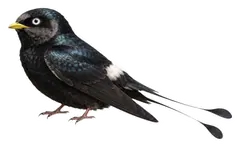 White-eyed River MartinPseudochelidon sirintarae
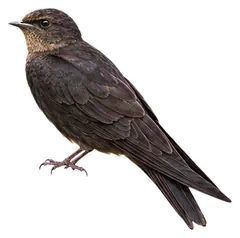 Square-tailed Saw-wingPsalidoprocne nitens
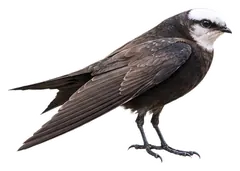 White-headed Saw-wingPsalidoprocne albiceps
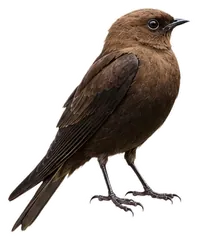 Mountain Saw-wingPsalidoprocne fuliginosa
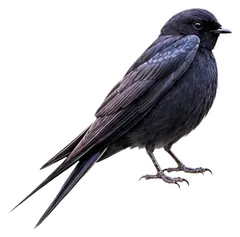 Black Saw-wingPsalidoprocne pristoptera
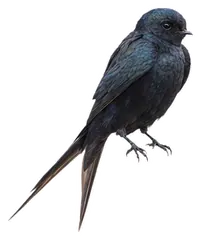 Fanti Saw-wingPsalidoprocne obscura
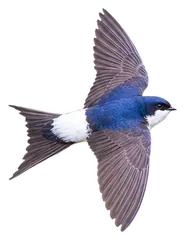
Download illustration
Free to use with credit: “Illustration: Bird Album (birdalbum.com)”. Drawn by AI from a reference photo by egorbirder. ↗
Heard it but can't see it? Mingji identifies birds by sound and photo, on your phone.