 Bird Album
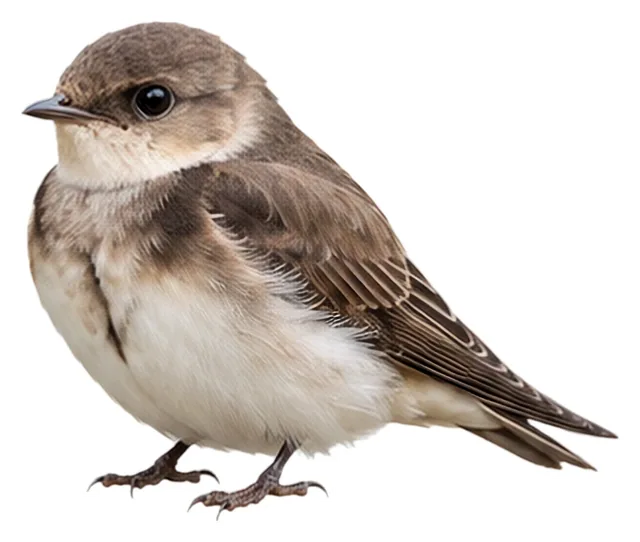
Pale Martin
Riparia diluta (Sharpe & Wyatt, 1893)
12–13 cmLength15 gWeight
This small gray-brown martin is white from the throat to the undertail-coverts and often occurs in small flocks.
Busiest months: May–June · Most records: China, Mongolia, India
How to identify
Field marks
- Head and upperparts gray-brown
- White from throat to undertail-coverts, with a gray-brown wash on the breast
- Primaries black, reaching the tail feathers when perched
- Bill black, slender, short and pointed
Where and when it's recorded
Busiest months: May–June · Most records: China, Mongolia, India

Pale Martin has been recorded at 320 of the 8,276 birding hotspots we track, in 16 countries and regions.
Records by month Northern Hemisphere
Where it's recorded most
- Khovd Bird Ringing Station, Khovd, MNMongolia96 records
- Ugii Lake, Ugiinuur, Arkhangai, MNMongolia95 records
- Rubber Mountain PassChina75 records
More places
- Corbett NP – DhikalaIndia73 records
- Asan Conservation ReserveIndia60 records
- Xiaobeihu Freshwater MarshChina55 records
- Qingshan LakeChina50 records
- Boon Tsagan NuurMongolia42 records
- Bayan Lake, Bayannuur, Bulgan, MNMongolia39 records
- Xining Ning Hu WetlandChina36 records
Countries and regions with the most records
eBird records via GBIF up to 2024-12-31. A record means someone listed it; more records partly mean more birders, not more birds.
Questions
How big is the Pale Martin?
The Pale Martin is about 12–13 cm long and weighs around 15 g.
Where does the Pale Martin live?
Its breeding range: Palearctic: central. It is most often recorded in China, Mongolia and India.
When is the best time to see the Pale Martin?
At the hotspots we track, it is recorded most in May and June (Northern Hemisphere).
Is the Pale Martin endangered?
The IUCN Red List classifies the Pale Martin as Least Concern.
What does the Pale Martin eat?
Main food: Insects & other invertebrates.
What family is the Pale Martin in?
It belongs to the family Swallows, Martins (Hirundinidae), order Passerines (Passeriformes).
At a glance
- Length
- 12–13 cm
- Weight
- 15 g
- Habitat
- Rivers & streams
- Diet
- Insects & other invertebrates
- Lifestyle
- Feeds in the air
- Migration
- Migratory
- Conservation
- Least Concern
More measurements
- Wing
- 99 mm
- Tail
- 50 mm
- Bill
- 9 mm
- Tarsus
- 11 mm
Averages from the AVONET dataset; length from field guides where available.
Range
Palearctic: central
Breeding range, IOC World Bird List 15.2
Subspecies · 3
- Riparia diluta diluta s, e Kazakhstan, n Kyrgyzstan, e, s Uzbekistan, w Tajikistan, c, sc, sw Siberia, n Mongolia and nw, ne China | non-breeding: to e Pakistan and w, nw India
- Riparia diluta tibetana sw, sc China (Tibetan Plateau) | non-breeding: to n, c India and w Bhutan
- Riparia diluta fohkienensis c, e China | non-breeding: to s China
Classification
- Order
- Passerines Passeriformes
- Family
- Swallows, Martins Hirundinidae
- Genus
- Riparia
Other birds in the genus Riparia
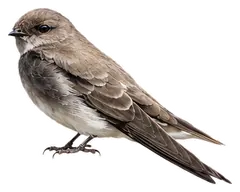 Brown-throated MartinRiparia paludicola
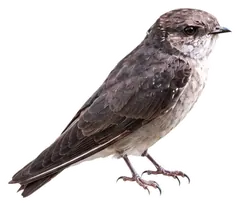 Madagascar MartinRiparia cowani
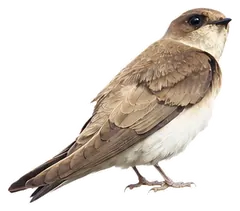 Grey-throated MartinRiparia chinensis
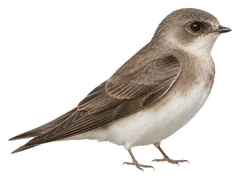 Congo MartinRiparia congica
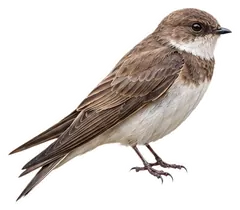 Sand MartinRiparia riparia
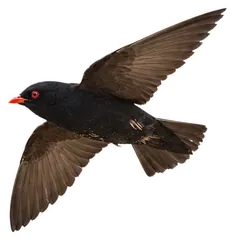 African River MartinPseudochelidon eurystomina
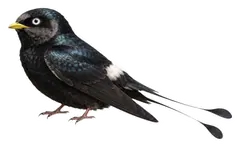 White-eyed River MartinPseudochelidon sirintarae
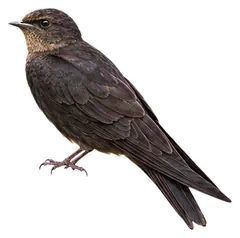 Square-tailed Saw-wingPsalidoprocne nitens
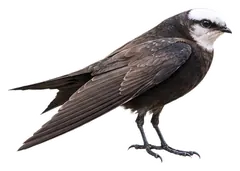 White-headed Saw-wingPsalidoprocne albiceps
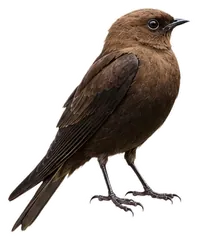 Mountain Saw-wingPsalidoprocne fuliginosa
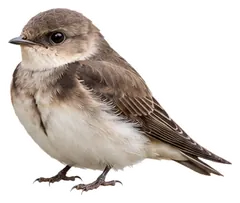
Download illustration
Free to use with credit: “Illustration: Bird Album (birdalbum.com)”. Drawn by AI from a reference photo by Vladimir Yu. Arkhipov, Arkhivov. ↗

Heard it but can't see it? Mingji identifies birds by sound and photo, on your phone.
In other languages
- EnglishPale Martin
- 简体中文淡色沙燕
- 繁體中文淡色沙燕
- 日本語ウスショウドウツバメ
- 한국어옅은갈색제비
- DeutschFahluferschwalbe
- FrançaisHirondelle pâle
- EspañolAvión pálido
- Portuguêsandorinha-das-barreiras-pálida
- ItalianoTopino pallido
- NederlandsBleke Oeverzwaluw
- РусскийБледная береговушка
- Svenskablek backsvala
- DanskØstlig Digesvale
- Polskibrzegówka azjatycka