 Bird Album
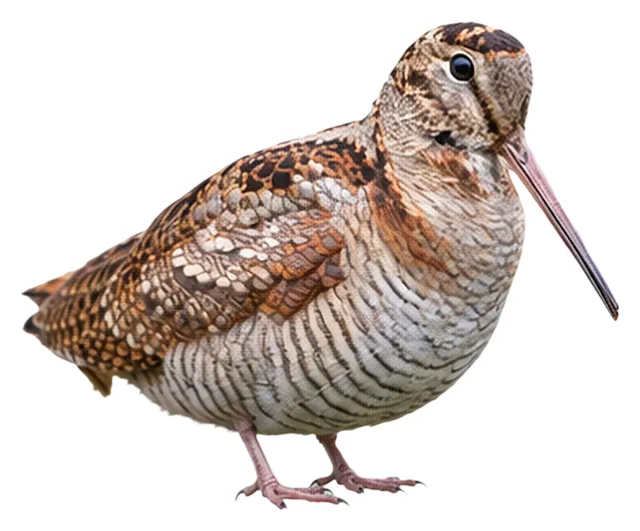
Eurasian Woodcock
Scolopax rusticola Linnaeus, 1758
33–38 cmLength58 cmWingspan308 gWeight
This rufous woodland bird is well camouflaged, with eyes set far back on the sides of its head.
Busiest months: October · Most records: United Kingdom, China, Czechia
How to identify
Field marks
- Back with intricate rufous patterning
- Belly pale yellow
- Head with black barring rather than streaks
- Bill long and straight, flesh-colored at the base and dark at the tip
Male, female and young
Sexes cannot be distinguished in the field.
Voice
Gives “orr, orr, orr, pist” during courtship flight.
Where and when it's recorded
Busiest months: October · Most records: United Kingdom, China, Czechia

Eurasian Woodcock has been recorded at 920 of the 8,276 birding hotspots we track, in 71 countries and regions.
Records by month Northern Hemisphere
Where it's recorded most
- Spurn Bird Observatory Recording AreaUnited Kingdom347 records
- CHKO Jeseníky – Červenohorské sedloCzechia343 records
- Titchwell Marsh RSPB ReserveUnited Kingdom324 records
More places
- HelgolandGermany234 records
- Fair IsleUnited Kingdom183 records
- Yokohama – Maioka ParkJapan129 records
- Wanstead FlatsUnited Kingdom123 records
- Wildlife Institute of IndiaIndia119 records
- Elton ReservoirUnited Kingdom117 records
- Amwell HMWT NRUnited Kingdom115 records
Countries and regions with the most records
eBird records via GBIF up to 2024-12-31. A record means someone listed it; more records partly mean more birders, not more birds.
About
The Eurasian woodcock (Scolopax rusticola) is a medium-small wading bird found in temperate and subarctic Eurasia. It has cryptic camouflage to suit its woodland habitat, with reddish-brown upperparts and buff-coloured underparts. Its eyes are set far back on its head to give it 360-degree vision and it probes in the ground for food with its long, sensitive bill, making it vulnerable to cold weather when the ground remains frozen.
Excerpt from Wikipedia, CC BY-SA 4.0 · authors · Read more on Wikipedia
Questions
How big is the Eurasian Woodcock?
The Eurasian Woodcock is about 33–38 cm long, with a wingspan of 58 cm and weighs around 308 g.
Where does the Eurasian Woodcock live?
Its breeding range: Palearctic: widespread subarctic to temperate and montane subtropical moist forests of Palearctic: British Isles north to Scandinavia (except far northern) south to northern Iberian Peninsula, Azores, Madeira and western, central Canary Islands (Macaronesia, northwest of western Africa), east through temperate Russia, northeastern Kazakhstan, northern Xinjiang (northwestern China), northern Mongolia, northeastern China, Amurland and Sakhalin (southeastern Russia), and Hokkaido to central Honshu (northern, central Japan); disjunctly in the Caucasus and Himalayas. It is most often recorded in United Kingdom, China and Czechia.
When is the best time to see the Eurasian Woodcock?
At the hotspots we track, it is recorded most in October (Northern Hemisphere).
Is the Eurasian Woodcock endangered?
The IUCN Red List classifies the Eurasian Woodcock as Least Concern.
What does the Eurasian Woodcock eat?
Main food: Omnivore.
What family is the Eurasian Woodcock in?
It belongs to the family Sandpipers, Snipes (Scolopacidae), order Charadriiformes.
At a glance
- Length
- 33–38 cm
- Wingspan
- 58 cm
- Weight
- 308 g
- Habitat
- Forest
- Diet
- Omnivore
- Lifestyle
- Active on the ground
- Migration
- Migratory
- Conservation
- Least Concern
More measurements
- Wing
- 192 mm
- Tail
- 85 mm
- Bill
- 77 mm
- Tarsus
- 34 mm
Averages from the AVONET dataset; length from field guides where available.
Range
Palearctic: widespread subarctic to temperate and montane subtropical moist forests of Palearctic: British Isles north to Scandinavia (except far northern) south to northern Iberian Peninsula, Azores, Madeira and western, central Canary Islands (Macaronesia, northwest of western Africa), east through temperate Russia, northeastern Kazakhstan, northern Xinjiang (northwestern China), northern Mongolia, northeastern China, Amurland and Sakhalin (southeastern Russia), and Hokkaido to central Honshu (northern, central Japan); disjunctly in the Caucasus and Himalayas
Breeding range, IOC World Bird List 15.2
Classification
- Order
- Charadriiformes
- Family
- Sandpipers, Snipes Scolopacidae
- Genus
- Scolopax
Other birds in the genus Scolopax
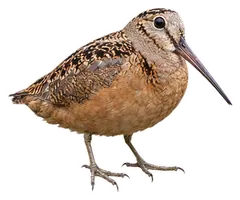 American WoodcockScolopax minor
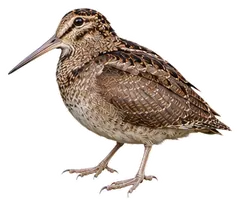 Amami WoodcockScolopax mira
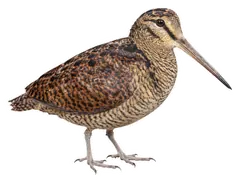 Bukidnon WoodcockScolopax bukidnonensis
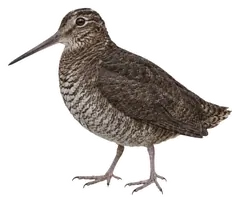 Javan WoodcockScolopax saturata
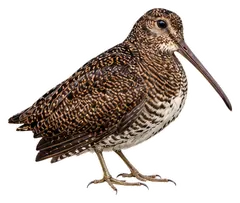 New Guinea WoodcockScolopax rosenbergii
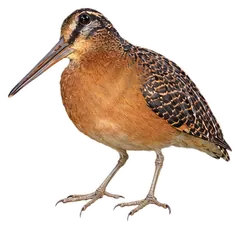 Sulawesi WoodcockScolopax celebensis
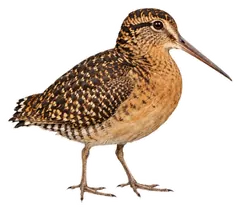 Moluccan WoodcockScolopax rochussenii
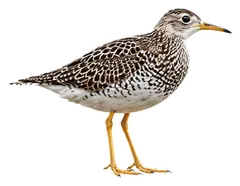 Upland SandpiperBartramia longicauda
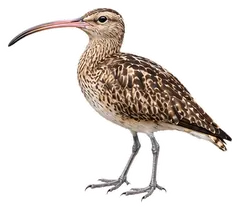 Bristle-thighed CurlewNumenius tahitiensis
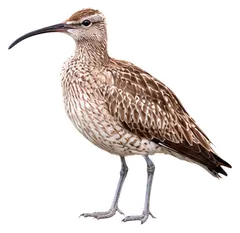 Eurasian WhimbrelNumenius phaeopus
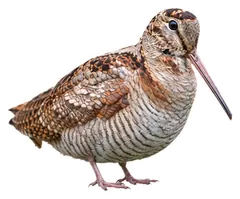
Download illustration
Free to use with credit: “Illustration: Bird Album (birdalbum.com)”. Drawn by AI from a reference photo by Ronald Slabke. ↗

Heard it but can't see it? Mingji identifies birds by sound and photo, on your phone.