 Bird Album
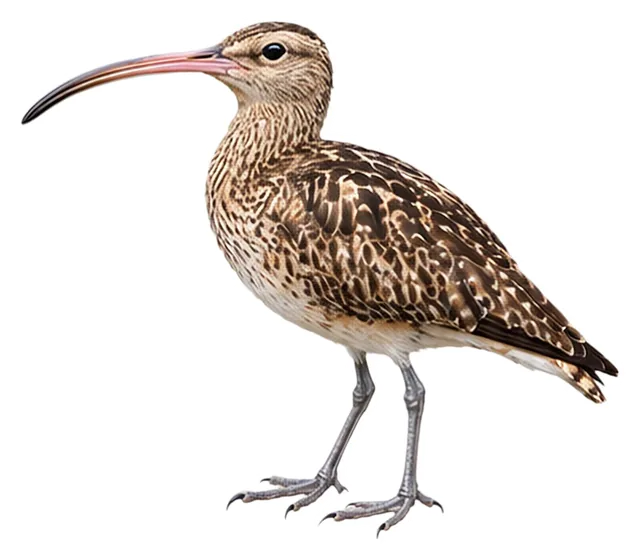
Bristle-thighed Curlew
Numenius tahitiensis (Gmelin, JF, 1789)
400 gWeight
The bristle-thighed curlew (Numenius tahitiensis) is a medium-sized shorebird that breeds in Alaska and winters on tropical Pacific islands.
Busiest months: May, October and December · Most records: U.S. Outlying Islands, United States, French Polynesia
Where and when it's recorded

Bristle-thighed Curlew has been recorded at 44 of the 8,171 birding hotspots we track, in 13 countries and regions.
Records by month Northern Hemisphere
Where it's recorded most
- Midway Atoll – Water Catchment AreaU.S. Outlying Islands596 records
- Midway Atoll NWR – Sand IslandU.S. Outlying Islands535 records
- Midway Atoll NWR – Eastern IslandU.S. Outlying Islands210 records
More places
- St. Paul IslandUnited States207 records
- Midway Atoll – Brackish SeepU.S. Outlying Islands159 records
- TetiaroaFrench Polynesia71 records
- Palmyra Atoll NWRU.S. Outlying Islands55 records
- Henderson Island – North LandingPitcairn Islands49 records
- KwajaleinMarshall Islands42 records
- Midway Atoll – Cargo PierU.S. Outlying Islands35 records
Countries and regions with the most records
eBird records via GBIF up to 2024-12-31. A record means someone listed it; more records partly mean more birders, not more birds.
About
The bristle-thighed curlew (Numenius tahitiensis) is a medium-sized shorebird that breeds in Alaska and winters on tropical Pacific islands.
Excerpt from Wikipedia, CC BY-SA 4.0 · authors · Read more on Wikipedia
Questions
How big is the Bristle-thighed Curlew?
The Bristle-thighed Curlew weighs around 400 g.
Where does the Bristle-thighed Curlew live?
Its breeding range: North America: low Arctic upland tundra of western Alaska: north-central Seward Peninsula and northern Yukon Delta. It is most often recorded in U.S. Outlying Islands, United States and French Polynesia.
When is the best time to see the Bristle-thighed Curlew?
At the hotspots we track, it is recorded most in May, October and December (Northern Hemisphere).
Is the Bristle-thighed Curlew endangered?
The IUCN Red List classifies the Bristle-thighed Curlew as Near Threatened.
What does the Bristle-thighed Curlew eat?
Main food: Omnivore.
What family is the Bristle-thighed Curlew in?
It belongs to the family Sandpipers, Snipes (Scolopacidae), order Charadriiformes.
At a glance
- Weight
- 400 g
- Habitat
- Grassland
- Diet
- Omnivore
- Lifestyle
- Active on the ground
- Migration
- Migratory
- Conservation
- Near Threatened
More measurements
- Wing
- 244 mm
- Tail
- 93 mm
- Bill
- 97 mm
- Tarsus
- 58 mm
Averages from the AVONET dataset; length from field guides where available.
Range
North America: low Arctic upland tundra of western Alaska: north-central Seward Peninsula and northern Yukon Delta
Breeding range, IOC World Bird List 15.2
Classification
- Order
- Charadriiformes
- Family
- Sandpipers, Snipes Scolopacidae
- Genus
- Numenius
Other birds in the genus Numenius
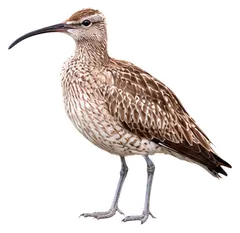 Eurasian WhimbrelNumenius phaeopus
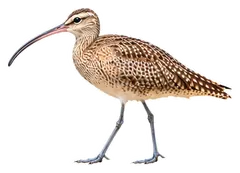 Hudsonian WhimbrelNumenius hudsonicus
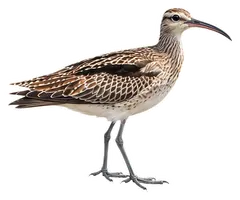 Little CurlewNumenius minutus
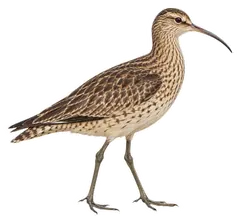 Eskimo CurlewNumenius borealis
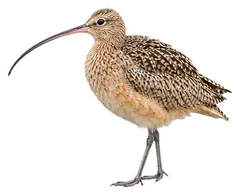 Long-billed CurlewNumenius americanus
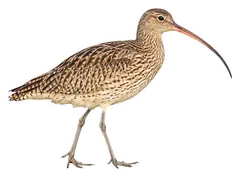 Far Eastern CurlewNumenius madagascariensis
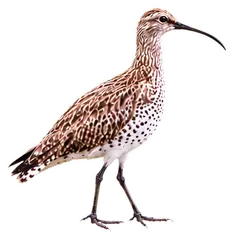 Slender-billed CurlewNumenius tenuirostris
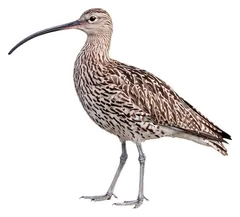 Eurasian CurlewNumenius arquata
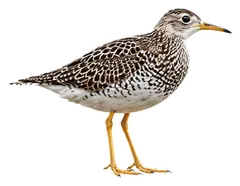 Upland SandpiperBartramia longicauda
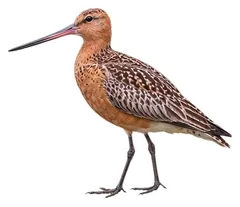 Bar-tailed GodwitLimosa lapponica
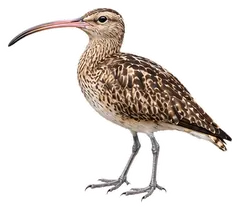
Download illustration
Free to use with credit: “Illustration: Bird Album (birdalbum.com)”. Drawn by AI from a reference photo by James Eaton. ↗
Heard it but can't see it? Mingji identifies birds by sound and photo, on your phone.