 Bird Album
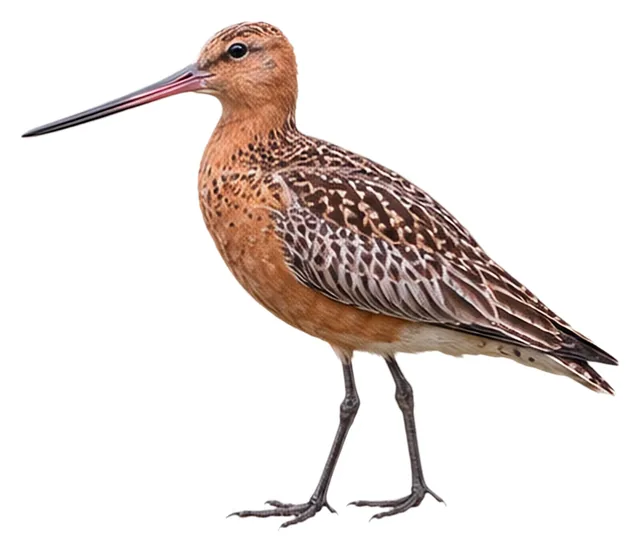
Bar-tailed Godwit
Limosa lapponica (Linnaeus, 1758)
37–41 cmLength73 cmWingspan292 gWeight
This bird has a long, slightly upturned bill and bright red breeding plumage; one subspecies can cross the Pacific without stopping.
Most records: Australia, United Kingdom, New Zealand
Looks like Black-tailed Godwit
How to identify
Field marks
- Tail feathers with black-and-white barring; no white wing-bar
- Bill long and slightly upturned, with a pink base and black tip
- Neck, breast and belly brick-red in breeding plumage; back dark brown
- Gray-brown with streaks and a white belly in the non-breeding season
Male, female and young
Female has duller breeding plumage, with a chestnut to cinnamon belly; juvenile resembles non-breeding adult but is more yellowish-brown.
Similar species
Where and when it's recorded

Bar-tailed Godwit has been recorded at 1,432 of the 8,171 birding hotspots we track, in 122 countries and regions.
Records by month Northern Hemisphere
Where it's recorded most
- Cairns EsplanadeAustralia6,131 records
- Titchwell Marsh RSPB ReserveUnited Kingdom5,409 records
- Txingudi – PlaiaundiSpain2,365 records
More places
- Western Treatment PlantAustralia2,155 records
- Hunter Wetlands National Park – Stockton SandspitAustralia1,926 records
- Cairns Esplanade – Northern EndAustralia1,844 records
- Cairns Esplanade – Southern EndAustralia1,669 records
- Spurn Bird Observatory Recording AreaUnited Kingdom1,654 records
- St. Paul IslandUnited States1,637 records
- Miranda – main hide/LimeworksNew Zealand1,621 records
Countries and regions with the most records
eBird records via GBIF up to 2024-12-31. A record means someone listed it; more records partly mean more birders, not more birds.
About
The bar-tailed godwit (Limosa lapponica) is a large and strongly migratory wader in the family Scolopacidae, which feeds on bristle-worms and shellfish on coastal mudflats and estuaries. Bar-tailed godwits breed on Arctic coasts and tundra from Scandinavia to Alaska, and overwinter on coasts in temperate and tropical regions of Australia and New Zealand.
Excerpt from Wikipedia, CC BY-SA 4.0 · authors · Read more on Wikipedia
Questions
How big is the Bar-tailed Godwit?
The Bar-tailed Godwit is about 37–41 cm long, with a wingspan of 73 cm and weighs around 292 g.
Where does the Bar-tailed Godwit live?
Its breeding range: Palearctic: patchily in low Arctic tundra of northern Palearctic: far northern Scandinavia to Chukotskiy and Anadyr peninsulas (northeastern Russia) and northern, western Alaska. It is most often recorded in Australia, United Kingdom and New Zealand.
Is the Bar-tailed Godwit endangered?
The IUCN Red List classifies the Bar-tailed Godwit as Near Threatened.
What does the Bar-tailed Godwit eat?
Main food: Fish, shrimp & shellfish.
What family is the Bar-tailed Godwit in?
It belongs to the family Sandpipers, Snipes (Scolopacidae), order Charadriiformes.
At a glance
- Length
- 37–41 cm
- Wingspan
- 73 cm
- Weight
- 292 g
- Habitat
- Wetland
- Diet
- Fish, shrimp & shellfish
- Lifestyle
- Active on the ground
- Migration
- Migratory
- Conservation
- Near Threatened
More measurements
- Wing
- 210 mm
- Tail
- 74 mm
- Bill
- 92 mm
- Tarsus
- 53 mm
Averages from the AVONET dataset; length from field guides where available.
Range
Palearctic: patchily in low Arctic tundra of northern Palearctic: far northern Scandinavia to Chukotskiy and Anadyr peninsulas (northeastern Russia) and northern, western Alaska
Breeding range, IOC World Bird List 15.2
Subspecies · 1
- Limosa lapponica baueri ne Siberia to n, w Alaska | non-breeding: China and Australasia
Classification
- Order
- Charadriiformes
- Family
- Sandpipers, Snipes Scolopacidae
- Genus
- Limosa
Other birds in the genus Limosa
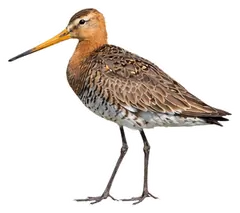 Black-tailed GodwitLimosa limosa
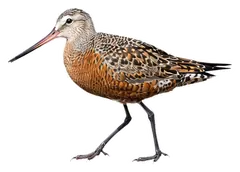 Hudsonian GodwitLimosa haemastica
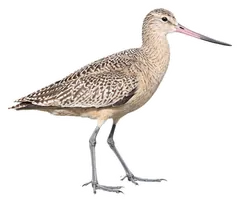 Marbled GodwitLimosa fedoa
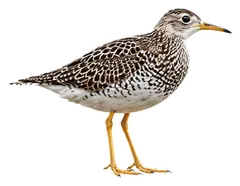 Upland SandpiperBartramia longicauda
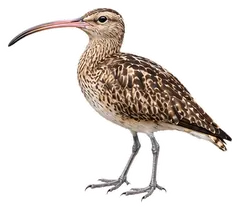 Bristle-thighed CurlewNumenius tahitiensis
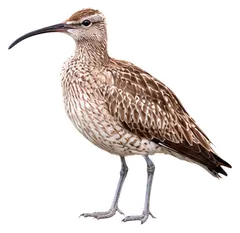 Eurasian WhimbrelNumenius phaeopus
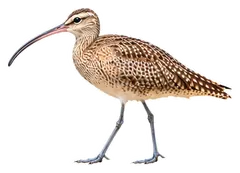 Hudsonian WhimbrelNumenius hudsonicus
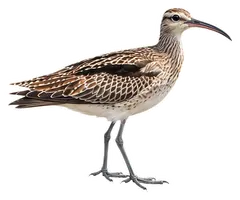 Little CurlewNumenius minutus
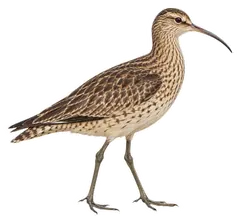 Eskimo CurlewNumenius borealis
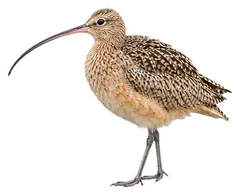 Long-billed CurlewNumenius americanus
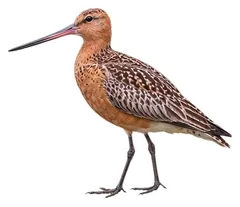
Download illustration
Free to use with credit: “Illustration: Bird Album (birdalbum.com)”. Drawn by AI from a reference photo by Andreas Trepte. ↗

Heard it but can't see it? Mingji identifies birds by sound and photo, on your phone.