 Bird Album
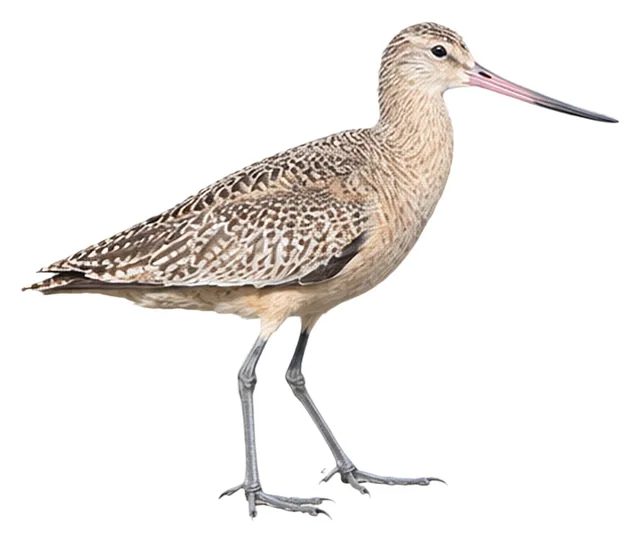
Marbled Godwit
Limosa fedoa (Linnaeus, 1758)
357 gWeight
The marbled godwit (Limosa fedoa) is a large migratory shorebird in the family Scolopacidae.
Busiest months: April and September · Most records: United States, Canada, Mexico
Where and when it's recorded
Busiest months: April and September · Most records: United States, Canada, Mexico

Marbled Godwit has been recorded at 437 of the 8,276 birding hotspots we track, in 23 countries and regions.
Records by month Northern Hemisphere
Where it's recorded most
- San Diego River mudflatsUnited States11,530 records
- Bolsa Chica Ecological ReserveUnited States11,328 records
- Moss Landing – Jetty Road, north jetty & State BeachUnited States8,988 records
More places
- Fort De Soto ParkUnited States8,263 records
- Arcata Marsh and Wildlife SanctuaryUnited States8,061 records
- Bolivar Flats Shorebird SanctuaryUnited States5,334 records
- Bolsa Chica – walkbridge/inner bayUnited States5,226 records
- Morro Bay SP – Marina/Boardwalk TrailUnited States4,872 records
- Charleston Slough/Coast Casey ForebayUnited States4,848 records
- Palo Alto BaylandsUnited States4,805 records
Countries and regions with the most records
eBird records via GBIF up to 2024-12-31. A record means someone listed it; more records partly mean more birders, not more birds.
About
The marbled godwit (Limosa fedoa) is a large migratory shorebird in the family Scolopacidae. On average, it is the largest of the four species of godwit.
Excerpt from Wikipedia, CC BY-SA 4.0 · authors · Read more on Wikipedia
Questions
How big is the Marbled Godwit?
The Marbled Godwit weighs around 357 g.
Where does the Marbled Godwit live?
Its breeding range: North America: subarctic to temperate grassland of Nearctic: disjunctly central Alaska Peninsula; south-central Canada to north-central USA; and western James Bay area (northern Ontario, east-central Canada). It is most often recorded in United States, Canada and Mexico.
When is the best time to see the Marbled Godwit?
At the hotspots we track, it is recorded most in April and September (Northern Hemisphere).
Is the Marbled Godwit endangered?
The IUCN Red List classifies the Marbled Godwit as Vulnerable.
What does the Marbled Godwit eat?
Main food: Fish, shrimp & shellfish.
What family is the Marbled Godwit in?
It belongs to the family Sandpipers, Snipes (Scolopacidae), order Charadriiformes.
At a glance
- Weight
- 357 g
- Habitat
- Wetland
- Diet
- Fish, shrimp & shellfish
- Lifestyle
- Active on the ground
- Migration
- Migratory
- Conservation
- Vulnerable
More measurements
- Wing
- 225 mm
- Tail
- 77 mm
- Bill
- 112 mm
- Tarsus
- 72 mm
Averages from the AVONET dataset; length from field guides where available.
Range
North America: subarctic to temperate grassland of Nearctic: disjunctly central Alaska Peninsula; south-central Canada to north-central USA; and western James Bay area (northern Ontario, east-central Canada)
Breeding range, IOC World Bird List 15.2
Classification
- Order
- Charadriiformes
- Family
- Sandpipers, Snipes Scolopacidae
- Genus
- Limosa
Other birds in the genus Limosa
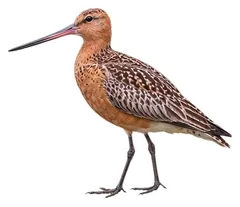 Bar-tailed GodwitLimosa lapponica
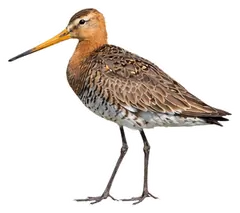 Black-tailed GodwitLimosa limosa
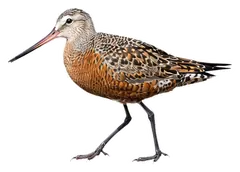 Hudsonian GodwitLimosa haemastica
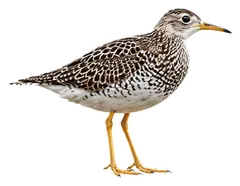 Upland SandpiperBartramia longicauda
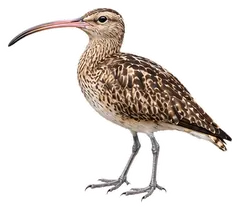 Bristle-thighed CurlewNumenius tahitiensis
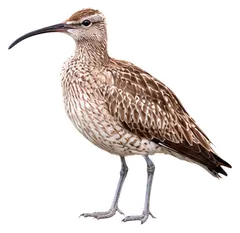 Eurasian WhimbrelNumenius phaeopus
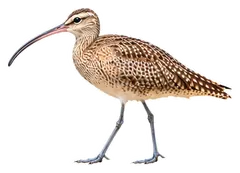 Hudsonian WhimbrelNumenius hudsonicus
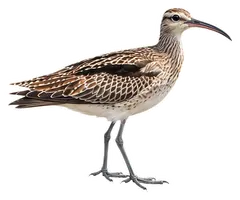 Little CurlewNumenius minutus
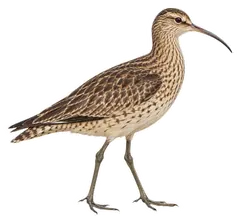 Eskimo CurlewNumenius borealis
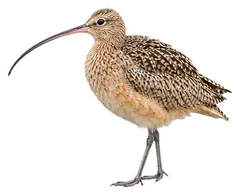 Long-billed CurlewNumenius americanus
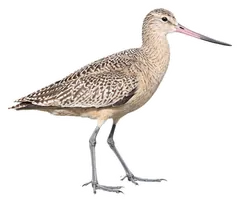
Download illustration
Free to use with credit: “Illustration: Bird Album (birdalbum.com)”. Drawn by AI from a reference photo by Liam Hutcheson. ↗
Heard it but can't see it? Mingji identifies birds by sound and photo, on your phone.