 Bird Album
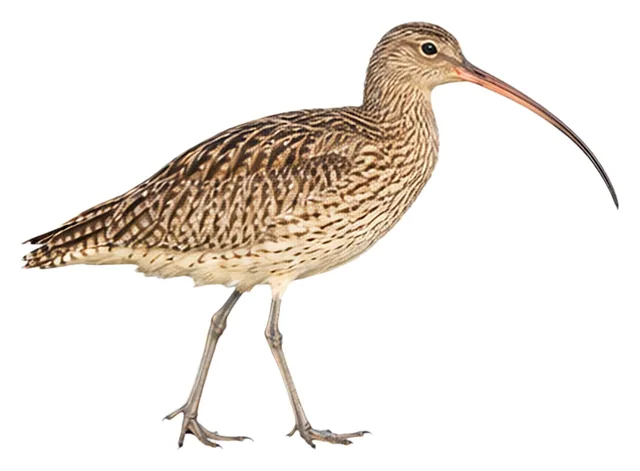
Far Eastern Curlew
Numenius madagascariensis (Linnaeus, 1766)
60–66 cmLength104 cmWingspan792 gWeight
This is the largest curlew, with an extremely long, decurved bill and mainly rufous plumage overall.
Busiest months: January and October · Most records: Australia, China, New Zealand
Looks like Eurasian Curlew
How to identify
Field marks
- Bill extremely long and decurved
- Mainly rufous overall
- Underwing coverts plain rufous, without markings
- Rump and lower back rufous, not white
Male, female and young
Female averages about 100 g heavier than male.
Voice
A sharp, clear whistle, “cuuue-reee”, often repeated.
Similar species
Where and when it's recorded
Busiest months: January and October · Most records: Australia, China, New Zealand

Far Eastern Curlew has been recorded at 412 of the 8,276 birding hotspots we track, in 23 countries and regions.
Records by month Southern Hemisphere
To protect this bird from disturbance, we don't list exact sites.
Countries and regions with the most records
eBird records via GBIF up to 2024-12-31. A record means someone listed it; more records partly mean more birders, not more birds.
About
The Far Eastern curlew (Numenius madagascariensis) is a large wader most similar in appearance to the long-billed curlew, but slightly larger. It is mostly brown, differentiated from other curlews by its plain, unpatterned brown underwing, and brown rump. It is not only the largest curlew but probably the world's largest sandpiper, at 60–66 cm (24–26 in) in length and 110 cm (43 in) across the wings.
Excerpt from Wikipedia, CC BY-SA 4.0 · authors · Read more on Wikipedia
Questions
How big is the Far Eastern Curlew?
The Far Eastern Curlew is about 60–66 cm long, with a wingspan of 104 cm and weighs around 792 g.
Where does the Far Eastern Curlew live?
Its breeding range: Palearctic: inland wetlands of subarctic to temperate northeastern Palearctic: east-central Siberia to Kamchatka and Ussuriland (southeastern Russia) and Heilongjiang (northeastern China). It is most often recorded in Australia, China and New Zealand.
When is the best time to see the Far Eastern Curlew?
At the hotspots we track, it is recorded most in January and October (Southern Hemisphere).
Is the Far Eastern Curlew endangered?
The IUCN Red List classifies the Far Eastern Curlew as Endangered.
What does the Far Eastern Curlew eat?
Main food: Fish, shrimp & shellfish.
What family is the Far Eastern Curlew in?
It belongs to the family Sandpipers, Snipes (Scolopacidae), order Charadriiformes.
At a glance
- Length
- 60–66 cm
- Wingspan
- 104 cm
- Weight
- 792 g
- Habitat
- Wetland
- Diet
- Fish, shrimp & shellfish
- Lifestyle
- Active on the ground
- Migration
- Migratory
- Conservation
- Endangered
More measurements
- Wing
- 305 mm
- Tail
- 114 mm
- Bill
- 184 mm
- Tarsus
- 93 mm
Averages from the AVONET dataset; length from field guides where available.
Range
Palearctic: inland wetlands of subarctic to temperate northeastern Palearctic: east-central Siberia to Kamchatka and Ussuriland (southeastern Russia) and Heilongjiang (northeastern China)
Breeding range, IOC World Bird List 15.2
Classification
- Order
- Charadriiformes
- Family
- Sandpipers, Snipes Scolopacidae
- Genus
- Numenius
Other birds in the genus Numenius
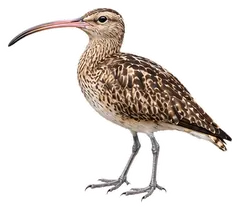 Bristle-thighed CurlewNumenius tahitiensis
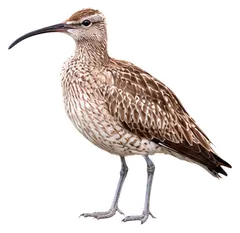 Eurasian WhimbrelNumenius phaeopus
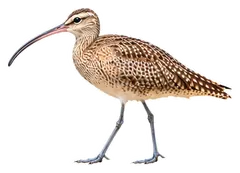 Hudsonian WhimbrelNumenius hudsonicus
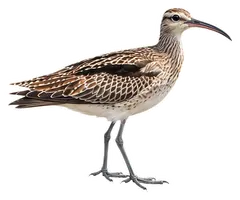 Little CurlewNumenius minutus
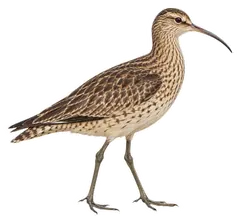 Eskimo CurlewNumenius borealis
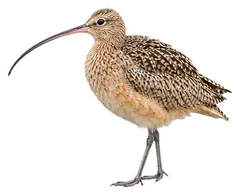 Long-billed CurlewNumenius americanus
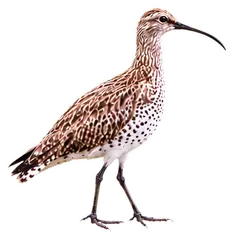 Slender-billed CurlewNumenius tenuirostris
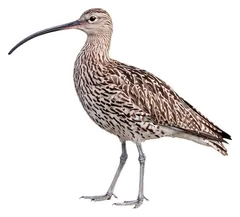 Eurasian CurlewNumenius arquata
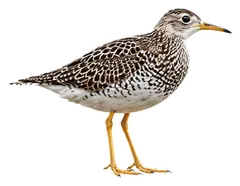 Upland SandpiperBartramia longicauda
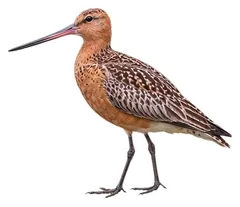 Bar-tailed GodwitLimosa lapponica
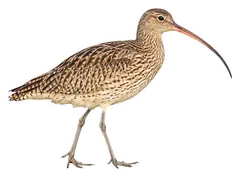
Download illustration
Free to use with credit: “Illustration: Bird Album (birdalbum.com)”. Drawn by AI from a reference photo by JJ Harrison (https://www.jjharrison.com.au/). ↗

Heard it but can't see it? Mingji identifies birds by sound and photo, on your phone.