 Bird Album
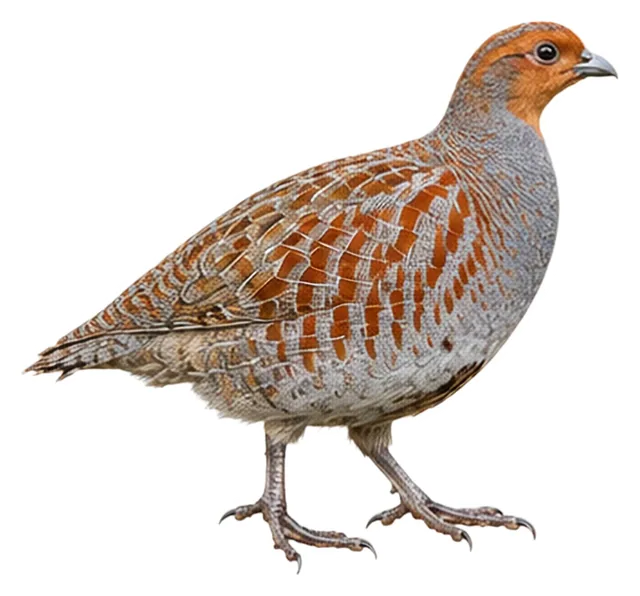
Grey Partridge
Perdix perdix (Linnaeus, 1758)
≈31 cmLength46 cmWingspan405 gWeight
It is round-bodied, often with a chestnut horseshoe-shaped patch on the white belly.
Busiest months: April–May · Most records: United Kingdom, Canada, Bulgaria
How to identify
Field marks
- Back brown
- Breast and flanks gray
- White belly often with a chestnut horseshoe-shaped patch
Male, female and young
Female usually slightly duller, with a smaller dark belly patch; juvenile mostly yellowish-brown, lacking the conspicuous face and underparts markings.
Voice
Vocalization a harsh, high-pitched “kieerr-ik”; often gives repeated “rick” notes when flushed.
Where and when it's recorded

Grey Partridge has been recorded at 477 of the 8,171 birding hotspots we track, in 44 countries and regions.
Records by month Northern Hemisphere
Where it's recorded most
- Hale Head LighthouseUnited Kingdom450 records
- Carr Lane PoolsUnited Kingdom443 records
- Druridge Pools NWT NR and Druridge LinksUnited Kingdom394 records
More places
- Frank Lake – NW lookout/blind/outflowCanada360 records
- St Mary's Island LNRUnited Kingdom294 records
- Pointe de MaizeretsCanada293 records
- Aberlady Bay LNRUnited Kingdom252 records
- University of York – Heslington East CampusUnited Kingdom227 records
- Rivière-OuelleCanada223 records
- Kaloyanovo ReservoirBulgaria204 records
Countries and regions with the most records
eBird records via GBIF up to 2024-12-31. A record means someone listed it; more records partly mean more birders, not more birds.
About
The grey partridge (Perdix perdix) is a bird in the pheasant family Phasianidae of the order Galliformes, gallinaceous birds. The scientific name is the Latin for "partridge".
Excerpt from Wikipedia, CC BY-SA 4.0 · authors · Read more on Wikipedia
Questions
How big is the Grey Partridge?
The Grey Partridge is about ≈31 cm long, with a wingspan of 46 cm and weighs around 405 g.
Where does the Grey Partridge live?
Its breeding range: Palearctic: western, west-central. It is most often recorded in United Kingdom, Canada and Bulgaria.
When is the best time to see the Grey Partridge?
At the hotspots we track, it is recorded most in April and May (Northern Hemisphere).
Is the Grey Partridge endangered?
The IUCN Red List classifies the Grey Partridge as Least Concern.
What does the Grey Partridge eat?
Main food: Omnivore.
What family is the Grey Partridge in?
It belongs to the family Pheasants & Allies (Phasianidae), order Galliformes.
At a glance
- Length
- ≈31 cm
- Wingspan
- 46 cm
- Weight
- 405 g
- Habitat
- Grassland
- Diet
- Omnivore
- Lifestyle
- Active on the ground
- Migration
- Resident (barely migrates)
- Conservation
- Least Concern
More measurements
- Wing
- 151 mm
- Tail
- 75 mm
- Bill
- 21 mm
- Tarsus
- 39 mm
Averages from the AVONET dataset; length from field guides where available.
Range
Palearctic: western, west-central
Breeding range, IOC World Bird List 15.2
Subspecies · 1
- Perdix perdix robusta Ural Mts. to sw Siberia and nw China
Classification
- Order
- Galliformes
- Family
- Pheasants & Allies Phasianidae
- Genus
- Perdix
Other birds in the genus Perdix
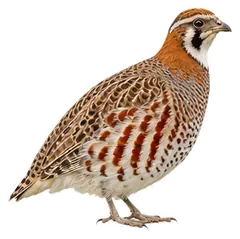 Tibetan PartridgePerdix hodgsoniae
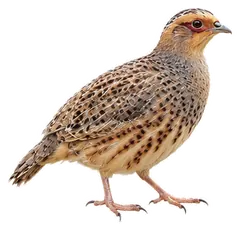 Daurian PartridgePerdix dauurica
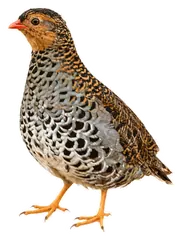 Udzungwa Forest PartridgeXenoperdix udzungwensis
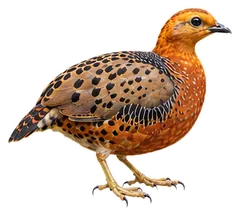 Ferruginous PartridgeCaloperdix oculeus
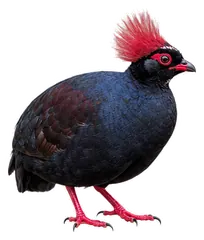 Crested PartridgeRollulus rouloul
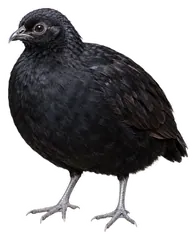 Black PartridgeMelanoperdix niger
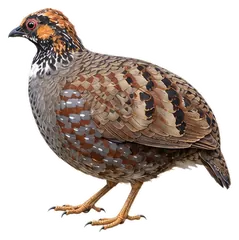 Hill PartridgeArborophila torqueola
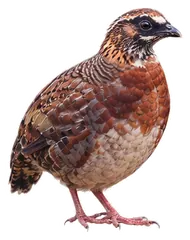 Sichuan PartridgeArborophila rufipectus
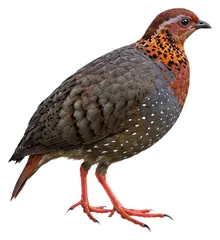 Chestnut-breasted PartridgeArborophila mandellii
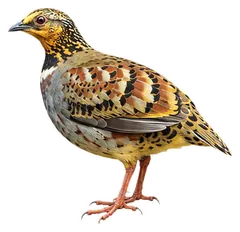 White-necklaced PartridgeArborophila gingica
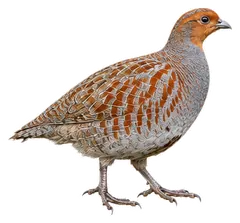
Download illustration
Free to use with credit: “Illustration: Bird Album (birdalbum.com)”. Drawn by AI from a reference photo by patrickgoa. ↗
Heard it but can't see it? Mingji identifies birds by sound and photo, on your phone.