 Bird Album
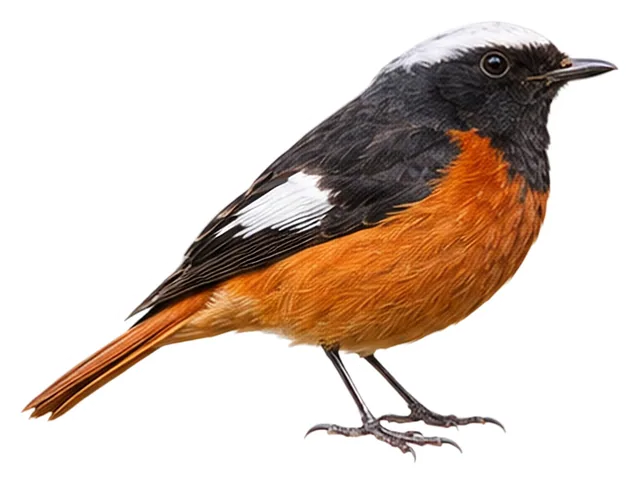
Güldenstädt's Redstart
Phoenicurus erythrogastrus (Güldenstädt, 1775)
18 cmLength24 gWeight
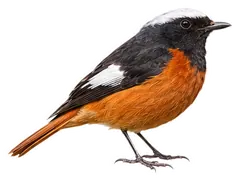
The male has a white crown, black upperparts and an orange-red belly and tail.
Busiest months: May · Most records: China, Mongolia, Georgia
Looks like White-capped Redstart
How to identify
Field marks
- Adult male crown white
- Adult male with a single white wing patch
- Adult male throat and upper breast black; remaining underparts orange-red
- Tail orange-red
Male, female and young
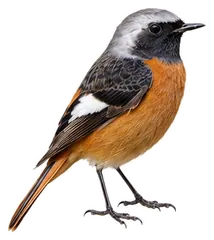
Female and immature male brown above and orange-yellowish-brown below, with an orange-red tail.
Similar species
Where and when it's recorded
Busiest months: May · Most records: China, Mongolia, Georgia

Güldenstädt's Redstart has been recorded at 139 of the 8,276 birding hotspots we track, in 8 countries and regions.
Records by month Northern Hemisphere
Where it's recorded most
- Lingshan Scenic AreaChina307 records
- Mt. Kuro slopesGeorgia203 records
- Khovd Bird Ringing Station, Khovd, MNMongolia117 records
More places
- E'La Mountain PassChina95 records
- Ile-Alatau NP – Kosmos StationKazakhstan94 records
- Khukh lake NR, Gurvanbulag, Bayankhongor, MNMongolia49 records
- Ile-Alatau NPKazakhstan38 records
- Dalangiin bulag, Dalandzadagad city, Ömnögovi, MNMongolia36 records
- Rubber Mountain PassChina34 records
- 3850 ) [Arabelskye syrty (3850 m)]Kyrgyzstan29 records
Countries and regions with the most records
eBird records via GBIF up to 2024-12-31. A record means someone listed it; more records partly mean more birders, not more birds.
About
Güldenstädt's redstart (Phoenicurus erythrogastrus), also known as the white-winged redstart, is a species of bird in the genus Phoenicurus, family Muscicapidae. It is found in the high mountains of the southwestern and central Palearctic in the Caucasus, Karakoram, Pamir, Himalaya, Tian Shan, and Altai, in the countries of Afghanistan, Armenia, Azerbaijan, Bhutan, China, Georgia, India, Iran, Kazakhstan, Mongolia, Nepal, Pakistan, Russia, Tajikistan, Turkmenistan, and Uzbekistan.
Excerpt from Wikipedia, CC BY-SA 4.0 · authors · Read more on Wikipedia
Questions
How big is the Güldenstädt's Redstart?
The Güldenstädt's Redstart is about 18 cm long and weighs around 24 g.
Where does the Güldenstädt's Redstart live?
Its breeding range: Palearctic: south-central, east-central. It is most often recorded in China, Mongolia and Georgia.
When is the best time to see the Güldenstädt's Redstart?
At the hotspots we track, it is recorded most in May (Northern Hemisphere).
Is the Güldenstädt's Redstart endangered?
The IUCN Red List classifies the Güldenstädt's Redstart as Least Concern.
What does the Güldenstädt's Redstart eat?
Main food: Insects & other invertebrates.
What family is the Güldenstädt's Redstart in?
It belongs to the family Chats, Old World Flycatchers (Muscicapidae), order Passerines (Passeriformes).
At a glance
- Length
- 18 cm
- Weight
- 24 g
- Habitat
- Grassland
- Diet
- Insects & other invertebrates
- Lifestyle
- Perches in trees
- Migration
- Partial migrant
- Conservation
- Least Concern
More measurements
- Wing
- 97 mm
- Tail
- 74 mm
- Bill
- 16 mm
- Tarsus
- 26 mm
Averages from the AVONET dataset; length from field guides where available.
Range
Palearctic: south-central, east-central
Breeding range, IOC World Bird List 15.2
Subspecies · 1
- Phoenicurus erythrogastrus grandis e Afghanistan to sc Siberia, w Mongolia and nw, c China | non-breeding: to s China
Classification
- Order
- Passerines Passeriformes
- Family
- Chats, Old World Flycatchers Muscicapidae
- Genus
- Phoenicurus
Other birds in the genus Phoenicurus
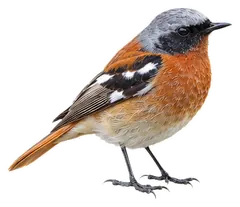 Eversmann's RedstartPhoenicurus erythronotus
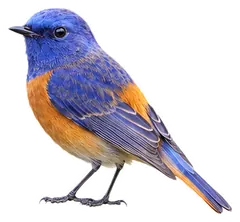 Blue-fronted RedstartPhoenicurus frontalis
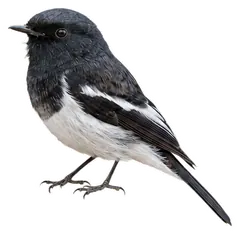 Blue-capped RedstartPhoenicurus coeruleocephala
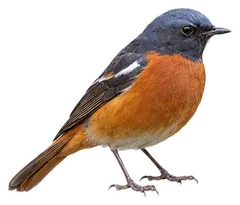 White-throated RedstartPhoenicurus schisticeps
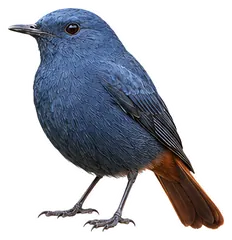 Plumbeous Water RedstartPhoenicurus fuliginosus
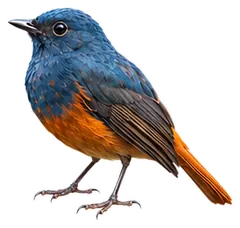 Luzon Water RedstartPhoenicurus bicolor
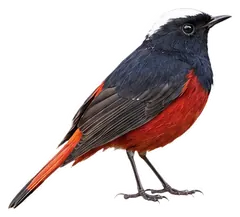 White-capped RedstartPhoenicurus leucocephalus
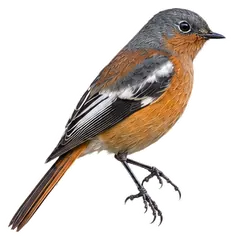 Przevalski's RedstartPhoenicurus alaschanicus
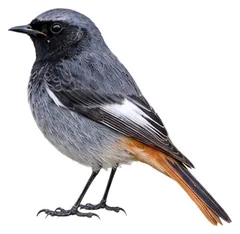 Black RedstartPhoenicurus ochruros
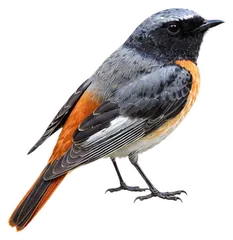 Common RedstartPhoenicurus phoenicurus
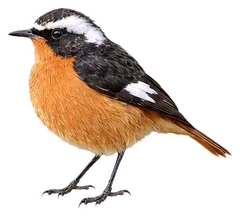 Moussier's RedstartPhoenicurus moussieri
 Daurian RedstartPhoenicurus auroreus
Download illustration
Free to use with credit: “Illustration: Bird Album (birdalbum.com)”. Drawn by AI from a reference photo by Mvshreeram. ↗

Heard it but can't see it? Mingji identifies birds by sound and photo, on your phone.
In other languages
- EnglishGüldenstädt's Redstart
- 简体中文红腹红尾鸲
- 繁體中文紅腹紅尾鴝
- 日本語シロガシラジョウビタキ
- 한국어흰날개딱새
- DeutschRiesenrotschwanz
- FrançaisRougequeue de Güldenstädt
- EspañolColirrojo de Güldenstädt
- Portuguêsrabirruivo-de-touca-branca
- ItalianoCodirosso di Guldenstadt
- NederlandsWitkruinroodstaart
- РусскийКраснобрюхая горихвостка
- Svenskabergrödstjärt
- DanskBjergrødstjert
- Polskipleszka kaukaska