 Bird Album
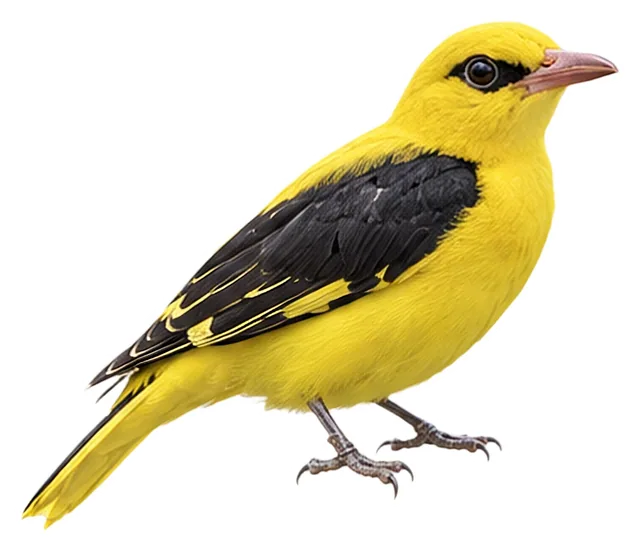
Indian Golden Oriole
Oriolus kundoo Sykes, 1832
≈25 cmLength66 gWeight
The male’s black eyestripe extends beyond the eye.
Busiest months: February · Most records: India, Nepal, Bangladesh
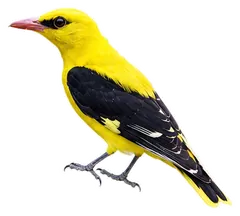
Looks like Eurasian Golden Oriole
How to identify
Field marks
- Male black eyestripe extending beyond the eye
- Male with a large patch at the bend of the wing
- Male secondaries and tertials with broad yellow tips
Similar species
Where and when it's recorded

Indian Golden Oriole has been recorded at 332 of the 8,171 birding hotspots we track, in 13 countries and regions.
Records by month Northern Hemisphere
Where it's recorded most
- GKVK CampusIndia2,568 records
- Kerala Agricultural UniversityIndia1,541 records
- IIT BombayIndia1,415 records
More places
- Saul Kere / Sowl KereIndia1,415 records
- Bhandup Pumping StationIndia1,217 records
- Kanha NP – Mukki ZoneIndia1,177 records
- KattampallyIndia1,160 records
- Valley SchoolIndia1,081 records
- Fergusson College CampusIndia1,081 records
- Bharatpur – Keoladeo Ghana NPIndia1,054 records
Countries and regions with the most records
eBird records via GBIF up to 2024-12-31. A record means someone listed it; more records partly mean more birders, not more birds.
About
The Indian golden oriole (Oriolus kundoo) is a species of oriole found in the Indian subcontinent and Central Asia. The species was formerly considered to be a subspecies of the Eurasian golden oriole, but is now considered a full species.
Excerpt from Wikipedia, CC BY-SA 4.0 · authors · Read more on Wikipedia
Questions
How big is the Indian Golden Oriole?
The Indian Golden Oriole is about ≈25 cm long and weighs around 66 g.
Where does the Indian Golden Oriole live?
Its breeding range: Palearctic: southern Kazakhstan to eastern China south to central Afghanistan, northern Pakistan, Nepal and central India. It is most often recorded in India, Nepal and Bangladesh.
When is the best time to see the Indian Golden Oriole?
At the hotspots we track, it is recorded most in February (Northern Hemisphere).
Is the Indian Golden Oriole endangered?
The IUCN Red List classifies the Indian Golden Oriole as Least Concern.
What does the Indian Golden Oriole eat?
Main food: Omnivore.
What family is the Indian Golden Oriole in?
It belongs to the family Figbirds, Old World Orioles, Piopios (Oriolidae), order Passerines (Passeriformes).
At a glance
- Length
- ≈25 cm
- Weight
- 66 g
- Habitat
- Woodland
- Diet
- Omnivore
- Lifestyle
- Perches in trees
- Migration
- Migratory
- Conservation
- Least Concern
More measurements
- Wing
- 139 mm
- Tail
- 85 mm
- Bill
- 31 mm
- Tarsus
- 24 mm
Averages from the AVONET dataset; length from field guides where available.
Range
Palearctic: southern Kazakhstan to eastern China south to central Afghanistan, northern Pakistan, Nepal and central India
Breeding range, IOC World Bird List 15.2
Classification
- Order
- Passerines Passeriformes
- Family
- Figbirds, Old World Orioles, Piopios Oriolidae
- Genus
- Oriolus
Other birds in the genus Oriolus
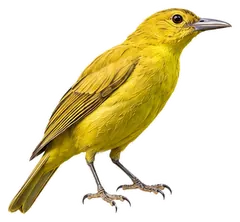 Isabela OrioleOriolus isabellae
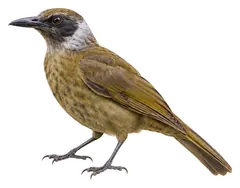 Grey-collared OrioleOriolus forsteni
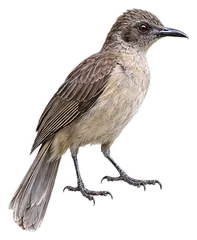 Black-eared OrioleOriolus bouroensis
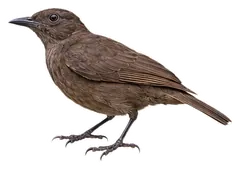 Dusky-brown OrioleOriolus phaeochromus
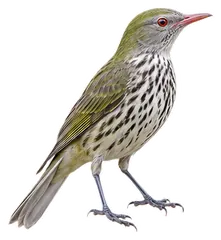 Olive-backed OrioleOriolus sagittatus
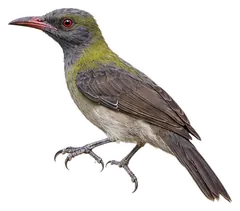 Timor OrioleOriolus melanotis
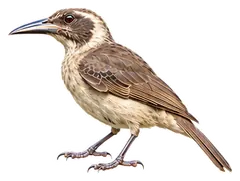 Wetar OrioleOriolus finschi
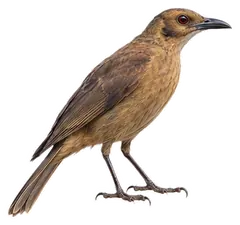 Tanimbar OrioleOriolus decipiens
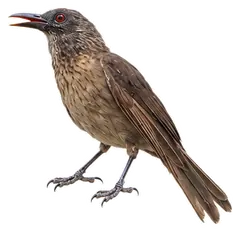 Brown OrioleOriolus szalayi
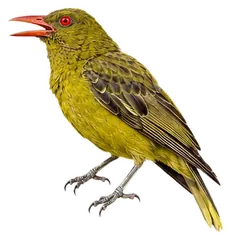 Green OrioleOriolus flavocinctus
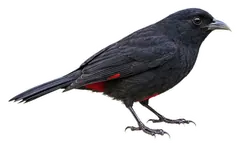 Javan OrioleOriolus cruentus
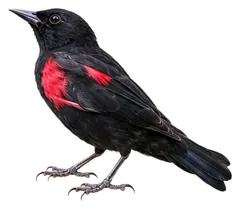 Black-and-crimson OrioleOriolus consanguineus
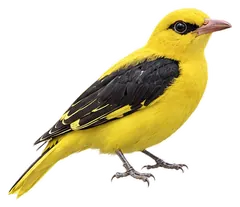
Download illustration
Free to use with credit: “Illustration: Bird Album (birdalbum.com)”. Drawn by AI from a reference photo by Sriram Reddy. ↗
Heard it but can't see it? Mingji identifies birds by sound and photo, on your phone.