 Bird Album
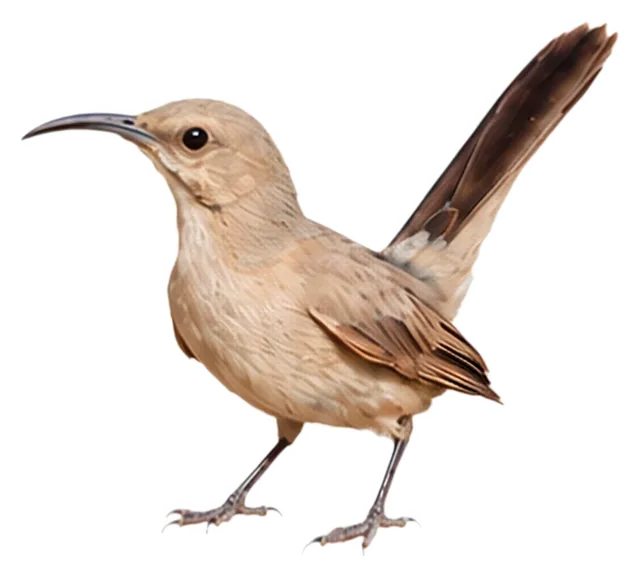
LeConte's Thrasher
Toxostoma lecontei Lawrence, 1851
62 gWeight
LeConte's thrasher (Toxostoma lecontei) is a pale bird found in the southwestern United States and northwestern Mexico.
Busiest months: September · Most records: United States, Mexico
Where and when it's recorded

LeConte's Thrasher has been recorded at 7 of the 8,171 birding hotspots we track, in 2 countries and regions.
Records by month Northern Hemisphere
Where it's recorded most
- Piute PondsUnited States1,168 records
- China Lake NAWS – Sewage PondsUnited States586 records
- Desert NWR – Corn CreekUnited States147 records
More places
- Big Morongo Canyon Preserve & Covington ParkUnited States15 records
- Henderson Bird Viewing PreserveUnited States10 records
- Laguna San IgnacioMexico6 records
- Floyd Lamb Park at Tule SpringsUnited States3 records
Countries and regions with the most records
eBird records via GBIF up to 2024-12-31. A record means someone listed it; more records partly mean more birders, not more birds.
About
LeConte's thrasher (Toxostoma lecontei) is a pale bird found in the southwestern United States and northwestern Mexico. It prefers to live in deserts with very little vegetation, where it blends in with the sandy soils. LeConte's thrashers are nonmigratory birds that reside in the same territory annually.
Excerpt from Wikipedia, CC BY-SA 4.0 · authors · Read more on Wikipedia
Questions
How big is the LeConte's Thrasher?
The LeConte's Thrasher weighs around 62 g.
Where does the LeConte's Thrasher live?
Its breeding range: North America, Middle America: southwestern USA and northwestern Mexico. It is most often recorded in United States and Mexico.
When is the best time to see the LeConte's Thrasher?
At the hotspots we track, it is recorded most in September (Northern Hemisphere).
Is the LeConte's Thrasher endangered?
The IUCN Red List classifies the LeConte's Thrasher as Least Concern.
What does the LeConte's Thrasher eat?
Main food: Insects & other invertebrates.
What family is the LeConte's Thrasher in?
It belongs to the family Mockingbirds, Thrashers (Mimidae), order Passerines (Passeriformes).
At a glance
- Weight
- 62 g
- Habitat
- Shrubland
- Diet
- Insects & other invertebrates
- Lifestyle
- Active on the ground
- Migration
- Partial migrant
- Conservation
- Least Concern
More measurements
- Wing
- 96 mm
- Tail
- 115 mm
- Bill
- 37 mm
- Tarsus
- 31 mm
Averages from the AVONET dataset; length from field guides where available.
Range
North America, Middle America: southwestern USA and northwestern Mexico
Breeding range, IOC World Bird List 15.2
Classification
- Order
- Passerines Passeriformes
- Family
- Mockingbirds, Thrashers Mimidae
- Genus
- Toxostoma
Other birds in the genus Toxostoma
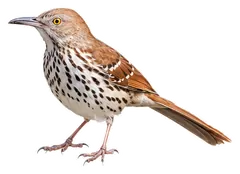 Brown ThrasherToxostoma rufum
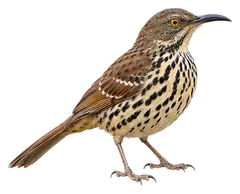 Long-billed ThrasherToxostoma longirostre
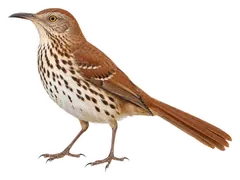 Cozumel ThrasherToxostoma guttatum
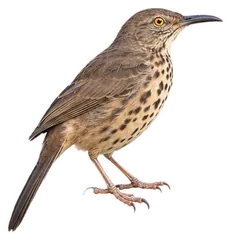 Grey ThrasherToxostoma cinereum
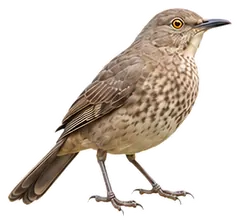 Bendire's ThrasherToxostoma bendirei
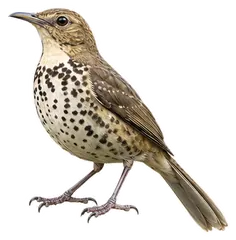 Ocellated ThrasherToxostoma ocellatum
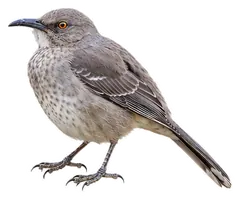 Curve-billed ThrasherToxostoma curvirostre
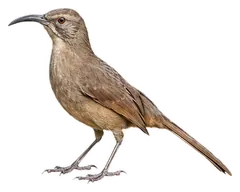 California ThrasherToxostoma redivivum
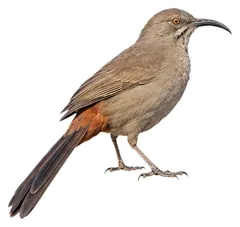 Crissal ThrasherToxostoma crissale
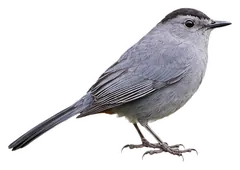 Grey CatbirdDumetella carolinensis
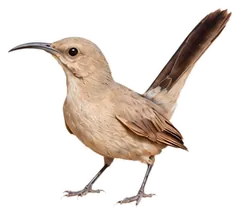
Download illustration
Free to use with credit: “Illustration: Bird Album (birdalbum.com)”. Drawn by AI from a reference photo by Andrew Core. ↗
Heard it but can't see it? Mingji identifies birds by sound and photo, on your phone.
In other languages
- EnglishLeConte's Thrasher
- 简体中文勒氏弯嘴嘲鸫
- 繁體中文來康氏矢嘲鶇
- 日本語サボテンムジツグミモドキ
- DeutschWüstenspottdrossel
- FrançaisMoqueur de LeConte
- EspañolCuitlacoche pálido
- Portuguêsdebulhador-pálido
- ItalianoMimo di Le Conte
- NederlandsWoestijnspotlijster
- РусскийПустынный пересмешник
- Svenskamojavehärmtrast
- DanskMojave Røddrossel
- Polskiprzedrzeźniacz piaskowy