 Bird Album
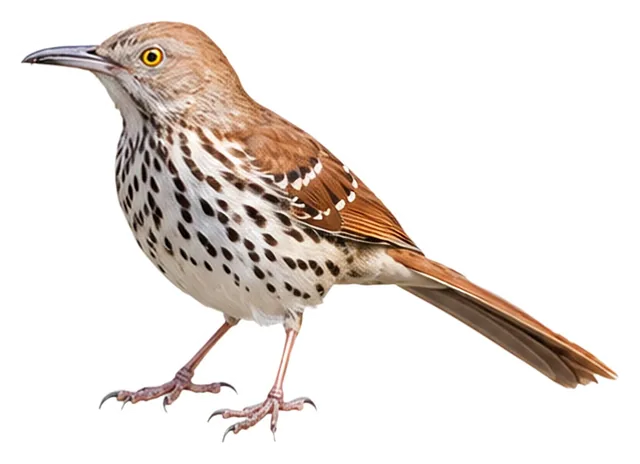
Brown Thrasher
Toxostoma rufum (Linnaeus, 1758)
69 gWeight
The brown thrasher (Toxostoma rufum), sometimes erroneously called the brown thrush or fox-coloured thrush, is a bird in the family Mimidae, which also includes the New World catbirds and mockingbirds.
Busiest months: May · Most records: United States, Canada, St. Pierre & Miquelon
Where and when it's recorded

Brown Thrasher has been recorded at 556 of the 8,276 birding hotspots we track, in 5 countries and regions.
Records by month Northern Hemisphere
Where it's recorded most
- Parker River NWRUnited States10,307 records
- Montrose Point Bird Sanctuary, Lincoln Park, ChicagoUnited States9,466 records
- Sabine WoodsUnited States9,083 records
More places
- Tawas Point SPUnited States8,395 records
- Galveston – Lafitte's CoveUnited States7,555 records
- Cape Island – Higbee Beach WMAUnited States7,354 records
- Point Pelee National ParkCanada6,034 records
- Bombay Hook National Wildlife RefugeUnited States5,991 records
- Conestee Nature PreserveUnited States5,955 records
- Central ParkUnited States4,437 records
Countries and regions with the most records
eBird records via GBIF up to 2024-12-31. A record means someone listed it; more records partly mean more birders, not more birds.
About
The brown thrasher (Toxostoma rufum), sometimes erroneously called the brown thrush or fox-coloured thrush, is a bird in the family Mimidae, which also includes the New World catbirds and mockingbirds. The brown thrasher is abundant throughout the eastern and central United States and southern and central Canada, and it is the only thrasher to live primarily east of the Rockies and central Texas. It is the state bird of Georgia.
Excerpt from Wikipedia, CC BY-SA 4.0 · authors · Read more on Wikipedia
Questions
How big is the Brown Thrasher?
The Brown Thrasher weighs around 69 g.
Where does the Brown Thrasher live?
Its breeding range: North America: central, eastern, southeastern. It is most often recorded in United States, Canada and St. Pierre & Miquelon.
When is the best time to see the Brown Thrasher?
At the hotspots we track, it is recorded most in May (Northern Hemisphere).
Is the Brown Thrasher endangered?
The IUCN Red List classifies the Brown Thrasher as Least Concern.
What does the Brown Thrasher eat?
Main food: Omnivore.
What family is the Brown Thrasher in?
It belongs to the family Mockingbirds, Thrashers (Mimidae), order Passerines (Passeriformes).
At a glance
- Weight
- 69 g
- Habitat
- Shrubland
- Diet
- Omnivore
- Lifestyle
- Varied
- Migration
- Partial migrant
- Conservation
- Least Concern
More measurements
- Wing
- 102 mm
- Tail
- 122 mm
- Bill
- 30 mm
- Tarsus
- 34 mm
Averages from the AVONET dataset; length from field guides where available.
Range
North America: central, eastern, southeastern
Breeding range, IOC World Bird List 15.2
Classification
- Order
- Passerines Passeriformes
- Family
- Mockingbirds, Thrashers Mimidae
- Genus
- Toxostoma
Other birds in the genus Toxostoma
 Long-billed ThrasherToxostoma longirostre
 Cozumel ThrasherToxostoma guttatum
 Grey ThrasherToxostoma cinereum
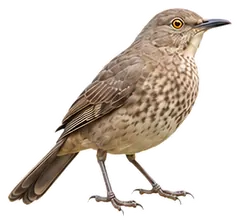 Bendire's ThrasherToxostoma bendirei
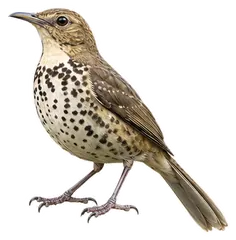 Ocellated ThrasherToxostoma ocellatum
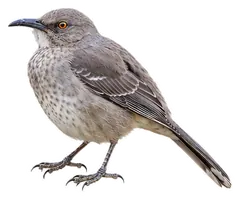 Curve-billed ThrasherToxostoma curvirostre
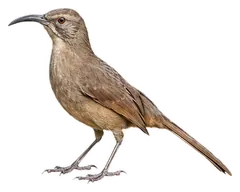 California ThrasherToxostoma redivivum
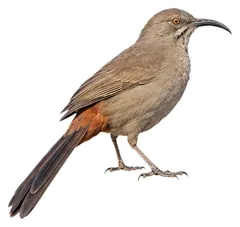 Crissal ThrasherToxostoma crissale
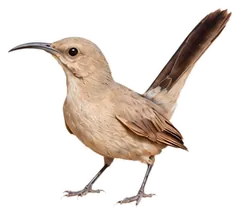 LeConte's ThrasherToxostoma lecontei
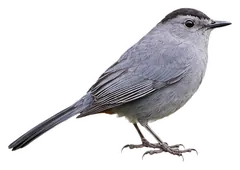 Grey CatbirdDumetella carolinensis
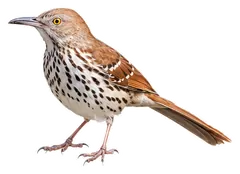
Download illustration
Free to use with credit: “Illustration: Bird Album (birdalbum.com)”. Drawn by AI from a reference photo by Tim Buskirk. ↗
Heard it but can't see it? Mingji identifies birds by sound and photo, on your phone.