 Bird Album
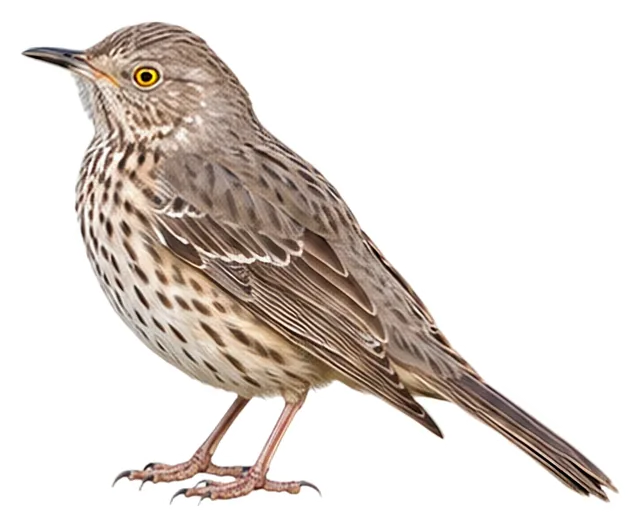
Sage Thrasher
Oreoscoptes montanus (Townsend, JK, 1837)
20–23 cmLength44 gWeight
The sage thrasher (Oreoscoptes montanus) is a medium-sized passerine bird in the family Mimidae.
Busiest months: September–October · Most records: United States, Canada, Mexico
Where and when it's recorded

Sage Thrasher has been recorded at 170 of the 8,171 birding hotspots we track, in 3 countries and regions.
Records by month Northern Hemisphere
Where it's recorded most
- Southeast Farallon IslandUnited States731 records
- Rocky Mountain Arsenal NWRUnited States635 records
- Antelope Island SP – CausewayUnited States464 records
More places
- Lagerman Agricultural Preserve – Lagerman ReservoirUnited States435 records
- Malheur NWR – HeadquartersUnited States395 records
- Desert NWR – Corn CreekUnited States383 records
- Gilsland Farm Audubon CenterUnited States267 records
- San Jacinto Wildlife AreaUnited States259 records
- Piute PondsUnited States228 records
- Coyote Hills Regional ParkUnited States171 records
Countries and regions with the most records
eBird records via GBIF up to 2024-12-31. A record means someone listed it; more records partly mean more birders, not more birds.
About
The sage thrasher (Oreoscoptes montanus) is a medium-sized passerine bird in the family Mimidae. It is the only species in the genus Oreoscoptes and the smallest of the thrashers. It is found in the regions of western North America, breeding from the Great Basin to southern British Columbia, and migrates south to southern United States and northern Mexico for winter.
Excerpt from Wikipedia, CC BY-SA 4.0 · authors · Read more on Wikipedia
Questions
How big is the Sage Thrasher?
The Sage Thrasher is about 20–23 cm long and weighs around 44 g.
Where does the Sage Thrasher live?
Its breeding range: North America: western, southwestern USA. It is most often recorded in United States, Canada and Mexico.
When is the best time to see the Sage Thrasher?
At the hotspots we track, it is recorded most in September and October (Northern Hemisphere).
Is the Sage Thrasher endangered?
The IUCN Red List classifies the Sage Thrasher as Least Concern.
What does the Sage Thrasher eat?
Main food: Insects & other invertebrates.
What family is the Sage Thrasher in?
It belongs to the family Mockingbirds, Thrashers (Mimidae), order Passerines (Passeriformes).
At a glance
- Length
- 20–23 cm
- Weight
- 44 g
- Habitat
- Shrubland
- Diet
- Insects & other invertebrates
- Lifestyle
- Active on the ground
- Migration
- Migratory
- Conservation
- Least Concern
More measurements
- Wing
- 98 mm
- Tail
- 96 mm
- Bill
- 21 mm
- Tarsus
- 29 mm
Averages from the AVONET dataset; length from field guides where available.
Range
North America: western, southwestern USA
Breeding range, IOC World Bird List 15.2
Classification
- Order
- Passerines Passeriformes
- Family
- Mockingbirds, Thrashers Mimidae
- Genus
- Oreoscoptes
More from the family Mockingbirds, Thrashers
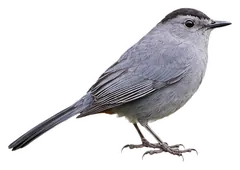 Grey CatbirdDumetella carolinensis
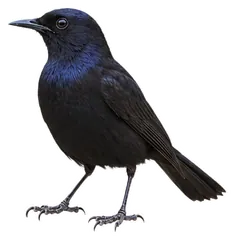 Black CatbirdMelanoptila glabrirostris
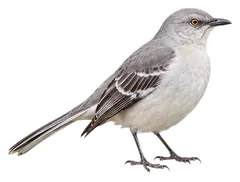 Northern MockingbirdMimus polyglottos
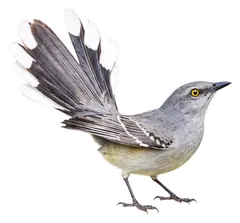 Tropical MockingbirdMimus gilvus
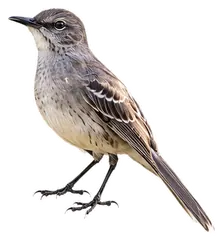 Bahama MockingbirdMimus gundlachii
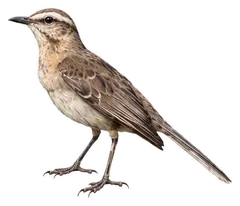 Chilean MockingbirdMimus thenca
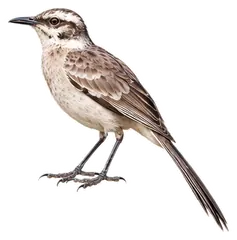 Long-tailed MockingbirdMimus longicaudatus
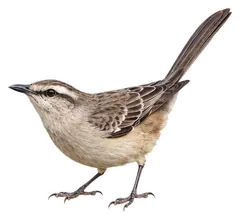 Chalk-browed MockingbirdMimus saturninus
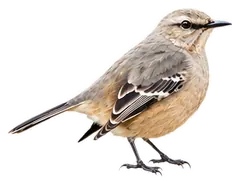 Patagonian MockingbirdMimus patagonicus
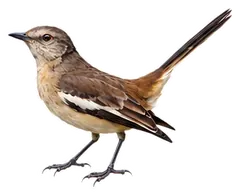 White-banded MockingbirdMimus triurus
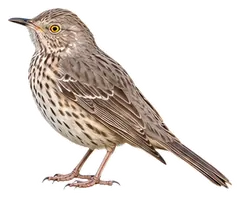
Download illustration
Free to use with credit: “Illustration: Bird Album (birdalbum.com)”. Drawn by AI from a reference photo by Nancy Christensen. ↗
Heard it but can't see it? Mingji identifies birds by sound and photo, on your phone.
In other languages
- EnglishSage Thrasher
- 简体中文高山弯嘴嘲鸫
- 繁體中文高山矢嘲鶇
- 日本語ウタイマネシツグミ
- DeutschBeifuß-Spottdrossel
- FrançaisMoqueur des armoises
- EspañolCuitlacoche de las artemisas
- Portuguêsdebulhador-das-artemísias
- ItalianoMimo della salvia
- NederlandsBergspotlijster
- РусскийПолынный пересмешник
- Svenskamalörtshärmtrast
- DanskBjergspottedrossel
- Polskiprzedrzeźniacz smugowany