Little Egret
Egretta garzetta (Linnaeus, 1766)
55–65 cmLength92 cmWingspan312 gWeight
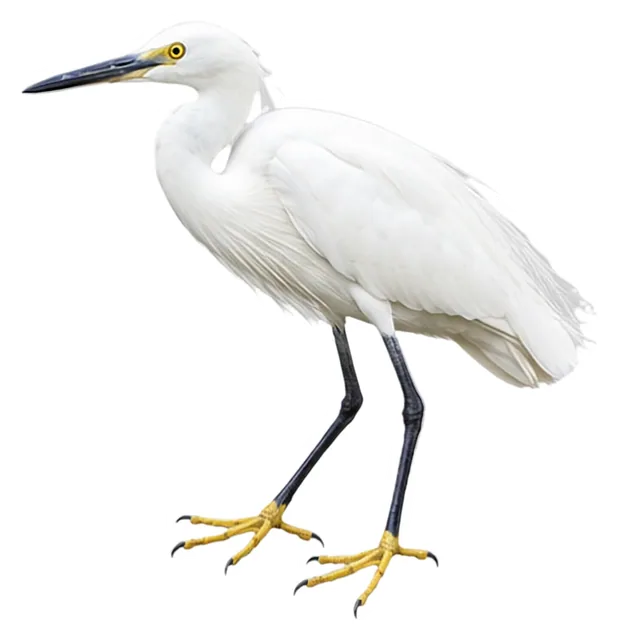
It is a small, all-white heron with a black bill and legs, with yellow feet in Asian, European and African populations.
Busiest months: September–January and March–April · Most records: China, United Kingdom, India
How to identify
Field marks
- Feathers usually all white
- Slender black bill
- Black legs; yellow feet in Asian, European and African populations
- Gray-green bare skin around the eye; yellow iris
Male, female and young
Juveniles resemble adults in the non-breeding season but have greenish-black legs and duller yellow feet.
Voice
Usually quiet; gives croaking and gurgling calls at breeding sites, and a grating alarm call when startled.
Where and when it's recorded
Busiest months: September–January and March–April · Most records: China, United Kingdom, India

Little Egret has been recorded at 4,274 of the 8,276 birding hotspots we track, in 169 countries and regions.
Records by month Northern Hemisphere
Where it's recorded most
- Titchwell Marsh RSPB ReserveUnited Kingdom6,969 records
- Amwell HMWT NRUnited Kingdom6,109 records
- Txingudi – PlaiaundiSpain6,055 records
More places
- Taipei – Tianliaoyang WetlandTaiwan (China)5,864 records
- Desembocadura del Guadalhorce – ÁreaSpain5,297 records
- International Birding and Research Center Eilat (IBRCE)Israel5,257 records
- Mai Po Nature ReserveHong Kong (China)4,577 records
- Western Treatment PlantAustralia4,282 records
- Sungei Buloh Wetland ReserveSingapore4,278 records
- Huajiang IBA – Huajiang Wild Duck Nature Park (Huajiang to Zhongxing Bridge)Taiwan (China)4,234 records
Countries and regions with the most records
eBird records via GBIF up to 2024-12-31. A record means someone listed it; more records partly mean more birders, not more birds.
About
The little egret (Egretta garzetta) is a species of small heron in the family Ardeidae. It is a white bird with a slender black beak, long black legs and, in the western race, yellow feet. As an aquatic bird, it feeds in shallow water and on land, consuming a variety of small creatures.
Excerpt from Wikipedia, CC BY-SA 4.0 · authors · Read more on Wikipedia
Questions
How big is the Little Egret?
The Little Egret is about 55–65 cm long, with a wingspan of 92 cm and weighs around 312 g.
Where does the Little Egret live?
Its breeding range: Palearctic, Africa, Oriental, Australasia: widespread. It is most often recorded in China, United Kingdom and India.
When is the best time to see the Little Egret?
At the hotspots we track, it is recorded most in January, March, April, September, October, November and December (Northern Hemisphere).
Is the Little Egret endangered?
The IUCN Red List classifies the Little Egret as Least Concern.
What does the Little Egret eat?
Main food: Fish, shrimp & shellfish.
What family is the Little Egret in?
It belongs to the family Herons, Bitterns (Ardeidae), order Pelecaniformes.
At a glance
- Length
- 55–65 cm
- Wingspan
- 92 cm
- Weight
- 312 g
- Habitat
- Wetland
- Diet
- Fish, shrimp & shellfish
- Lifestyle
- Active on the ground
- Migration
- Partial migrant
- Conservation
- Least Concern
More measurements
- Wing
- 252 mm
- Tail
- 94 mm
- Bill
- 95 mm
- Tarsus
- 99 mm
Averages from the AVONET dataset; length from field guides where available.
Range
Palearctic, Africa, Oriental, Australasia: widespread
Breeding range, IOC World Bird List 15.2
Classification
- Order
- Pelecaniformes
- Family
- Herons, Bitterns Ardeidae
- Genus
- Egretta
Other birds in the genus Egretta
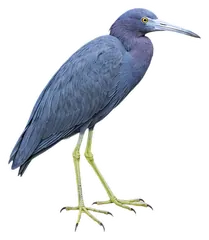 Little Blue HeronEgretta caerulea
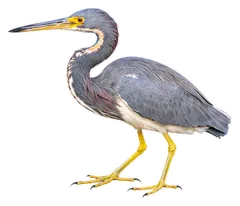 Tricolored HeronEgretta tricolor
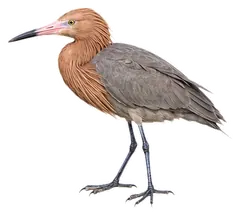 Reddish EgretEgretta rufescens
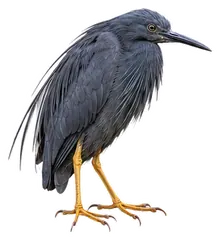 Slaty EgretEgretta vinaceigula
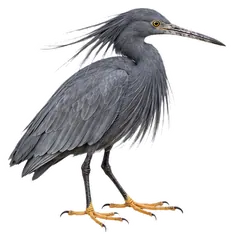 Black HeronEgretta ardesiaca
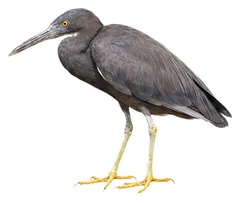 Pacific Reef HeronEgretta sacra
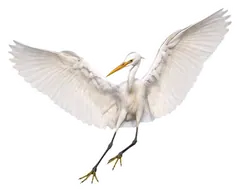 Chinese EgretEgretta eulophotes
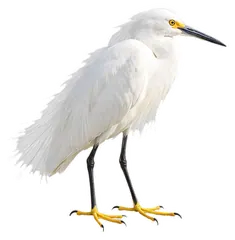 Snowy EgretEgretta thula
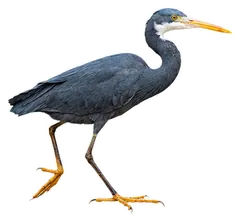 Western Reef HeronEgretta gularis
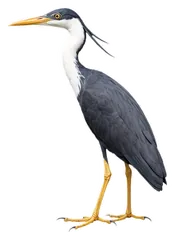 Pied HeronEgretta picata
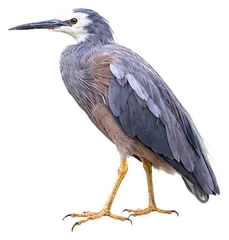 White-faced HeronEgretta novaehollandiae
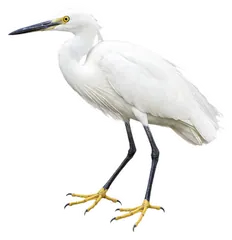
Download illustration
Free to use with credit: “Illustration: Bird Album (birdalbum.com)”. Drawn by AI from a reference photo by Shantanu Kuveskar. ↗

Heard it but can't see it? Mingji identifies birds by sound and photo, on your phone.