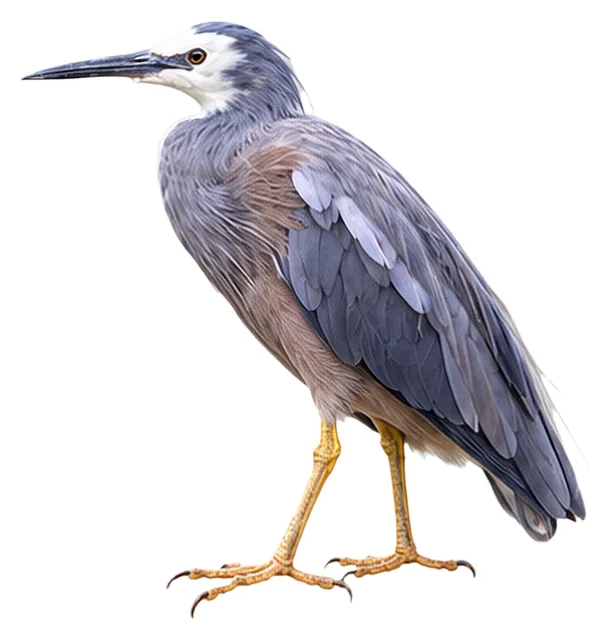
White-faced Heron
Egretta novaehollandiae (Latham, 1790)
≈53 cmLength106 cmWingspan559 gWeight
It has a pale blue-gray body, a white face and yellow legs.
Busiest months: January and October–November · Most records: Australia, New Zealand, Norfolk Island
How to identify
Field marks
- Body mostly pale blue-gray
- White forehead, crown, chin and upper throat
- Black lores
- Black bill, often pale gray at the base
Male, female and young
Immatures are paler gray, with white confined to the throat and often a reddish wash on the underparts.
Voice
Often gives a harsh, coarse, low “graak” or “graaw”.
Where and when it's recorded
Busiest months: January and October–November · Most records: Australia, New Zealand, Norfolk Island

White-faced Heron has been recorded at 407 of the 8,276 birding hotspots we track, in 13 countries and regions.
Records by month Southern Hemisphere
Where it's recorded most
- Western Treatment PlantAustralia8,434 records
- Jerrabomberra Wetlands Nature ReserveAustralia6,381 records
- Centennial ParkAustralia2,209 records
More places
- Western Treatment Plant – T Section PondsAustralia2,137 records
- Tinchi Tamba Wetlands ReserveAustralia2,061 records
- Oxley Creek CommonAustralia2,060 records
- Townsville Town Common Conservation ParkAustralia2,046 records
- Cairns EsplanadeAustralia2,011 records
- Hunter Wetlands National Park – Stockton SandspitAustralia1,850 records
- Bowra Wildlife SanctuaryAustralia1,826 records
Countries and regions with the most records
eBird records via GBIF up to 2024-12-31. A record means someone listed it; more records partly mean more birders, not more birds.
About
The white-faced heron (Egretta novaehollandiae) also known as the white-fronted heron, and incorrectly as the grey heron, or blue crane, is a common bird throughout most of Australasia, including New Guinea, the islands of Torres Strait, Indonesia, New Zealand, and all but the driest areas of Australia.
Excerpt from Wikipedia, CC BY-SA 4.0 · authors · Read more on Wikipedia
Questions
How big is the White-faced Heron?
The White-faced Heron is about ≈53 cm long, with a wingspan of 106 cm and weighs around 559 g.
Where does the White-faced Heron live?
Its breeding range: Australasia: Timor (eastern Lesser Sundas), Australasia to New Caledonia, Fiji and Tonga (southwestern, south-central Polynesia). It is most often recorded in Australia, New Zealand and Norfolk Island.
When is the best time to see the White-faced Heron?
At the hotspots we track, it is recorded most in January, October and November (Southern Hemisphere).
Is the White-faced Heron endangered?
The IUCN Red List classifies the White-faced Heron as Least Concern.
What does the White-faced Heron eat?
Main food: Fish, shrimp & shellfish.
What family is the White-faced Heron in?
It belongs to the family Herons, Bitterns (Ardeidae), order Pelecaniformes.
At a glance
- Length
- ≈53 cm
- Wingspan
- 106 cm
- Weight
- 559 g
- Habitat
- Wetland
- Diet
- Fish, shrimp & shellfish
- Lifestyle
- Active on the ground
- Migration
- Resident (barely migrates)
- Conservation
- Least Concern
More measurements
- Wing
- 298 mm
- Tail
- 115 mm
- Bill
- 81 mm
- Tarsus
- 89 mm
Averages from the AVONET dataset; length from field guides where available.
Range
Australasia: Timor (eastern Lesser Sundas), Australasia to New Caledonia, Fiji and Tonga (southwestern, south-central Polynesia)
Breeding range, IOC World Bird List 15.2
Classification
- Order
- Pelecaniformes
- Family
- Herons, Bitterns Ardeidae
- Genus
- Egretta
Other birds in the genus Egretta
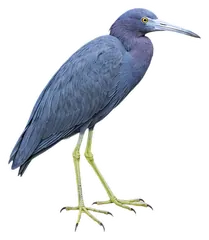 Little Blue HeronEgretta caerulea
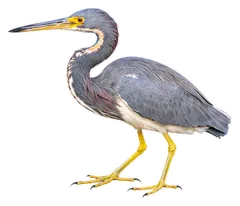 Tricolored HeronEgretta tricolor
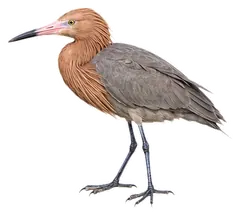 Reddish EgretEgretta rufescens
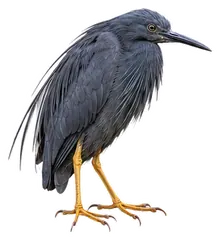 Slaty EgretEgretta vinaceigula
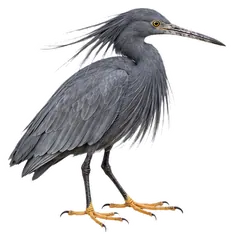 Black HeronEgretta ardesiaca
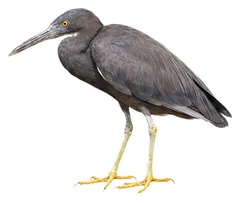 Pacific Reef HeronEgretta sacra
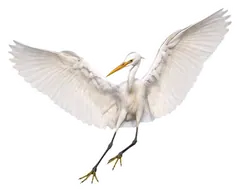 Chinese EgretEgretta eulophotes
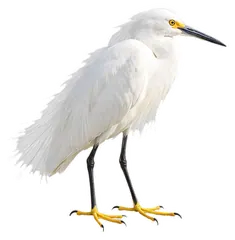 Snowy EgretEgretta thula
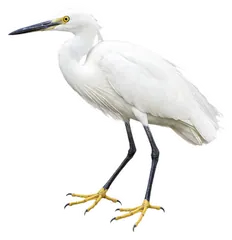 Little EgretEgretta garzetta
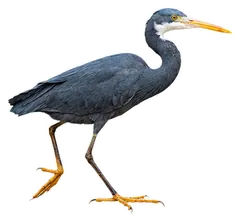 Western Reef HeronEgretta gularis
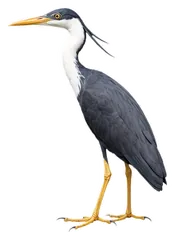 Pied HeronEgretta picata
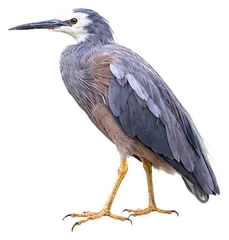
Download illustration
Free to use with credit: “Illustration: Bird Album (birdalbum.com)”. Drawn by AI from a reference photo by Andrew Jamieson. ↗
Heard it but can't see it? Mingji identifies birds by sound and photo, on your phone.