 Bird Album
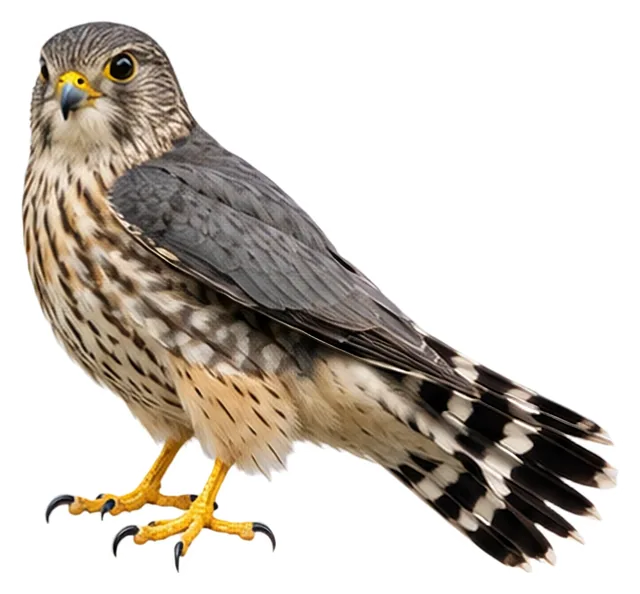
Merlin
Falco columbarius Linnaeus, 1758
24–33 cmLength60 cmWingspan188 gWeight
A small falcon whose male has a blue-gray back, it flies fast and low and often harasses larger raptors.
Busiest months: September–October · Most records: United States, Canada, United Kingdom
How to identify
Field marks
- Male has blue-gray back
- Male has pale yellowish-brown to orange belly with markings
- Tail usually has three or four black bands and a narrow white tip
- Yellow cere on the bill; legs and feet yellow
Male, female and young
Females and juveniles have a gray-brown to dark brown back and a white belly with brown spots; the female is slightly larger.
Where and when it's recorded
Busiest months: September–October · Most records: United States, Canada, United Kingdom

Merlin has been recorded at 2,551 of the 8,276 birding hotspots we track, in 117 countries and regions.
Records by month Northern Hemisphere
Where it's recorded most
- Cape Island – CMPSP – Hawkwatch PlatformUnited States8,081 records
- Whitefish PointUnited States6,358 records
- Cape Island – Cape May Point SPUnited States5,792 records
More places
- Cape Island – South Cape May MeadowsUnited States5,433 records
- Parker River NWRUnited States4,833 records
- Monhegan IslandUnited States4,581 records
- Sandy HookUnited States4,191 records
- Cape Island – Higbee Beach WMAUnited States3,707 records
- Cape Island – CMP – Coral Ave. dune crossingUnited States3,431 records
- Hawk Ridge Nature ReserveUnited States3,422 records
Countries and regions with the most records
eBird records via GBIF up to 2024-12-31. A record means someone listed it; more records partly mean more birders, not more birds.
About
The merlin (Falco columbarius) is a small species of falcon from the Northern Hemisphere, with numerous subspecies throughout North America and Eurasia. A bird of prey, the merlin breeds in the northern Holarctic; some migrate to subtropical and northern tropical regions in winter. Males typically have wingspans of 53–58 centimetres (21–23 in), with females being slightly larger.
Excerpt from Wikipedia, CC BY-SA 4.0 · authors · Read more on Wikipedia
Questions
How big is the Merlin?
The Merlin is about 24–33 cm long, with a wingspan of 60 cm and weighs around 188 g.
Where does the Merlin live?
Its breeding range: North America, Palearctic: widespread. It is most often recorded in United States, Canada and United Kingdom.
When is the best time to see the Merlin?
At the hotspots we track, it is recorded most in September and October (Northern Hemisphere).
Is the Merlin endangered?
The IUCN Red List classifies the Merlin as Least Concern.
What does the Merlin eat?
Main food: Vertebrate prey.
What family is the Merlin in?
It belongs to the family Caracaras, Falcons (Falconidae), order Falconiformes.
At a glance
- Length
- 24–33 cm
- Wingspan
- 60 cm
- Weight
- 188 g
- Habitat
- Woodland
- Diet
- Vertebrate prey
- Lifestyle
- Feeds in the air
- Migration
- Migratory
- Conservation
- Least Concern
More measurements
- Wing
- 200 mm
- Tail
- 117 mm
- Bill
- 17 mm
- Tarsus
- 34 mm
Averages from the AVONET dataset; length from field guides where available.
Range
North America, Palearctic: widespread
Breeding range, IOC World Bird List 15.2
Subspecies · 1
- Falco columbarius pacificus ne Asia | non-breeding: Japan and e China
Classification
- Order
- Falconiformes
- Family
- Caracaras, Falcons Falconidae
- Genus
- Falco
Other birds in the genus Falco
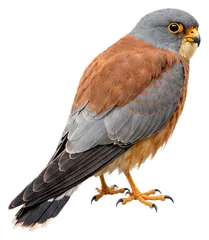 Lesser KestrelFalco naumanni
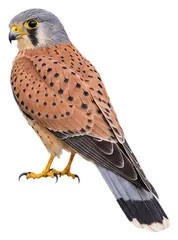 Common KestrelFalco tinnunculus
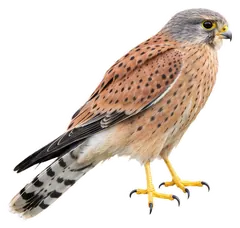 Rock KestrelFalco rupicolus
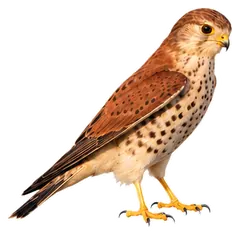 Malagasy KestrelFalco newtoni
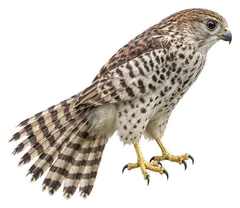 Mauritius KestrelFalco punctatus
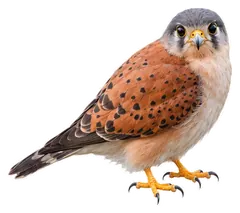 Seychelles KestrelFalco araeus
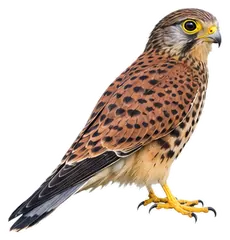 Spotted KestrelFalco moluccensis
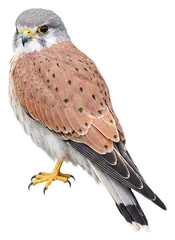 Nankeen KestrelFalco cenchroides
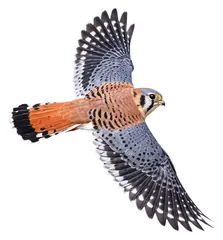 American KestrelFalco sparverius
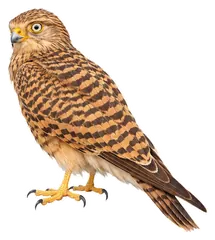 Greater KestrelFalco rupicoloides
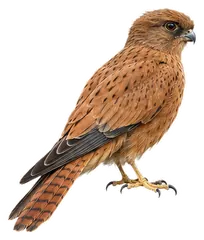 Fox KestrelFalco alopex
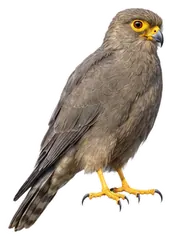 Grey KestrelFalco ardosiaceus
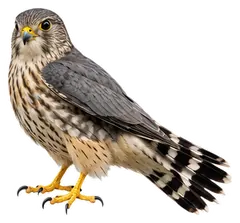
Download illustration
Free to use with credit: “Illustration: Bird Album (birdalbum.com)”. Drawn by AI from a reference photo by mc_photo. ↗
Heard it but can't see it? Mingji identifies birds by sound and photo, on your phone.