 Bird Album
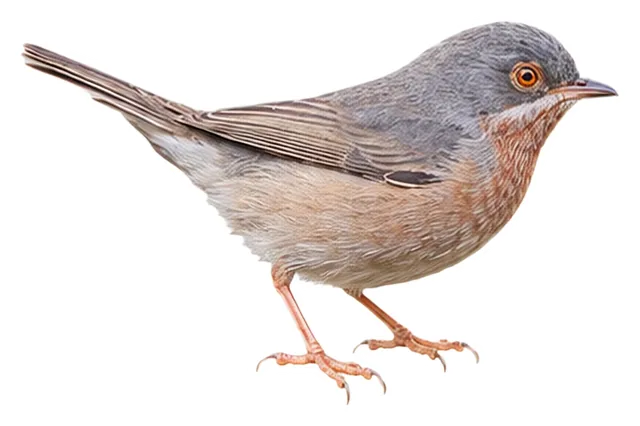
Moltoni's Warbler
Curruca subalpina (Temminck, 1820)
9.6 gWeight
Moltoni's warbler (Curruca subalpina) is a small bird species belonging to the family Sylviidae, often referred to as the typical warblers.
Busiest months: April · Most records: Italy, United Kingdom, Spain
Where and when it's recorded

Moltoni's Warbler has been recorded at 30 of the 8,171 birding hotspots we track, in 10 countries and regions.
Records by month Northern Hemisphere
Where it's recorded most
- Isola di VentoteneItaly66 records
- SkokholmUnited Kingdom17 records
- LinosaItaly13 records
More places
- VariconiItaly7 records
- ViðareiðiFaroe Islands5 records
- Foce del CentaItaly5 records
- Hides de Sa Roca i C. Informació, P.N. s'Albufera de MallorcaSpain5 records
- Fair IsleUnited Kingdom5 records
- Ottenby – södra uddeSweden4 records
- Barrage El Mansour Eddahbi – tadamreesht – domaine généraleMorocco3 records
Countries and regions with the most records
eBird records via GBIF up to 2024-12-31. A record means someone listed it; more records partly mean more birders, not more birds.
About
Moltoni's warbler (Curruca subalpina) is a small bird species belonging to the family Sylviidae, often referred to as the typical warblers. This species is native to Italy and islands of the Tyrrhenian Sea.
Excerpt from Wikipedia, CC BY-SA 4.0 · authors · Read more on Wikipedia
Questions
How big is the Moltoni's Warbler?
The Moltoni's Warbler weighs around 9.6 g.
Where does the Moltoni's Warbler live?
Its breeding range: Palearctic: northwestern to north-central Italy, Corsica, Sardinia, Balearics. It is most often recorded in Italy, United Kingdom and Spain.
When is the best time to see the Moltoni's Warbler?
At the hotspots we track, it is recorded most in April (Northern Hemisphere).
Is the Moltoni's Warbler endangered?
The IUCN Red List classifies the Moltoni's Warbler as Least Concern.
What does the Moltoni's Warbler eat?
Main food: Insects & other invertebrates.
What family is the Moltoni's Warbler in?
It belongs to the family Sylviid Babblers (Sylviidae), order Passerines (Passeriformes).
At a glance
- Weight
- 9.6 g
- Habitat
- Shrubland
- Diet
- Insects & other invertebrates
- Lifestyle
- Perches in trees
- Migration
- Migratory
- Conservation
- Least Concern
More measurements
- Wing
- 57 mm
- Tail
- 52 mm
- Bill
- 12 mm
- Tarsus
- 18 mm
Averages from the AVONET dataset; length from field guides where available.
Range
Palearctic: northwestern to north-central Italy, Corsica, Sardinia, Balearics
Breeding range, IOC World Bird List 15.2
Classification
- Order
- Passerines Passeriformes
- Family
- Sylviid Babblers Sylviidae
- Genus
- Curruca
Other birds in the genus Curruca
 Barred WarblerCurruca nisoria
 Layard's WarblerCurruca layardi
 Banded ParisomaCurruca boehmi
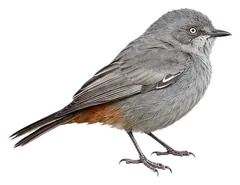 Chestnut-vented WarblerCurruca subcoerulea
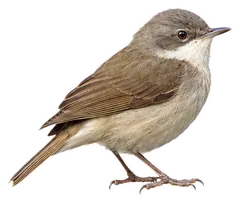 Lesser WhitethroatCurruca curruca
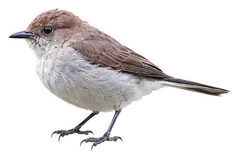 Brown ParisomaCurruca lugens
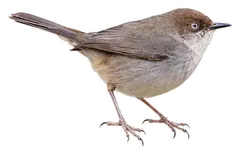 Yemen WarblerCurruca buryi
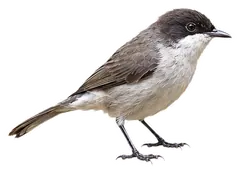 Arabian WarblerCurruca leucomelaena
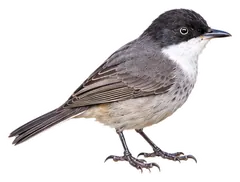 Western Orphean WarblerCurruca hortensis
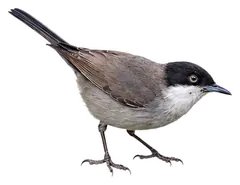 Eastern Orphean WarblerCurruca crassirostris
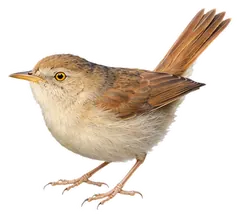 African Desert WarblerCurruca deserti
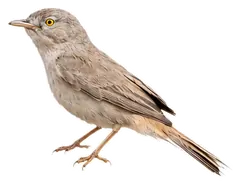 Asian Desert WarblerCurruca nana
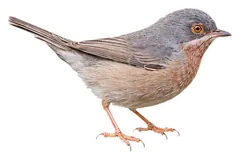
Download illustration
Free to use with credit: “Illustration: Bird Album (birdalbum.com)”. Drawn by AI from reference photos. ↗
Heard it but can't see it? Mingji identifies birds by sound and photo, on your phone.
In other languages
- EnglishMoltoni's Warbler
- 简体中文地中海林莺
- 繁體中文摩氏林鶯
- 日本語アコウザンムシクイ
- DeutschLigurien-Bartgrasmücke
- FrançaisFauvette de Moltoni
- EspañolCurruca subalpina
- Portuguêstoutinegra-subalpina
- ItalianoSterpazzolina di Moltoni
- NederlandsMoltoni's Baardgrasmus
- РусскийСубальпийская славка
- Svenskamoltonisångare
- DanskMakisanger
- Polskipokrzewka różowobrzucha