 Bird Album
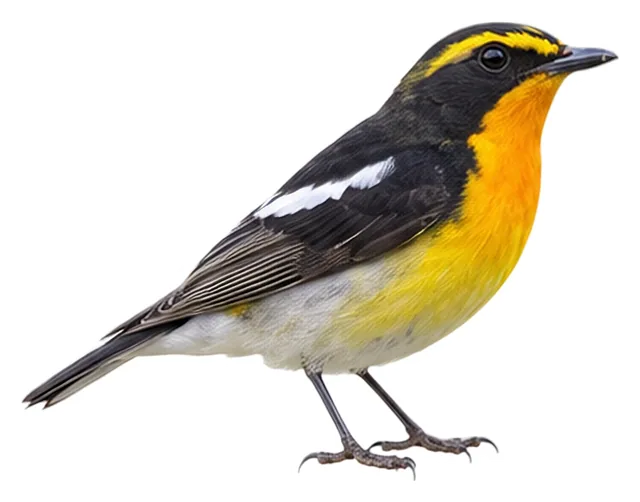
Narcissus Flycatcher
Ficedula narcissina (Temminck, 1836)
≈13 cmLength13 gWeight
During the breeding season, the male has a black back, an orange throat, an orange-yellow supercilium, and white wing patches.
Busiest months: April · Most records: China, Japan, South Korea
How to identify
Field marks
- Male has a vivid orange throat and paler breast and belly during the breeding season
- Male has an orange-yellow supercilium during the breeding season
- Male has a black crown and back during the breeding season
- Male has white patches on black wings during the breeding season
Male, female and young
Female is entirely different from the male, mostly rufous-brown with a rusty tinge to the wings and a two-toned eye-ring; non-breeding-season males vary in the intensity of their yellow.
Voice
During the breeding season, the male sings repeated melodious whistles.
Where and when it's recorded

Narcissus Flycatcher has been recorded at 363 of the 8,171 birding hotspots we track, in 11 countries and regions.
Records by month Northern Hemisphere
Where it's recorded most
- Yeliu IBATaiwan (China)848 records
- Matsu – Dongyin Vegetable FarmChina654 records
- Nanhui DongtanChina545 records
More places
- Matsu – DongyinChina363 records
- Taipei – Taipei Botanical GardenTaiwan (China)354 records
- Matsu – Dongyin Dongyong ReservoirChina272 records
- Po ToiHong Kong (China)269 records
- Karuizawa – Karuizawa Wild Bird SanctuaryJapan251 records
- Wajima – Hegurajima (island)Japan215 records
- Sakata – Tobishima (island)Japan214 records
Countries and regions with the most records
eBird records via GBIF up to 2024-12-31. A record means someone listed it; more records partly mean more birders, not more birds.
About
The narcissus flycatcher (Ficedula narcissina) is a passerine bird in the Old World flycatcher family. It is native to the East Palearctic, from Sakhalin to the north, through Japan across through Korea, mainland China, and Taiwan (China), wintering in southeast Asia, including the Philippines, Vietnam and Borneo. It is highly migratory, and has been found as a vagrant from Australia in the south to Alaska in the north Archived 2006-01-10 at the Wayback Machine.
Excerpt from Wikipedia, CC BY-SA 4.0 · authors · Read more on Wikipedia
Questions
How big is the Narcissus Flycatcher?
The Narcissus Flycatcher is about ≈13 cm long and weighs around 13 g.
Where does the Narcissus Flycatcher live?
Its breeding range: Palearctic: Sakhalin and Kuril Islands (southeastern Russia) and Japan (except Ryukyu Islands). It is most often recorded in China, Japan and South Korea.
When is the best time to see the Narcissus Flycatcher?
At the hotspots we track, it is recorded most in April (Northern Hemisphere).
Is the Narcissus Flycatcher endangered?
The IUCN Red List classifies the Narcissus Flycatcher as Least Concern.
What does the Narcissus Flycatcher eat?
Main food: Insects & other invertebrates.
What family is the Narcissus Flycatcher in?
It belongs to the family Chats, Old World Flycatchers (Muscicapidae), order Passerines (Passeriformes).
At a glance
- Length
- ≈13 cm
- Weight
- 13 g
- Habitat
- Forest
- Diet
- Insects & other invertebrates
- Lifestyle
- Perches in trees
- Migration
- Migratory
- Conservation
- Least Concern
More measurements
- Wing
- 75 mm
- Tail
- 47 mm
- Bill
- 14 mm
- Tarsus
- 16 mm
Averages from the AVONET dataset; length from field guides where available.
Range
Palearctic: Sakhalin and Kuril Islands (southeastern Russia) and Japan (except Ryukyu Islands)
Breeding range, IOC World Bird List 15.2
Classification
- Order
- Passerines Passeriformes
- Family
- Chats, Old World Flycatchers Muscicapidae
- Genus
- Ficedula
Other birds in the genus Ficedula
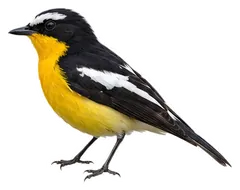 Yellow-rumped FlycatcherFicedula zanthopygia
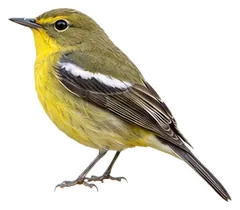 Green-backed FlycatcherFicedula elisae
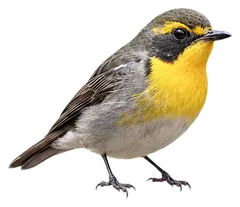 Ryukyu FlycatcherFicedula owstoni
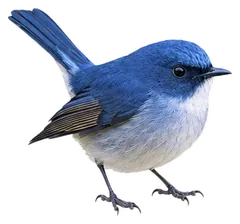 Slaty-blue FlycatcherFicedula tricolor
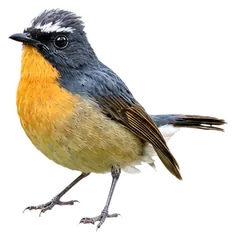 Snowy-browed FlycatcherFicedula hyperythra
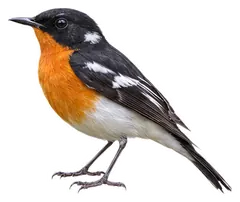 Mugimaki FlycatcherFicedula mugimaki
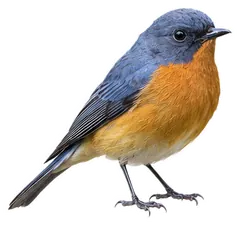 Slaty-backed FlycatcherFicedula erithacus
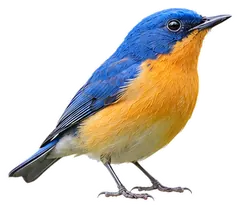 Pygmy FlycatcherFicedula hodgsoni
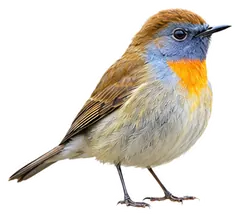 Rufous-gorgeted FlycatcherFicedula strophiata
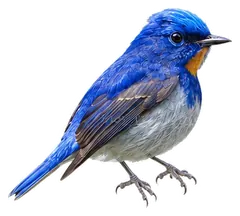 Sapphire FlycatcherFicedula sapphira
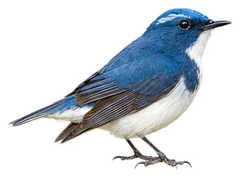 Ultramarine FlycatcherFicedula superciliaris
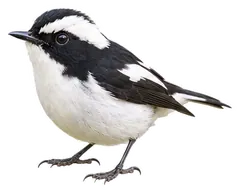 Little Pied FlycatcherFicedula westermanni
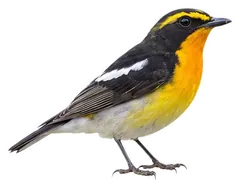
Download illustration
Free to use with credit: “Illustration: Bird Album (birdalbum.com)”. Drawn by AI from a reference photo by Kuribo. ↗

Heard it but can't see it? Mingji identifies birds by sound and photo, on your phone.
In other languages
- EnglishNarcissus Flycatcher
- 简体中文黄眉姬鹟
- 繁體中文黃眉黃鶲
- 日本語キビタキ
- 한국어황금새
- DeutschNarzissenschnäpper
- FrançaisGobemouche narcisse
- EspañolPapamoscas narciso
- Portuguêspapa-moscas-de-peito-amarelo
- ItalianoPigliamosche narciso
- NederlandsGeelbrauwvliegenvanger
- РусскийЯпонская мухоловка
- Svenskanarcissflugsnappare
- DanskNarcissus Fluesnapper
- Polskimuchołówka złotobrewa