 Bird Album
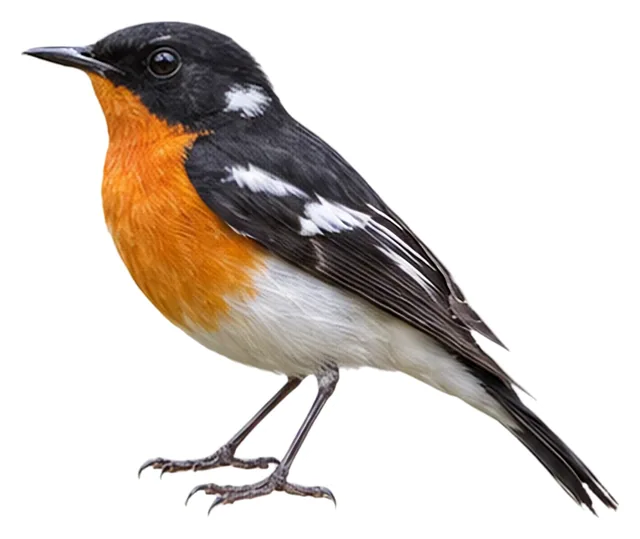
Mugimaki Flycatcher
Ficedula mugimaki (Temminck, 1836)
≈12 cmLength12 gWeight
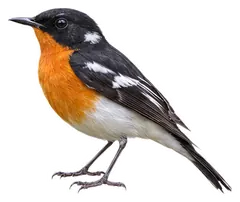
The male has an orange-red throat and breast and a short white supercilium behind the eye, and frequently flicks its wings and tail.
Busiest months: April and October · Most records: China, Malaysia, Singapore
How to identify
Field marks
- Male has black upperparts and a short white supercilium behind the eye
- Male has an orange-red throat and breast and a white belly
- Male has white wing patches
- Male has white feather edges on the tertials and white bases to the outer tail feathers
Male, female and young
Female has gray-brown upperparts, a pale orange-brown throat and breast, no white on the tail, and pale wing-bars. Young male resembles the female, but has a more orange breast and white on the tail.
Voice
Call is a series of quavering sounds.
Where and when it's recorded
Busiest months: April and October · Most records: China, Malaysia, Singapore

Mugimaki Flycatcher has been recorded at 615 of the 8,276 birding hotspots we track, in 15 countries and regions.
Records by month Northern Hemisphere
Where it's recorded most
- Nanhui DongtanChina507 records
- Kinabalu Park – HQ areaMalaysia411 records
- Bukit FraserMalaysia327 records
More places
- Dairy Farm Nature ParkSingapore320 records
- Man Nai IslandThailand316 records
- Deo Nui San passVietnam232 records
- Po ToiHong Kong (China)214 records
- Pak Sha OHong Kong (China)181 records
- Da Lat – Ta Nung ValleyVietnam168 records
- Singapore Botanic GardensSingapore163 records
Countries and regions with the most records
eBird records via GBIF up to 2024-12-31. A record means someone listed it; more records partly mean more birders, not more birds.
About
The mugimaki flycatcher (Ficedula mugimaki) is a small passerine bird of eastern Asia belonging to the genus Ficedula in the Old World flycatcher family, Muscicapidae. The name "mugimaki" comes from Japanese and means "wheat-sower". The bird is also known as the robin flycatcher.
Excerpt from Wikipedia, CC BY-SA 4.0 · authors · Read more on Wikipedia
Questions
How big is the Mugimaki Flycatcher?
The Mugimaki Flycatcher is about ≈12 cm long and weighs around 12 g.
Where does the Mugimaki Flycatcher live?
Its breeding range: Palearctic: northern Mongolia and southeastern Russia through northeastern China to the Korean Peninsula. It is most often recorded in China, Malaysia and Singapore.
When is the best time to see the Mugimaki Flycatcher?
At the hotspots we track, it is recorded most in April and October (Northern Hemisphere).
Is the Mugimaki Flycatcher endangered?
The IUCN Red List classifies the Mugimaki Flycatcher as Least Concern.
What does the Mugimaki Flycatcher eat?
Main food: Insects & other invertebrates.
What family is the Mugimaki Flycatcher in?
It belongs to the family Chats, Old World Flycatchers (Muscicapidae), order Passerines (Passeriformes).
At a glance
- Length
- ≈12 cm
- Weight
- 12 g
- Habitat
- Forest
- Diet
- Insects & other invertebrates
- Lifestyle
- Perches in trees
- Migration
- Migratory
- Conservation
- Least Concern
More measurements
- Wing
- 72 mm
- Tail
- 49 mm
- Bill
- 12 mm
- Tarsus
- 16 mm
Averages from the AVONET dataset; length from field guides where available.
Range
Palearctic: northern Mongolia and southeastern Russia through northeastern China to the Korean Peninsula
Breeding range, IOC World Bird List 15.2
Classification
- Order
- Passerines Passeriformes
- Family
- Chats, Old World Flycatchers Muscicapidae
- Genus
- Ficedula
Other birds in the genus Ficedula
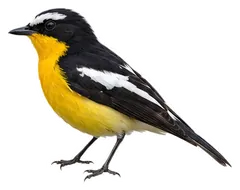 Yellow-rumped FlycatcherFicedula zanthopygia
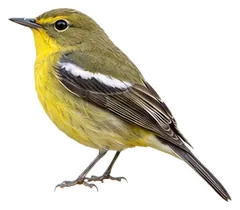 Green-backed FlycatcherFicedula elisae
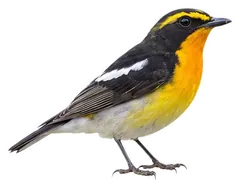 Narcissus FlycatcherFicedula narcissina
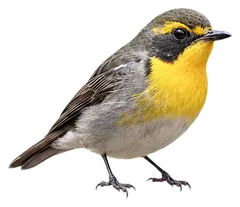 Ryukyu FlycatcherFicedula owstoni
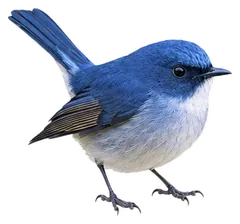 Slaty-blue FlycatcherFicedula tricolor
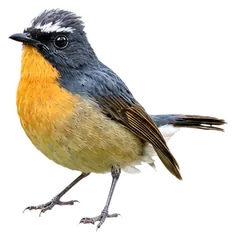 Snowy-browed FlycatcherFicedula hyperythra
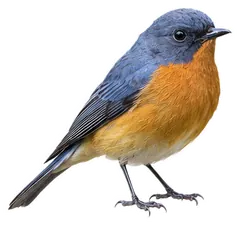 Slaty-backed FlycatcherFicedula erithacus
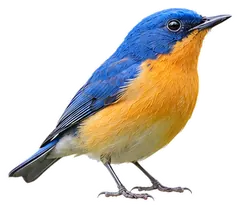 Pygmy FlycatcherFicedula hodgsoni
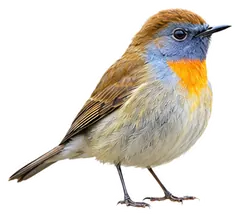 Rufous-gorgeted FlycatcherFicedula strophiata
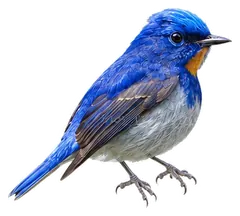 Sapphire FlycatcherFicedula sapphira
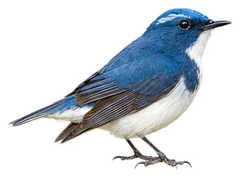 Ultramarine FlycatcherFicedula superciliaris
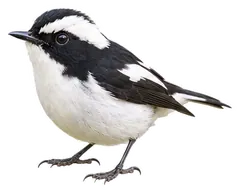 Little Pied FlycatcherFicedula westermanni
Download illustration
Free to use with credit: “Illustration: Bird Album (birdalbum.com)”. Drawn by AI from a reference photo by Wang.QG. ↗

Heard it but can't see it? Mingji identifies birds by sound and photo, on your phone.
In other languages
- EnglishMugimaki Flycatcher
- 简体中文鸲姬鹟
- 繁體中文白眉黃鶲
- 日本語ムギマキ
- 한국어노랑딱새
- DeutschMugimakischnäpper
- FrançaisGobemouche mugimaki
- EspañolPapamoscas mugimaki
- Portuguêspapa-moscas-muguimaqui
- ItalianoBalia mugimaki
- NederlandsMugimakivliegenvanger
- РусскийТаёжная мухоловка
- Svenskamugimakiflugsnappare
- DanskMugimaki Fluesnapper
- Polskimuchołówka syberyjska