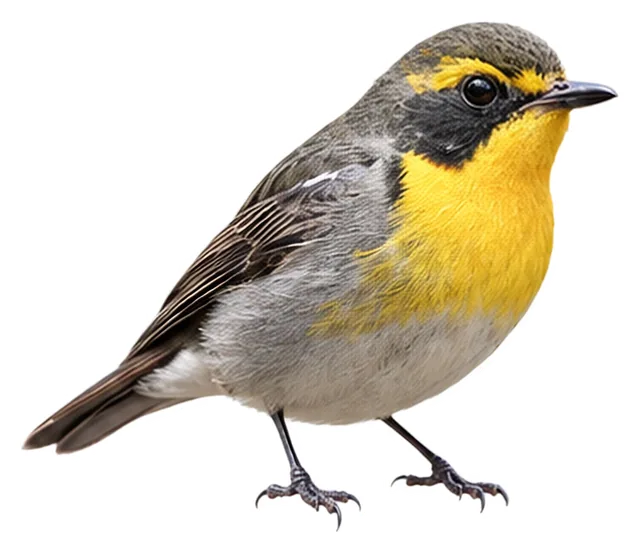
Ryukyu Flycatcher
Ficedula owstoni (Bangs, 1901)
≈13 cmLength13 gWeight
The male's yellow rump and orange bib stand out against its blue-black plumage.
Busiest months: April · Most records: China, Japan
Looks like Narcissus Flycatcher
How to identify
Field marks
- Male has a greenish tinge to the upperparts
- Male has a yellow lower back and rump
- Male has a yellow-orange stripe above the eye
Male, female and young
Male is usually larger and more brightly colored.
Voice
Song is a series of bright whistles; calls include dry ticking notes and a low “chuk”.
Similar species
Where and when it's recorded
Busiest months: April · Most records: China, Japan

Ryukyu Flycatcher has been recorded at 18 of the 8,276 birding hotspots we track, in 2 countries and regions.
Records by month Northern Hemisphere
Where it's recorded most
- Amami – Tatsugo – Amami Nature ForestJapan19 records
- Taichung – Taichung Metropolitan ParkTaiwan (China)11 records
- Kadoorie Farm and Botanic GardenHong Kong (China)9 records
More places
- Matsu – Dongyin Shizi Vegetable FarmChina5 records
- Yeliu IBATaiwan (China)5 records
- Nanhui DongtanChina5 records
- Matsu – Dongyin Vegetable FarmChina3 records
- Sun Yat-sen University - South CampusChina2 records
- Shek Kong Airfield RoadHong Kong (China)1 record
- Po ToiHong Kong (China)1 record
Countries and regions with the most records
eBird records via GBIF up to 2024-12-31. A record means someone listed it; more records partly mean more birders, not more birds.
About
The Ryukyu flycatcher (Ficedula owstoni) is a passerine bird in the Old World flycatcher family. It is native to the Ryukyu Islands, from Tanegashima in the Osumi Islands to Iriomote in the Yaeyama Islands.
Excerpt from Wikipedia, CC BY-SA 4.0 · authors · Read more on Wikipedia
Questions
How big is the Ryukyu Flycatcher?
The Ryukyu Flycatcher is about ≈13 cm long and weighs around 13 g.
Where does the Ryukyu Flycatcher live?
Its breeding range: Palearctic: Ryukyu Islands (southern Japan). It is most often recorded in China and Japan.
When is the best time to see the Ryukyu Flycatcher?
At the hotspots we track, it is recorded most in April (Northern Hemisphere).
Is the Ryukyu Flycatcher endangered?
The IUCN Red List classifies the Ryukyu Flycatcher as Least Concern.
What does the Ryukyu Flycatcher eat?
Main food: Insects & other invertebrates.
What family is the Ryukyu Flycatcher in?
It belongs to the family Chats, Old World Flycatchers (Muscicapidae), order Passerines (Passeriformes).
At a glance
- Length
- ≈13 cm
- Weight
- 13 g
- Habitat
- Forest
- Diet
- Insects & other invertebrates
- Lifestyle
- Perches in trees
- Migration
- Migratory
- Conservation
- Least Concern
More measurements
- Wing
- 75 mm
- Tail
- 47 mm
- Bill
- 14 mm
- Tarsus
- 16 mm
Averages from the AVONET dataset; length from field guides where available.
Range
Palearctic: Ryukyu Islands (southern Japan)
Breeding range, IOC World Bird List 15.2
Classification
- Order
- Passerines Passeriformes
- Family
- Chats, Old World Flycatchers Muscicapidae
- Genus
- Ficedula
Other birds in the genus Ficedula
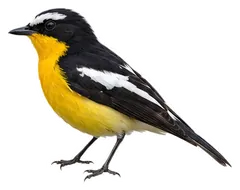 Yellow-rumped FlycatcherFicedula zanthopygia
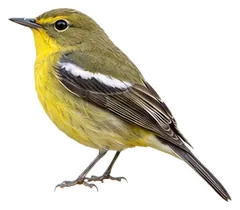 Green-backed FlycatcherFicedula elisae
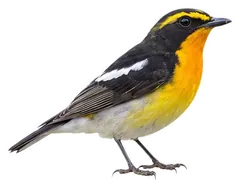 Narcissus FlycatcherFicedula narcissina
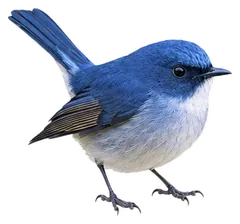 Slaty-blue FlycatcherFicedula tricolor
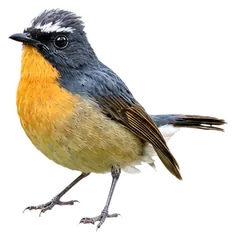 Snowy-browed FlycatcherFicedula hyperythra
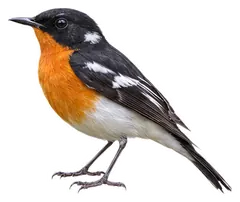 Mugimaki FlycatcherFicedula mugimaki
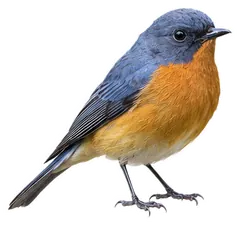 Slaty-backed FlycatcherFicedula erithacus
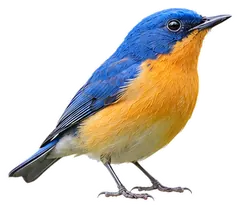 Pygmy FlycatcherFicedula hodgsoni
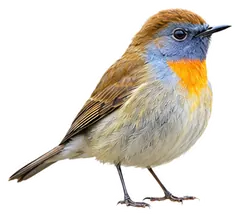 Rufous-gorgeted FlycatcherFicedula strophiata
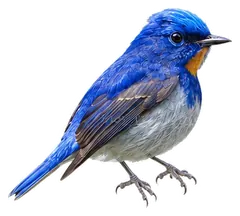 Sapphire FlycatcherFicedula sapphira
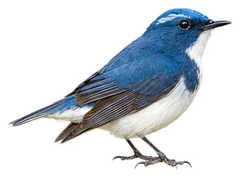 Ultramarine FlycatcherFicedula superciliaris
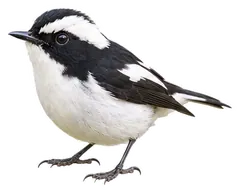 Little Pied FlycatcherFicedula westermanni
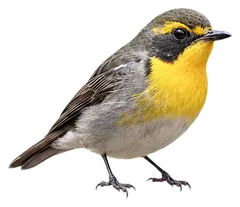
Download illustration
Free to use with credit: “Illustration: Bird Album (birdalbum.com)”. Drawn by AI from a reference photo by lbaobao2008hf. ↗
Heard it but can't see it? Mingji identifies birds by sound and photo, on your phone.