 Bird Album
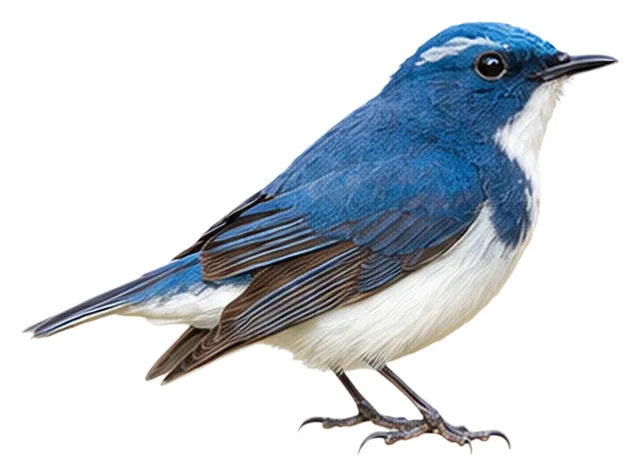
Ultramarine Flycatcher
Ficedula superciliaris (Jerdon, 1840)
≈11 cmLength8 gWeight
The male has deep blue upperparts and a white stripe extending from the center of the throat to the belly.
Busiest months: February–April · Most records: India, Thailand, Bhutan
How to identify
Field marks
- Male has deep blue upperparts and sides of the head and neck
- Conspicuous white patch from the throat center to the belly
- Slightly smaller than Eurasian Tree Sparrow, about 10 cm, with a stocky build
- Frequently flicks its upturned tail
Voice
Often gives a “trrr”, especially near the nest.
Where and when it's recorded

Ultramarine Flycatcher has been recorded at 179 of the 8,171 birding hotspots we track, in 7 countries and regions.
Records by month Northern Hemisphere
Where it's recorded most
- Doi Pha Hom Pok NP – Doi Lang (W), AKA Doi San JuThailand768 records
- SattalIndia728 records
- Sinhagad ValleyIndia385 records
More places
- Doi Pha Hom Pok NP – Doi Lang (W) stakeout Mrs Hume's Pheasant [ARRIVE BEFORE SUNRISE & WAIT IN THE CAR ON THE LEFT SIDE OF THE RD.]Thailand319 records
- Nandi HillsIndia287 records
- Munsyari – Bheema WodeyarIndia284 records
- PangotIndia225 records
- Fergusson College CampusIndia197 records
- Ananthagiri Hills, VikarabadIndia174 records
- Mt. PhulchowkiNepal133 records
Countries and regions with the most records
eBird records via GBIF up to 2024-12-31. A record means someone listed it; more records partly mean more birders, not more birds.
About
The ultramarine flycatcher or the white-browed blue flycatcher (Ficedula superciliaris) is a small arboreal Old World flycatcher in the Ficedula genus. Its breeding range extends from eastern Afghanistan to the Hengduan Mountains; it winters in India and northwestern Indochina.
Excerpt from Wikipedia, CC BY-SA 4.0 · authors · Read more on Wikipedia
Questions
How big is the Ultramarine Flycatcher?
The Ultramarine Flycatcher is about ≈11 cm long and weighs around 8 g.
Where does the Ultramarine Flycatcher live?
Its breeding range: Oriental: eastern Afghanistan to southern China, central India and Southeast Asia. It is most often recorded in India, Thailand and Bhutan.
When is the best time to see the Ultramarine Flycatcher?
At the hotspots we track, it is recorded most in February, March and April (Northern Hemisphere).
Is the Ultramarine Flycatcher endangered?
The IUCN Red List classifies the Ultramarine Flycatcher as Least Concern.
What does the Ultramarine Flycatcher eat?
Main food: Insects & other invertebrates.
What family is the Ultramarine Flycatcher in?
It belongs to the family Chats, Old World Flycatchers (Muscicapidae), order Passerines (Passeriformes).
At a glance
- Length
- ≈11 cm
- Weight
- 8 g
- Habitat
- Forest
- Diet
- Insects & other invertebrates
- Lifestyle
- Perches in trees
- Migration
- Partial migrant
- Conservation
- Least Concern
More measurements
- Wing
- 63 mm
- Tail
- 48 mm
- Bill
- 12 mm
- Tarsus
- 16 mm
Averages from the AVONET dataset; length from field guides where available.
Range
Oriental: eastern Afghanistan to southern China, central India and Southeast Asia
Breeding range, IOC World Bird List 15.2
Subspecies · 1
- Ficedula superciliaris aestigma e Himalayas to sc China
Classification
- Order
- Passerines Passeriformes
- Family
- Chats, Old World Flycatchers Muscicapidae
- Genus
- Ficedula
Other birds in the genus Ficedula
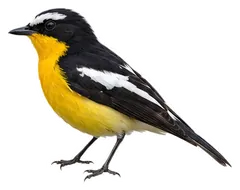 Yellow-rumped FlycatcherFicedula zanthopygia
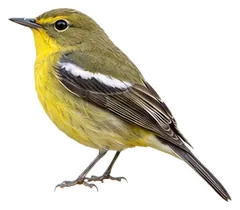 Green-backed FlycatcherFicedula elisae
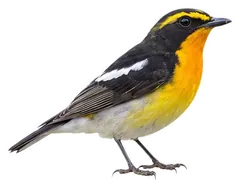 Narcissus FlycatcherFicedula narcissina
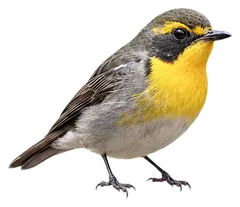 Ryukyu FlycatcherFicedula owstoni
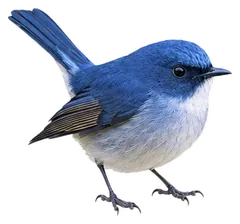 Slaty-blue FlycatcherFicedula tricolor
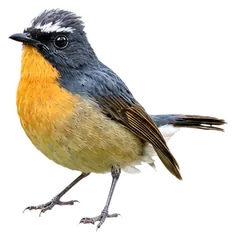 Snowy-browed FlycatcherFicedula hyperythra
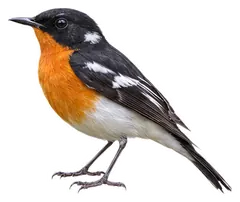 Mugimaki FlycatcherFicedula mugimaki
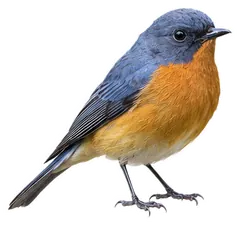 Slaty-backed FlycatcherFicedula erithacus
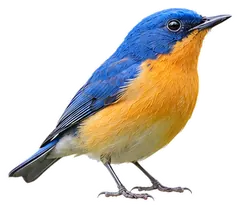 Pygmy FlycatcherFicedula hodgsoni
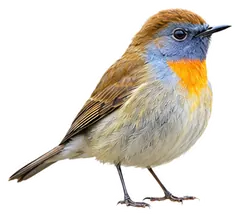 Rufous-gorgeted FlycatcherFicedula strophiata
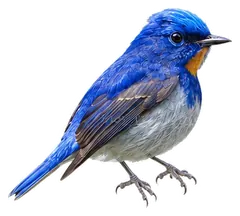 Sapphire FlycatcherFicedula sapphira
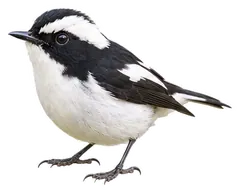 Little Pied FlycatcherFicedula westermanni
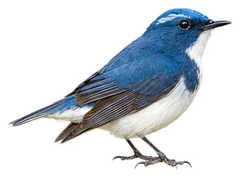
Download illustration
Free to use with credit: “Illustration: Bird Album (birdalbum.com)”. Drawn by AI from a reference photo by egorbirder. ↗
Heard it but can't see it? Mingji identifies birds by sound and photo, on your phone.
In other languages
- EnglishUltramarine Flycatcher
- 简体中文白眉蓝姬鹟
- 繁體中文白眉藍姬鶲
- 日本語マユヒタキ
- DeutschWeißbrauenschnäpper
- FrançaisGobemouche ultramarin
- EspañolPapamoscas ultramarino
- Portuguêspapa-moscas-ultramarino
- ItalianoPigliamosche oltremarino
- NederlandsWitkeelvliegenvanger
- РусскийУльтрамариновая мухоловка
- Svenskaultramarinflugsnappare
- DanskUltramarin Fluesnapper
- Polskimuchołówka granatowa