 Bird Album
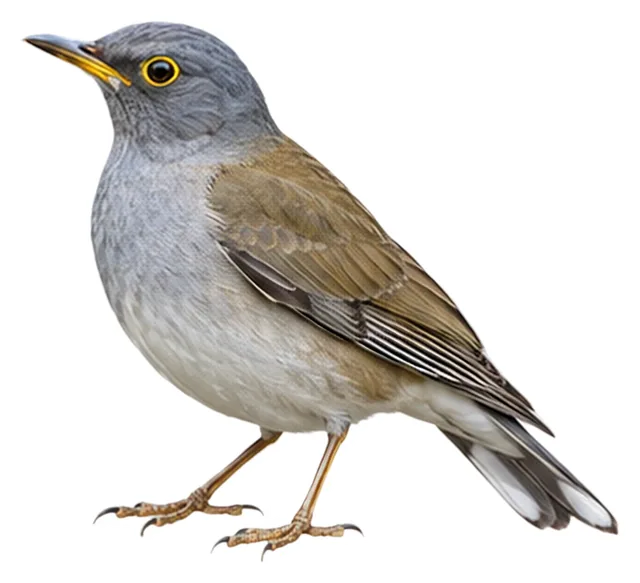
Pale Thrush
Turdus pallidus Gmelin, JF, 1789
23–25 cmLength72 gWeight
The male has a blue-gray head and throat, a whitish belly and no pale supercilium.
Busiest months: December · Most records: China, Japan, South Korea
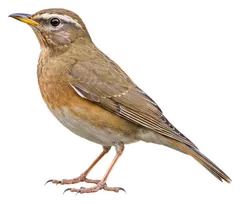
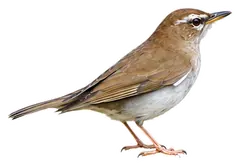
Looks like Eyebrowed Thrush, Grey-sided Thrush
How to identify
Field marks
- Male has a blue-gray head and throat
- Gray-brown breast and flanks, whitish belly
- No pale supercilium
- Gray upper mandible and yellow lower mandible
Male, female and young
Female resembles male but is duller, with a brown head and a white throat with fine markings.
Voice
Grating “chuck-chuck” and “see-ip” calls, and a bubbling alarm call.
Similar species
Where and when it's recorded

Pale Thrush has been recorded at 593 of the 8,171 birding hotspots we track, in 5 countries and regions.
Records by month Northern Hemisphere
Where it's recorded most
- Yeliu IBATaiwan (China)1,559 records
- Taipei – Tianliaoyang WetlandTaiwan (China)1,166 records
- Nanhui DongtanChina1,052 records
More places
- Taipei – Taipei Botanical GardenTaiwan (China)930 records
- Jinshan – Jinshan Youth Activity CenterTaiwan (China)864 records
- Taipei – National Taiwan University Main CampusTaiwan (China)779 records
- Century ParkChina548 records
- Edogawa Ward – Kasai Rinkai Park / Kasai Kaihin ParkJapan534 records
- Hsinchu Coast IBA – GangnanTaiwan (China)499 records
- Taipei – Da'an Forest ParkTaiwan (China)496 records
Countries and regions with the most records
eBird records via GBIF up to 2024-12-31. A record means someone listed it; more records partly mean more birders, not more birds.
About
The pale thrush (Turdus pallidus) is a passerine bird of the eastern Palearctic belonging to the genus Turdus in the thrush family Turdidae.
Excerpt from Wikipedia, CC BY-SA 4.0 · authors · Read more on Wikipedia
Questions
How big is the Pale Thrush?
The Pale Thrush is about 23–25 cm long and weighs around 72 g.
Where does the Pale Thrush live?
Its breeding range: Palearctic: southeastern Russia, northeastern China and the Korea Peninsula. It is most often recorded in China, Japan and South Korea.
When is the best time to see the Pale Thrush?
At the hotspots we track, it is recorded most in December (Northern Hemisphere).
Is the Pale Thrush endangered?
The IUCN Red List classifies the Pale Thrush as Least Concern.
What does the Pale Thrush eat?
Main food: Insects & other invertebrates.
What family is the Pale Thrush in?
It belongs to the family Thrushes (Turdidae), order Passerines (Passeriformes).
At a glance
- Length
- 23–25 cm
- Weight
- 72 g
- Habitat
- Forest
- Diet
- Insects & other invertebrates
- Lifestyle
- Varied
- Migration
- Migratory
- Conservation
- Least Concern
More measurements
- Wing
- 126 mm
- Tail
- 89 mm
- Bill
- 24 mm
- Tarsus
- 31 mm
Averages from the AVONET dataset; length from field guides where available.
Range
Palearctic: southeastern Russia, northeastern China and the Korea Peninsula
Breeding range, IOC World Bird List 15.2
Classification
- Order
- Passerines Passeriformes
- Family
- Thrushes Turdidae
- Genus
- Turdus
Other birds in the genus Turdus
 Ethiopian ThrushTurdus simensis
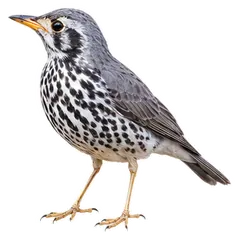 Groundscraper ThrushTurdus litsitsirupa
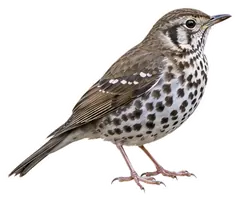 Chinese ThrushTurdus mupinensis
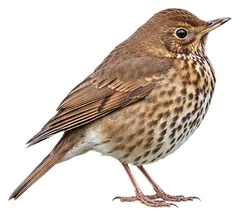 Song ThrushTurdus philomelos
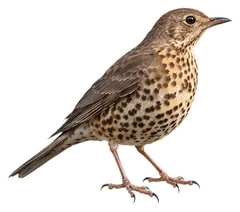 Mistle ThrushTurdus viscivorus
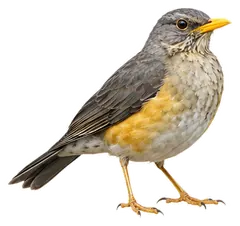 African ThrushTurdus pelios
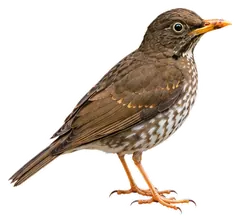 Principe ThrushTurdus xanthorhynchus
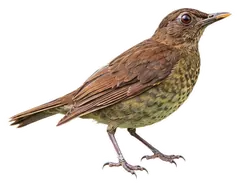 Sao Tome ThrushTurdus olivaceofuscus
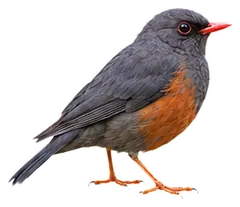 Abyssinian ThrushTurdus abyssinicus
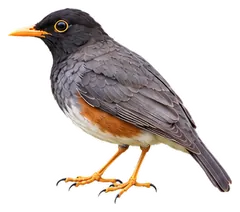 Taita ThrushTurdus helleri
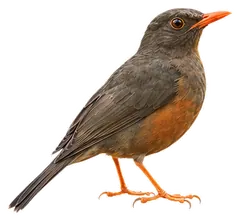 Usambara ThrushTurdus roehli
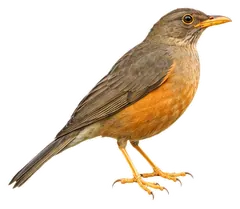 Olive ThrushTurdus olivaceus
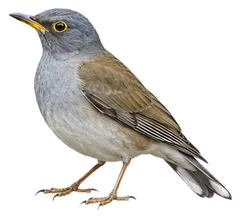
Download illustration
Free to use with credit: “Illustration: Bird Album (birdalbum.com)”. Drawn by AI from a reference photo by Francesco Veronesi. ↗

Heard it but can't see it? Mingji identifies birds by sound and photo, on your phone.