 Bird Album
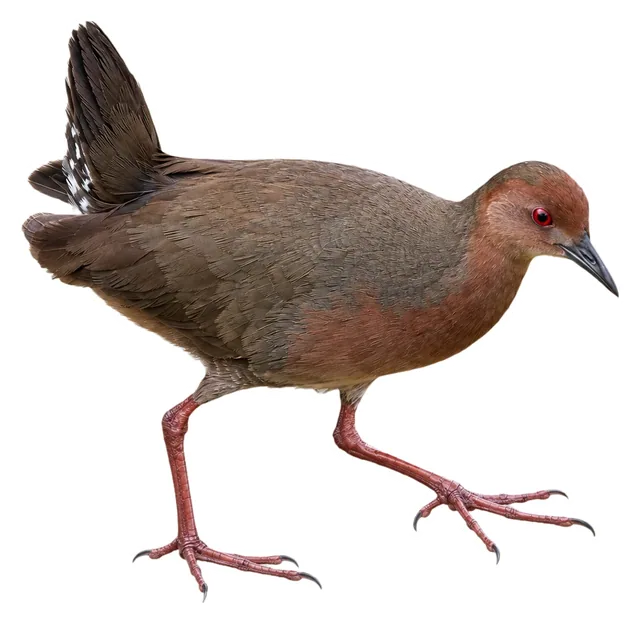
Ruddy-breasted Crake
Zapornia fusca (Linnaeus, 1766)
22–23 cmLength57 gWeight
The adult has a chestnut head and breast and red legs and feet, and hides in vegetation when alarmed.
Busiest months: January–February · Most records: India, China, Thailand
How to identify
Field marks
- Adult has a chestnut head and underparts
- Red eyes and red legs and feet
- Adult has white barring on the flanks and undertail
- Long toes and short tail
Male, female and young
Sexes similar; juvenile is dark brown with some white patches.
Where and when it's recorded

Ruddy-breasted Crake has been recorded at 609 of the 8,171 birding hotspots we track, in 19 countries and regions.
Records by month Northern Hemisphere
Where it's recorded most
- Aogu Wetland IBATaiwan (China)668 records
- Hsinchu Coast IBA – GangnanTaiwan (China)499 records
- Saul Kere / Sowl KereIndia481 records
More places
- Baruipur MarshesIndia474 records
- Chilika Lake – MangalajodiIndia473 records
- Krishnampathi Lake, SeeranaickenpalayamIndia433 records
- Anekal Dodda KereIndia402 records
- Taipei – Beitou Guizikeng Drainage CanalTaiwan (China)333 records
- EzhomeIndia318 records
- Lat Krabang – Thap Yao paddies & aquaculture pondsThailand284 records
Countries and regions with the most records
eBird records via GBIF up to 2024-12-31. A record means someone listed it; more records partly mean more birders, not more birds.
About
The ruddy-breasted crake (Zapornia fusca), or ruddy crake, is a waterbird in the rail and crake family Rallidae, formerly included in the genus Porzana.
Excerpt from Wikipedia, CC BY-SA 4.0 · authors · Read more on Wikipedia
Questions
How big is the Ruddy-breasted Crake?
The Ruddy-breasted Crake is about 22–23 cm long and weighs around 57 g.
Where does the Ruddy-breasted Crake live?
Its breeding range: Oriental: widespread, also East Asia. It is most often recorded in India, China and Thailand.
When is the best time to see the Ruddy-breasted Crake?
At the hotspots we track, it is recorded most in January and February (Northern Hemisphere).
Is the Ruddy-breasted Crake endangered?
The IUCN Red List classifies the Ruddy-breasted Crake as Least Concern.
What does the Ruddy-breasted Crake eat?
Main food: Fish, shrimp & shellfish.
What family is the Ruddy-breasted Crake in?
It belongs to the family Rails, Crakes & Coots (Rallidae), order Gruiformes.
At a glance
- Length
- 22–23 cm
- Weight
- 57 g
- Habitat
- Wetland
- Diet
- Fish, shrimp & shellfish
- Lifestyle
- Active on the ground
- Migration
- Partial migrant
- Conservation
- Least Concern
More measurements
- Wing
- 94 mm
- Tail
- 42 mm
- Bill
- 26 mm
- Tarsus
- 31 mm
Averages from the AVONET dataset; length from field guides where available.
Range
Oriental: widespread, also East Asia
Breeding range, IOC World Bird List 15.2
Subspecies · 1
- Zapornia fusca erythrothorax se Siberia to ne China, Korea and Japan, Taiwan (China) | non-breeding: to Greater Sundas
Classification
- Order
- Gruiformes
- Family
- Rails, Crakes & Coots Rallidae
- Genus
- Zapornia
Other birds in the genus Zapornia
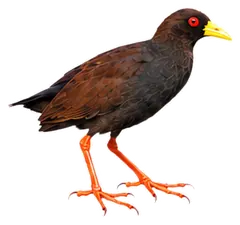 Black CrakeZapornia flavirostra
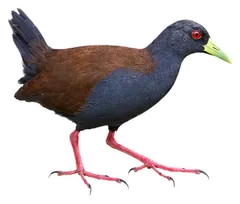 Sakalava RailZapornia olivieri
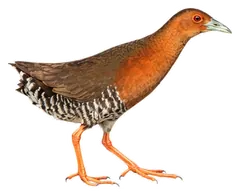 Band-bellied CrakeZapornia paykullii
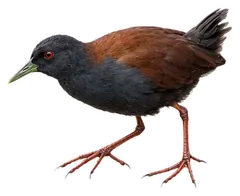 Black-tailed CrakeZapornia bicolor
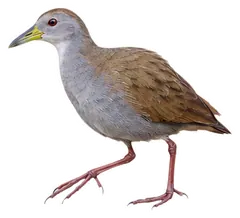 Brown CrakeZapornia akool
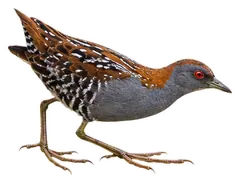 Baillon's CrakeZapornia pusilla
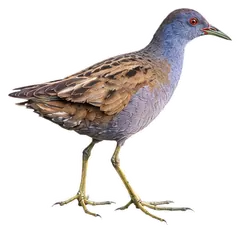 Little CrakeZapornia parva
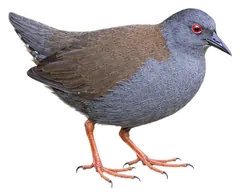 Spotless CrakeZapornia tabuensis
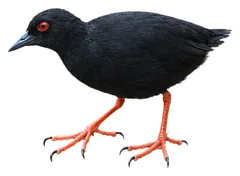 Henderson CrakeZapornia atra
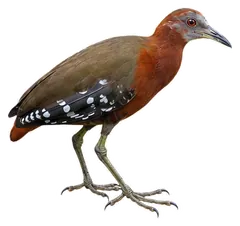 Grey-throated RailCanirallus oculeus
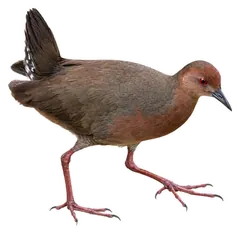
Download illustration
Free to use with credit: “Illustration: Bird Album (birdalbum.com)”. Drawn by AI from a reference photo by TAM Phan Minh. ↗
Heard it but can't see it? Mingji identifies birds by sound and photo, on your phone.
In other languages
- EnglishRuddy-breasted Crake
- 简体中文红胸田鸡
- 繁體中文緋秧雞
- 日本語ヒクイナ
- 한국어쇠뜸부기사촌
- DeutschZimtsumpfhuhn
- FrançaisMarouette brune
- EspañolPolluela pechirrufa
- Portuguêsfranga-de-água-de-peito-ruivo
- ItalianoSchiribilla pettorossiccio
- NederlandsBruin Porseleinhoen
- РусскийКрасноногий погоныш
- Svenskarödbrun sumphöna
- DanskRødbrystet Rørvagtel
- Polskikureczka kasztanowata