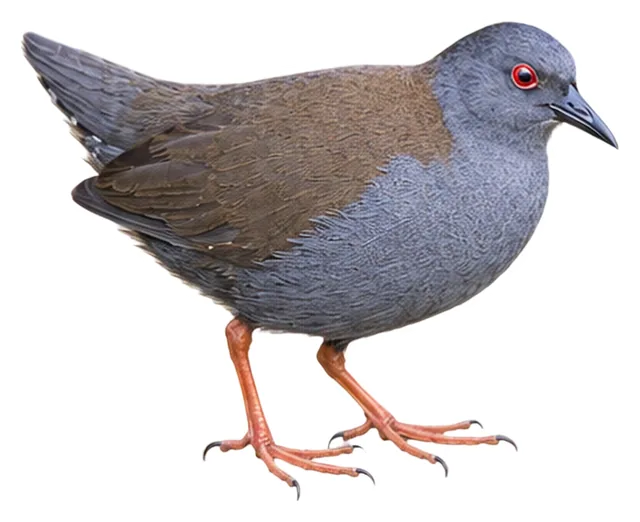
Spotless Crake
Zapornia tabuensis (Gmelin, JF, 1789)
42 gWeight
The spotless crake (Zapornia tabuensis) is a species of bird in the rail family, Rallidae.
Busiest months: January and September–October · Most records: Australia, New Zealand, Papua New Guinea
Where and when it's recorded
Busiest months: January and September–October · Most records: Australia, New Zealand, Papua New Guinea

Spotless Crake has been recorded at 180 of the 8,276 birding hotspots we track, in 12 countries and regions.
Records by month Southern Hemisphere
Where it's recorded most
- Sandy Camp Road WetlandsAustralia1,964 records
- Western Treatment PlantAustralia1,336 records
- Jerrabomberra Wetlands Nature ReserveAustralia1,034 records
More places
- Royal ParkAustralia538 records
- Laratinga WetlandsAustralia518 records
- Newport LakesAustralia383 records
- Western Treatment Plant – T Section PondsAustralia309 records
- Herdsman LakeAustralia281 records
- Lake Cargelligo Wastewater Treatment PlantAustralia271 records
- Tiritiri MatangiNew Zealand261 records
Countries and regions with the most records
eBird records via GBIF up to 2024-12-31. A record means someone listed it; more records partly mean more birders, not more birds.
About
The spotless crake (Zapornia tabuensis) is a species of bird in the rail family, Rallidae. It is widely distributed species occurring from the Philippines, New Guinea, Australia, New Zealand across the southern Pacific Ocean to the Marquesas Islands to the south east along the Tuamotus island chain to Pitcairn Oeno island.
Excerpt from Wikipedia, CC BY-SA 4.0 · authors · Read more on Wikipedia
Questions
How big is the Spotless Crake?
The Spotless Crake weighs around 42 g.
Where does the Spotless Crake live?
Its breeding range: Oriental, Australasia: Luzon and Mindoro (northern Philippines), Timor (eastern Lesser Sundas), Australasian region and Oceania. It is most often recorded in Australia, New Zealand and Papua New Guinea.
When is the best time to see the Spotless Crake?
At the hotspots we track, it is recorded most in January, September and October (Southern Hemisphere).
Is the Spotless Crake endangered?
The IUCN Red List classifies the Spotless Crake as Least Concern.
What does the Spotless Crake eat?
Main food: Omnivore.
What family is the Spotless Crake in?
It belongs to the family Rails, Crakes & Coots (Rallidae), order Gruiformes.
At a glance
- Weight
- 42 g
- Habitat
- Wetland
- Diet
- Omnivore
- Lifestyle
- Active on the ground
- Migration
- Resident (barely migrates)
- Conservation
- Least Concern
More measurements
- Wing
- 80 mm
- Tail
- 36 mm
- Bill
- 19 mm
- Tarsus
- 24 mm
Averages from the AVONET dataset; length from field guides where available.
Range
Oriental, Australasia: Luzon and Mindoro (northern Philippines), Timor (eastern Lesser Sundas), Australasian region and Oceania
Breeding range, IOC World Bird List 15.2
Classification
- Order
- Gruiformes
- Family
- Rails, Crakes & Coots Rallidae
- Genus
- Zapornia
Other birds in the genus Zapornia
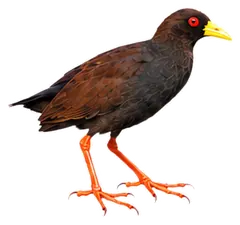 Black CrakeZapornia flavirostra
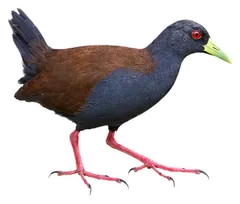 Sakalava RailZapornia olivieri
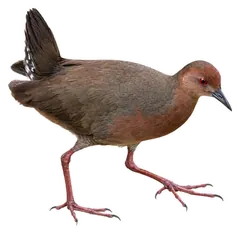 Ruddy-breasted CrakeZapornia fusca
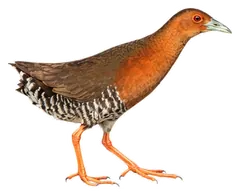 Band-bellied CrakeZapornia paykullii
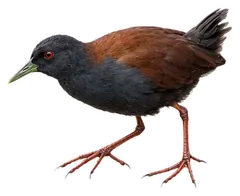 Black-tailed CrakeZapornia bicolor
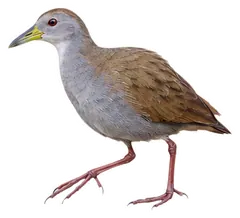 Brown CrakeZapornia akool
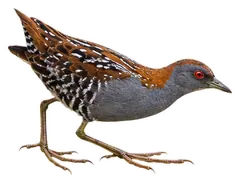 Baillon's CrakeZapornia pusilla
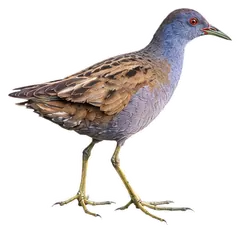 Little CrakeZapornia parva
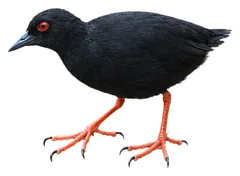 Henderson CrakeZapornia atra
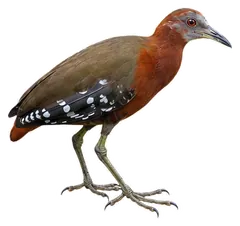 Grey-throated RailCanirallus oculeus
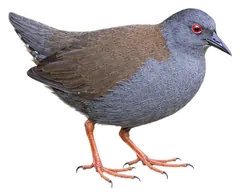
Download illustration
Free to use with credit: “Illustration: Bird Album (birdalbum.com)”. Drawn by AI from reference photos. ↗
Heard it but can't see it? Mingji identifies birds by sound and photo, on your phone.
In other languages
- EnglishSpotless Crake
- 简体中文无斑田鸡
- 繁體中文煙背田雞
- 日本語ミナミクロクイナ
- DeutschSüdsee-Sumpfhuhn
- FrançaisMarouette fuligineuse
- EspañolPolluela de Tongatapu
- Portuguêsfranga-de-água-fuliginosa
- ItalianoSchiribilla uniforme
- NederlandsPacifisch Porseleinhoen
- РусскийКрапчатый погоныш
- Svenskasotsumphöna
- DanskSodbrun Rørvagtel
- Polskikureczka posępna