 Bird Album
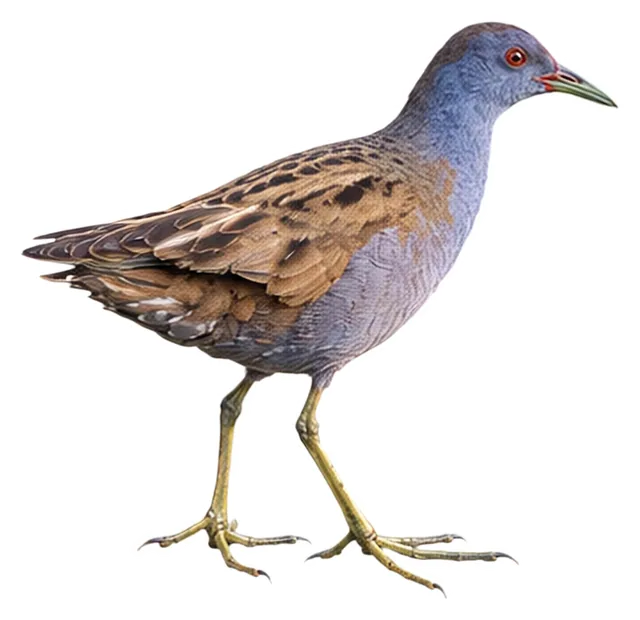
Little Crake
Zapornia parva (Scopoli, 1769)
17–19 cmLength37 cmWingspan50 gWeight
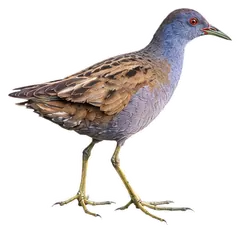
It is a small crake whose adult male has a blue-gray face and underparts, while the female has yellowish-brown underparts.
Busiest months: March–April · Most records: Israel, Kuwait, Türkiye
Looks like Baillon's Crake, Spotted Crake
How to identify
Field marks
- Short, straight yellow bill with red at the base of the bill
- Green legs and feet, with long toes
- Short tail with black-and-white barring underneath
- Adult male lacks dark barring and white spots on the flanks
Male, female and young
Adult male has mainly brown upperparts and a blue-gray face and underparts; female has pale yellowish-brown underparts and a gray face; immature resembles the female, with a white face and breast.
Voice
A sharp, short, barking “kua”; rather noisy on migration.
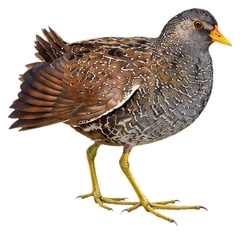
Similar species
Where and when it's recorded
Busiest months: March–April · Most records: Israel, Kuwait, Türkiye

Little Crake has been recorded at 371 of the 8,276 birding hotspots we track, in 61 countries and regions.
Records by month Northern Hemisphere
Where it's recorded most
- International Birding and Research Center Eilat (IBRCE)Israel1,272 records
- Al Jahra Reserve (Restricted access)Kuwait503 records
- Agia VarvaraCyprus210 records
More places
- RivaTürkiye150 records
- Poleg MarshIsrael140 records
- Kfar Ruppin fishpondsIsrael139 records
- Hama'apil FishpondsIsrael118 records
- Chorokhi River DeltaGeorgia116 records
- Eilat – KM19 Sewage Ponds 19Israel102 records
- Oasi del NerviaItaly92 records
Countries and regions with the most records
eBird records via GBIF up to 2024-12-31. A record means someone listed it; more records partly mean more birders, not more birds.
About
The little crake (Zapornia parva) is a very small waterbird of the family Rallidae. parva is Latin for "small". This species was long included in the genus Porzana.
Excerpt from Wikipedia, CC BY-SA 4.0 · authors · Read more on Wikipedia
Questions
How big is the Little Crake?
The Little Crake is about 17–19 cm long, with a wingspan of 37 cm and weighs around 50 g.
Where does the Little Crake live?
Its breeding range: Palearctic: southern and central Europe to northwestern China. It is most often recorded in Israel, Kuwait and Türkiye.
When is the best time to see the Little Crake?
At the hotspots we track, it is recorded most in March and April (Northern Hemisphere).
Is the Little Crake endangered?
The IUCN Red List classifies the Little Crake as Least Concern.
What does the Little Crake eat?
Main food: Fish, shrimp & shellfish.
What family is the Little Crake in?
It belongs to the family Rails, Crakes & Coots (Rallidae), order Gruiformes.
At a glance
- Length
- 17–19 cm
- Wingspan
- 37 cm
- Weight
- 50 g
- Habitat
- Wetland
- Diet
- Fish, shrimp & shellfish
- Lifestyle
- Active on the ground
- Migration
- Migratory
- Conservation
- Least Concern
More measurements
- Wing
- 101 mm
- Tail
- 53 mm
- Bill
- 19 mm
- Tarsus
- 29 mm
Averages from the AVONET dataset; length from field guides where available.
Range
Palearctic: southern and central Europe to northwestern China
Breeding range, IOC World Bird List 15.2
Classification
- Order
- Gruiformes
- Family
- Rails, Crakes & Coots Rallidae
- Genus
- Zapornia
Other birds in the genus Zapornia
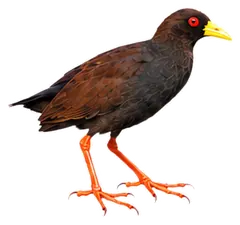 Black CrakeZapornia flavirostra
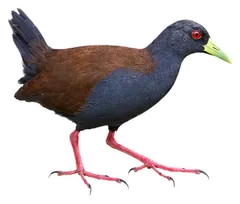 Sakalava RailZapornia olivieri
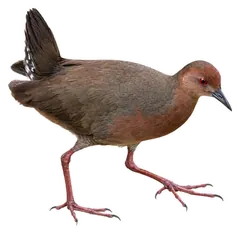 Ruddy-breasted CrakeZapornia fusca
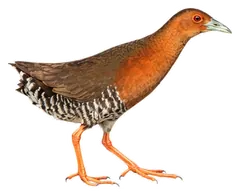 Band-bellied CrakeZapornia paykullii
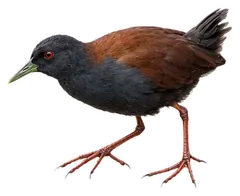 Black-tailed CrakeZapornia bicolor
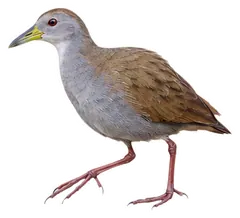 Brown CrakeZapornia akool
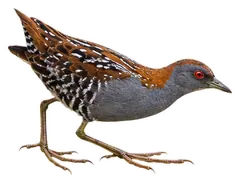 Baillon's CrakeZapornia pusilla
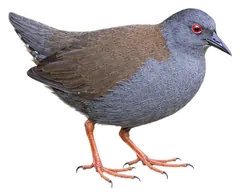 Spotless CrakeZapornia tabuensis
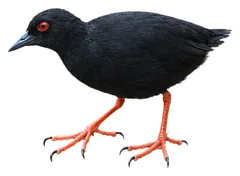 Henderson CrakeZapornia atra
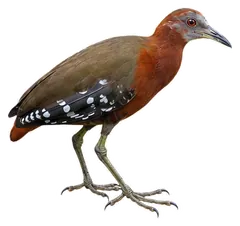 Grey-throated RailCanirallus oculeus
Download illustration
Free to use with credit: “Illustration: Bird Album (birdalbum.com)”. Drawn by AI from a reference photo by Светлана Стрижова. ↗
Heard it but can't see it? Mingji identifies birds by sound and photo, on your phone.