 Bird Album
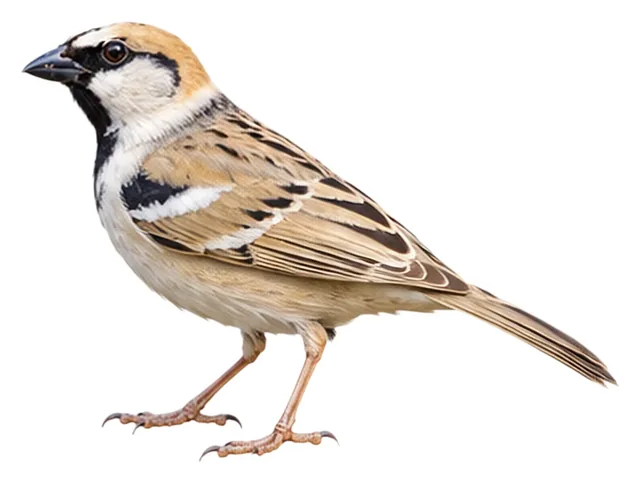
Saxaul Sparrow
Passer ammodendri Gould, 1872
≈16 cmLength29 gWeight
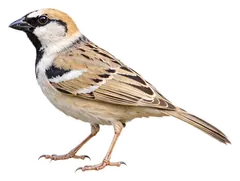
The male has a single black crown stripe flanked by bright chestnut.
Busiest months: June · Most records: Kazakhstan, Mongolia, China
How to identify
Field marks
- Male with one black crown stripe and one black eyestripe
- Male with bright chestnut sides of crown and nape
- Male's cheeks pale gray or yellowish-brown
Male, female and young
The female is paler and lacks the male's black head stripes.
Voice
Often gives a soft, melodious “cheerp cheerp”; in flight, a “twerp”.
Where and when it's recorded

Saxaul Sparrow has been recorded at 21 of the 8,171 birding hotspots we track, in 4 countries and regions.
Records by month Northern Hemisphere
Where it's recorded most
- Khongorin ElsMongolia112 records
- Ile River Delta – Zheltorangy Poplars;Kazakhstan89 records
- BeishawoChina39 records
More places
- Ile River Delta – Topar Lakes;Kazakhstan19 records
- ToudaoshaziChina16 records
- Ulungur Lake – EastChina14 records
- Alik LakeChina13 records
- Taukum DesertKazakhstan12 records
- Khoyor modny Well, Khovsgol, Dornogovi, MNMongolia11 records
- Urho Poplar ForestChina4 records
Countries and regions with the most records
eBird records via GBIF up to 2024-12-31. A record means someone listed it; more records partly mean more birders, not more birds.
About
The saxaul sparrow (Passer ammodendri) is a passerine bird of the sparrow family (Passeridae), found in parts of Central Asia. At 14–16 centimetres (5.5–6.3 in) and 25–32 grams (0.88–1.13 oz), it is among the larger range of sparrows. The head markings of both sexes make the saxaul sparrow distinctive and unlikely to be confused with any other bird.
Excerpt from Wikipedia, CC BY-SA 4.0 · authors · Read more on Wikipedia
Questions
How big is the Saxaul Sparrow?
The Saxaul Sparrow is about ≈16 cm long and weighs around 29 g.
Where does the Saxaul Sparrow live?
Its breeding range: Palearctic: temperate central Palearctic in saxaul and riparian scrub, fields: patchily southern Kazakhstan, northern Xinjiang (northwestern China) and southern, central Mongolia, southern in Uzbekistan and Turkmenistan to northern Gansu, western Inner Mongolia and northern Ningxia (north-central China). It is most often recorded in Kazakhstan, Mongolia and China.
When is the best time to see the Saxaul Sparrow?
At the hotspots we track, it is recorded most in June (Northern Hemisphere).
Is the Saxaul Sparrow endangered?
The IUCN Red List classifies the Saxaul Sparrow as Least Concern.
What does the Saxaul Sparrow eat?
Main food: Seeds.
What family is the Saxaul Sparrow in?
It belongs to the family Old World Sparrows, Snowfinches (Passeridae), order Passerines (Passeriformes).
At a glance
- Length
- ≈16 cm
- Weight
- 29 g
- Habitat
- Desert
- Diet
- Seeds
- Lifestyle
- Active on the ground
- Migration
- Resident (barely migrates)
- Conservation
- Least Concern
More measurements
- Wing
- 77 mm
- Tail
- 67 mm
- Bill
- 13 mm
- Tarsus
- 19 mm
Averages from the AVONET dataset; length from field guides where available.
Range
Palearctic: temperate central Palearctic in saxaul and riparian scrub, fields: patchily southern Kazakhstan, northern Xinjiang (northwestern China) and southern, central Mongolia, southern in Uzbekistan and Turkmenistan to northern Gansu, western Inner Mongolia and northern Ningxia (north-central China)
Breeding range, IOC World Bird List 15.2
Subspecies · 2
- Passer ammodendri nigricans e Kazakhstan to sw Mongolia and w China
- Passer ammodendri stoliczkae wc China and s Mongolia
Classification
- Order
- Passerines Passeriformes
- Family
- Old World Sparrows, Snowfinches Passeridae
- Genus
- Passer
Other birds in the genus Passer
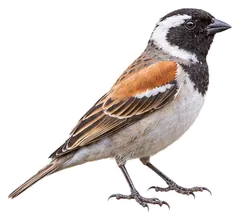 Cape SparrowPasser melanurus
 Chestnut SparrowPasser eminibey
 Kordofan SparrowPasser cordofanicus
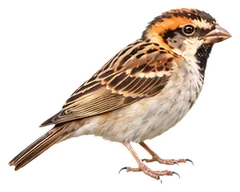 Shelley's SparrowPasser shelleyi
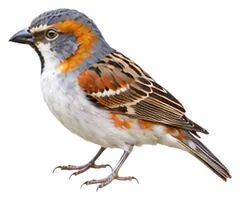 Kenya SparrowPasser rufocinctus
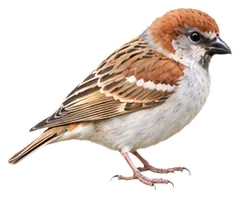 Great SparrowPasser motitensis
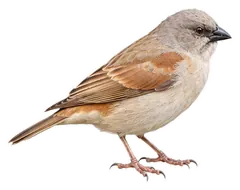 Northern Grey-headed SparrowPasser griseus
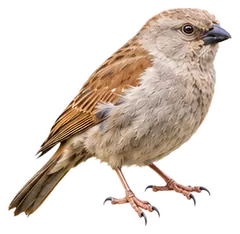 Swainson's SparrowPasser swainsonii
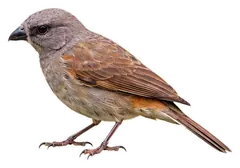 Swahili SparrowPasser suahelicus
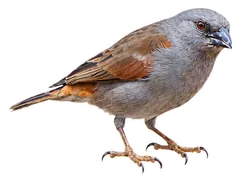 Parrot-billed SparrowPasser gongonensis
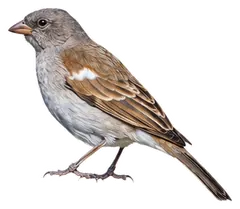 Southern Grey-headed SparrowPasser diffusus
 Sind SparrowPasser pyrrhonotus
Download illustration
Free to use with credit: “Illustration: Bird Album (birdalbum.com)”. Drawn by AI from a reference photo by Juugee Nergui. ↗
Heard it but can't see it? Mingji identifies birds by sound and photo, on your phone.