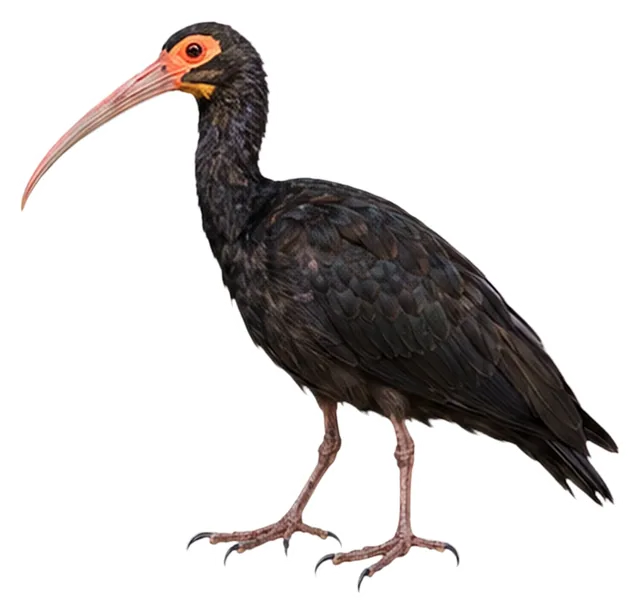
Sharp-tailed Ibis
Cercibis oxycerca (Spix, 1825)
75–86 cmLength1.8 kgWeight
The sharp-tailed ibis (Cercibis oxycerca) is a species of ibis native to open wet savannas in parts of northern South America.
Busiest months: January–February · Most records: Venezuela, Colombia, Guyana
Where and when it's recorded
Busiest months: January–February · Most records: Venezuela, Colombia, Guyana

Sharp-tailed Ibis has been recorded at 9 of the 8,276 birding hotspots we track, in 3 countries and regions.
Records by month Northern Hemisphere
Where it's recorded most
- Hato La Aurora – Ecolodge Juan SolitoColombia460 records
- Hato El CedralVenezuela274 records
- Hato PiñeroVenezuela266 records
More places
- Hato Masaguaral (propiedad privada) – alrededores de casa principal y oficinasVenezuela105 records
- Wichabai RanchGuyana62 records
- Dadanawa RanchGuyana18 records
- PN CauraVenezuela7 records
- Universidad de Los LlanosColombia7 records
- Manari RanchGuyana1 record
Countries and regions with the most records
eBird records via GBIF up to 2024-12-31. A record means someone listed it; more records partly mean more birders, not more birds.
About
The sharp-tailed ibis (Cercibis oxycerca) is a species of ibis native to open wet savannas in parts of northern South America.
Excerpt from Wikipedia, CC BY-SA 4.0 · authors · Read more on Wikipedia
Questions
How big is the Sharp-tailed Ibis?
The Sharp-tailed Ibis is about 75–86 cm long and weighs around 1.8 kg.
Where does the Sharp-tailed Ibis live?
Its breeding range: South America: eastern Colombia, Venezuela, Guyana and northern Brazil. It is most often recorded in Venezuela, Colombia and Guyana.
When is the best time to see the Sharp-tailed Ibis?
At the hotspots we track, it is recorded most in January and February (Northern Hemisphere).
Is the Sharp-tailed Ibis endangered?
The IUCN Red List classifies the Sharp-tailed Ibis as Least Concern.
What does the Sharp-tailed Ibis eat?
Main food: Fish, shrimp & shellfish.
What family is the Sharp-tailed Ibis in?
It belongs to the family Ibises, Spoonbills (Threskiornithidae), order Pelecaniformes.
At a glance
- Length
- 75–86 cm
- Weight
- 1.8 kg
- Habitat
- Grassland
- Diet
- Fish, shrimp & shellfish
- Lifestyle
- Active on the ground
- Migration
- Partial migrant
- Conservation
- Least Concern
More measurements
- Wing
- 400 mm
- Tail
- 262 mm
- Bill
- 159 mm
- Tarsus
- 76 mm
Averages from the AVONET dataset; length from field guides where available.
Range
South America: eastern Colombia, Venezuela, Guyana and northern Brazil
Breeding range, IOC World Bird List 15.2
Classification
- Order
- Pelecaniformes
- Family
- Ibises, Spoonbills Threskiornithidae
- Genus
- Cercibis
More from the family Ibises, Spoonbills
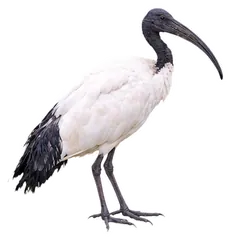 African Sacred IbisThreskiornis aethiopicus
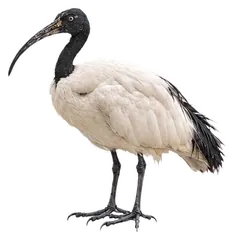 Malagasy Sacred IbisThreskiornis bernieri
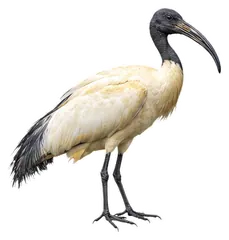 Black-headed IbisThreskiornis melanocephalus
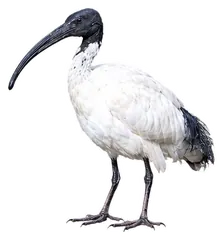 Australian White IbisThreskiornis molucca
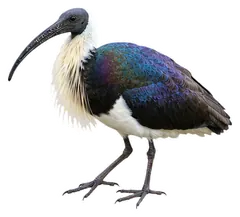 Straw-necked IbisThreskiornis spinicollis
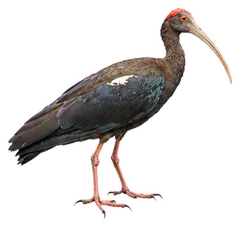 Red-naped IbisPseudibis papillosa
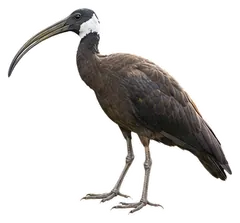 White-shouldered IbisPseudibis davisoni
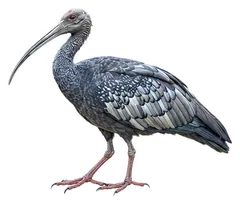 Giant IbisPseudibis gigantea
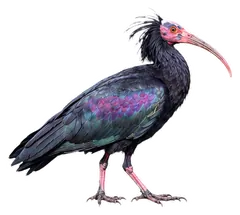 Northern Bald IbisGeronticus eremita
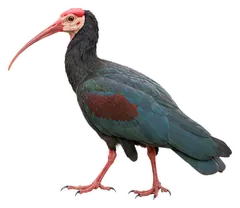 Southern Bald IbisGeronticus calvus
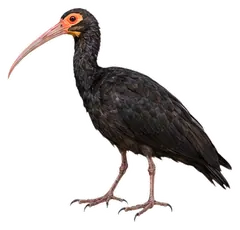
Download illustration
Free to use with credit: “Illustration: Bird Album (birdalbum.com)”. Drawn by AI from a reference photo by Adriano Lopes. ↗
Heard it but can't see it? Mingji identifies birds by sound and photo, on your phone.