 Bird Album
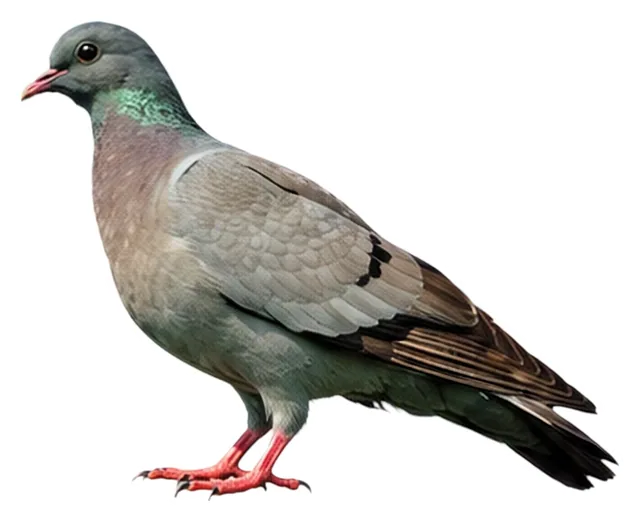
Stock Dove
Columba oenas Linnaeus, 1758
28–34 cmLength75 cmWingspan291 gWeight
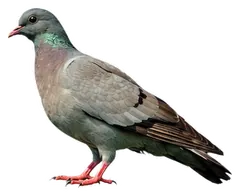
It is a blue-gray pigeon with a patch on the side of the neck whose metallic gloss shifts between green and purple with the light.
Busiest months: April–May · Most records: United Kingdom, Spain, Germany
Looks like Rock Dove, Common Wood Pigeon
How to identify
Field marks
- Plumage blue-gray
- Patch on side of neck with a metallic gloss shifting between green and purple with the light
- A single broad dark gray band at tail tip
- Bill pink, with yellow tip
Male, female and young
Sexes cannot be distinguished by plumage; male is slightly larger; juvenile is similar but lacks the patch with a metallic gloss on the side of the neck.
Voice
A short, low “Ooo-uu-ooh”, like a gurgle, unlike the rising and falling cooing of Common Wood Pigeon.
Similar species
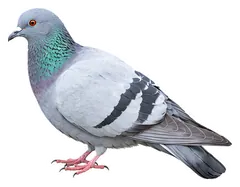
Similar in size and plumage; wild Rock Dove has brighter eyes, a white rump, and two complete dark bands on the upperwing, whereas Stock Dove has a gray rump and incomplete wing-bars.
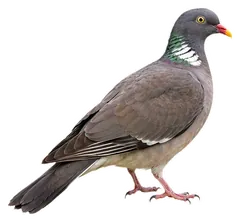
Common Wood Pigeon is larger with pale yellow eyes; adult has white on the neck and wings and is easy to distinguish.
Where and when it's recorded

Stock Dove has been recorded at 955 of the 8,171 birding hotspots we track, in 62 countries and regions.
Records by month Northern Hemisphere
Where it's recorded most
- Amwell HMWT NRUnited Kingdom4,572 records
- Beddington FarmlandsUnited Kingdom3,124 records
- Rutland WaterUnited Kingdom2,393 records
More places
- Spurn Bird Observatory Recording AreaUnited Kingdom1,968 records
- Parque El Retiro-MadridSpain1,963 records
- East Tilbury River and MarshesUnited Kingdom1,956 records
- Walthamstow WetlandsUnited Kingdom1,807 records
- South Downs NP – Pulborough Brooks RSPB ReserveUnited Kingdom1,635 records
- WWT London Wetland CentreUnited Kingdom1,475 records
- Saltholme RSPB ReserveUnited Kingdom1,317 records
Countries and regions with the most records
eBird records via GBIF up to 2024-12-31. A record means someone listed it; more records partly mean more birders, not more birds.
About
The stock dove (Columba oenas) is a species of bird in the family Columbidae, the doves and pigeons. It is widely distributed in the western Palearctic, north to central Scandinavia and south to northwest Africa. Western and southern populations are resident, while northeastern populations are migratory to avoid the colder winters there.
Excerpt from Wikipedia, CC BY-SA 4.0 · authors · Read more on Wikipedia
Questions
How big is the Stock Dove?
The Stock Dove is about 28–34 cm long, with a wingspan of 75 cm and weighs around 291 g.
Where does the Stock Dove live?
Its breeding range: Palearctic: western, southwestern. It is most often recorded in United Kingdom, Spain and Germany.
When is the best time to see the Stock Dove?
At the hotspots we track, it is recorded most in April and May (Northern Hemisphere).
Is the Stock Dove endangered?
The IUCN Red List classifies the Stock Dove as Least Concern.
What does the Stock Dove eat?
Main food: Omnivore.
What family is the Stock Dove in?
It belongs to the family Pigeons, Doves (Columbidae), order Columbiformes.
At a glance
- Length
- 28–34 cm
- Wingspan
- 75 cm
- Weight
- 291 g
- Habitat
- Woodland
- Diet
- Omnivore
- Lifestyle
- Active on the ground
- Migration
- Resident (barely migrates)
- Conservation
- Least Concern
More measurements
- Wing
- 215 mm
- Tail
- 119 mm
- Bill
- 23 mm
- Tarsus
- 26 mm
Averages from the AVONET dataset; length from field guides where available.
Range
Palearctic: western, southwestern
Breeding range, IOC World Bird List 15.2
Subspecies · 1
- Columba oenas yarkandensis se Kazakhstan and Uzbekistan to w China
Classification
- Order
- Columbiformes
- Family
- Pigeons, Doves Columbidae
- Genus
- Columba
Other birds in the genus Columba
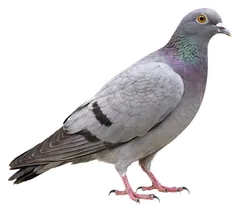
Rock DoveColumba livia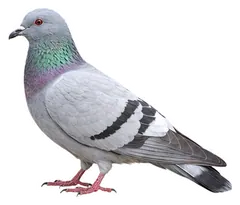 Hill PigeonColumba rupestris
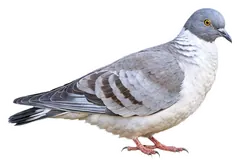 Snow PigeonColumba leuconota
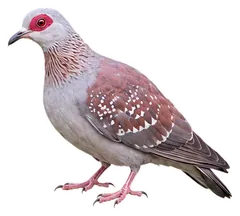 Speckled PigeonColumba guinea
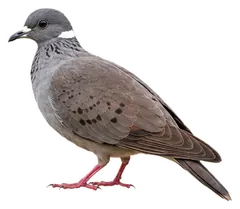 White-collared PigeonColumba albitorques
 Yellow-eyed PigeonColumba eversmanni
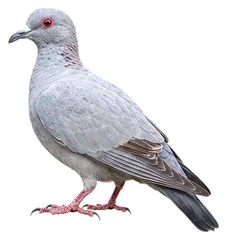 Somali PigeonColumba oliviaeCommon Wood PigeonColumba palumbus
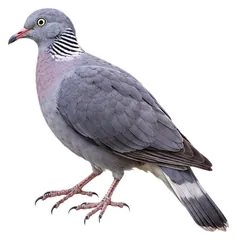 Trocaz PigeonColumba trocaz
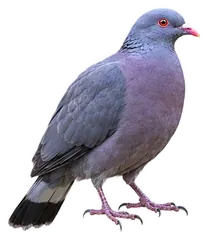 Bolle's PigeonColumba bollii
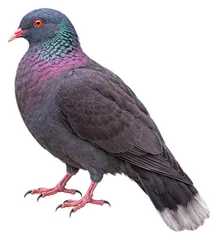 Laurel PigeonColumba junoniae
 Afep PigeonColumba unicincta
Download illustration
Free to use with credit: “Illustration: Bird Album (birdalbum.com)”. Drawn by AI from a reference photo by Sergey Kluchnikov. ↗
Heard it but can't see it? Mingji identifies birds by sound and photo, on your phone.