 Bird Album
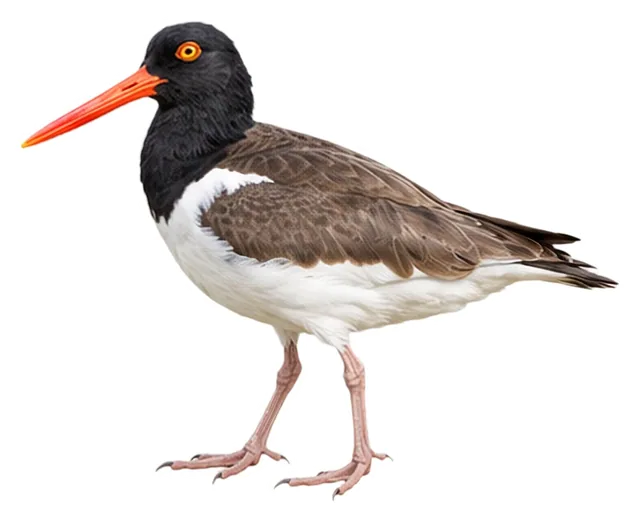
American Oystercatcher
Haematopus palliatus Temminck, 1820
42–52 cmLength602 gWeight
The American oystercatcher (Haematopus palliatus), occasionally called the American pied oystercatcher, is a member of family Haematopodidae.
Busiest months: May · Most records: United States, Chile, Peru
Where and when it's recorded

American Oystercatcher has been recorded at 416 of the 8,171 birding hotspots we track, in 41 countries and regions.
Records by month Northern Hemisphere
Where it's recorded most
- Cape Island – South Cape May MeadowsUnited States10,684 records
- Milford Point, CT AudubonUnited States9,810 records
- Fort De Soto ParkUnited States8,433 records
More places
- Edwin B. Forsythe NWRUnited States7,446 records
- Sandy HookUnited States6,993 records
- Cape Island – Cape May Point SPUnited States6,001 records
- Plumb BeachUnited States5,894 records
- Jamaica Bay Wildlife RefugeUnited States5,680 records
- Chincoteague NWRUnited States5,413 records
- Edwin B. Forsythe NWR – Wildlife DriveUnited States5,266 records
Countries and regions with the most records
eBird records via GBIF up to 2024-12-31. A record means someone listed it; more records partly mean more birders, not more birds.
About
The American oystercatcher (Haematopus palliatus), occasionally called the American pied oystercatcher, is a member of family Haematopodidae. Originally called the "sea pie", it was renamed in 1731 when naturalist Mark Catesby claimed that he had observed the bird eating oysters. The current population of American oystercatchers is estimated to be 50,000 – 99,999 mature individuals.
Excerpt from Wikipedia, CC BY-SA 4.0 · authors · Read more on Wikipedia
Questions
How big is the American Oystercatcher?
The American Oystercatcher is about 42–52 cm long and weighs around 602 g.
Where does the American Oystercatcher live?
Its breeding range: North America, Middle America, South America: widespread coastal western Mexico to south-central Chile; coastal northeastern USA to northern Gulf of Mexico, Yucatan Peninsula; Caribbean (local) to southern Argentina. It is most often recorded in United States, Chile and Peru.
When is the best time to see the American Oystercatcher?
At the hotspots we track, it is recorded most in May (Northern Hemisphere).
Is the American Oystercatcher endangered?
The IUCN Red List classifies the American Oystercatcher as Least Concern.
What does the American Oystercatcher eat?
Main food: Fish, shrimp & shellfish.
What family is the American Oystercatcher in?
It belongs to the family Oystercatchers (Haematopodidae), order Charadriiformes.
At a glance
- Length
- 42–52 cm
- Weight
- 602 g
- Habitat
- Coast & tidal flats
- Diet
- Fish, shrimp & shellfish
- Lifestyle
- Active on the ground
- Migration
- Resident (barely migrates)
- Conservation
- Least Concern
More measurements
- Wing
- 247 mm
- Tail
- 96 mm
- Bill
- 86 mm
- Tarsus
- 54 mm
Averages from the AVONET dataset; length from field guides where available.
Range
North America, Middle America, South America: widespread coastal western Mexico to south-central Chile; coastal northeastern USA to northern Gulf of Mexico, Yucatan Peninsula; Caribbean (local) to southern Argentina
Breeding range, IOC World Bird List 15.2
Classification
- Order
- Charadriiformes
- Family
- Oystercatchers Haematopodidae
- Genus
- Haematopus
Other birds in the genus Haematopus
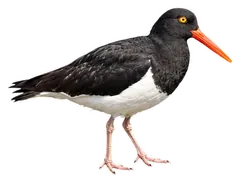 Magellanic OystercatcherHaematopus leucopodus
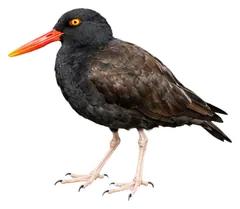 Blackish OystercatcherHaematopus ater
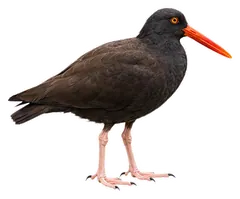 Black OystercatcherHaematopus bachmani
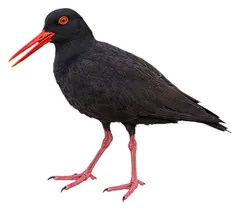 African OystercatcherHaematopus moquini
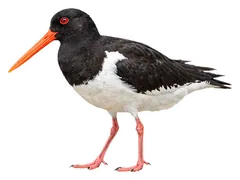 Eurasian OystercatcherHaematopus ostralegus
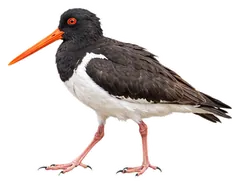 South Island OystercatcherHaematopus finschi
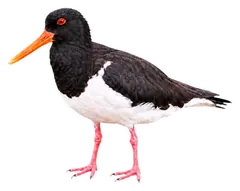 Pied OystercatcherHaematopus longirostris
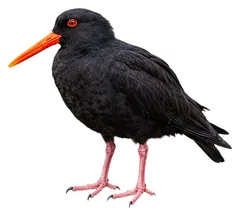 Variable OystercatcherHaematopus unicolor
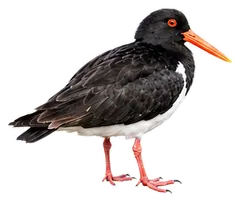 Chatham Islands OystercatcherHaematopus chathamensis
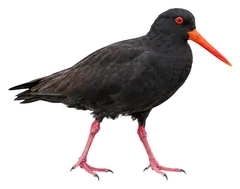 Sooty OystercatcherHaematopus fuliginosus
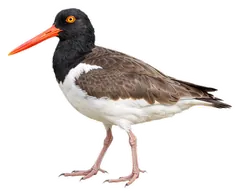
Download illustration
Free to use with credit: “Illustration: Bird Album (birdalbum.com)”. Drawn by AI from a reference photo by Carlos Moura. ↗
Heard it but can't see it? Mingji identifies birds by sound and photo, on your phone.
In other languages
- EnglishAmerican Oystercatcher
- 简体中文美洲斑蛎鹬
- 繁體中文美洲蠣鴴
- 日本語アメリカミヤコドリ
- DeutschBraunmantel-Austernfischer
- FrançaisHuîtrier d’Amérique
- EspañolOstrero pío americano
- Portuguêspirupiru-americano
- ItalianoBeccaccia di mare americana
- NederlandsAmerikaanse Bonte Scholekster
- РусскийАмериканский кулик-сорока
- Svenskaamerikansk strandskata
- DanskAmerikansk Strandskade
- Polskiostrygojad brunatny