 Bird Album
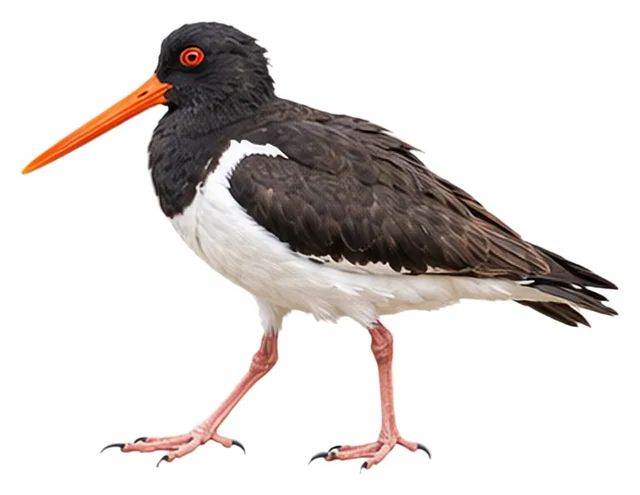
South Island Oystercatcher
Haematopus finschi Martens, GH, 1897
526 gWeight
The South Island oystercatcher or South Island pied oystercatcher (Haematopus finschi) is one of two common oystercatcher species found in New Zealand.
Busiest months: January and November · Most records: New Zealand, Australia, Norfolk Island
Where and when it's recorded

South Island Oystercatcher has been recorded at 107 of the 8,171 birding hotspots we track, in 3 countries and regions.
Records by month Southern Hemisphere
Where it's recorded most
- Miranda – main hide/LimeworksNew Zealand1,347 records
- Foxton Beach – Manawatu estuaryNew Zealand814 records
- Miranda Shorebird CentreNew Zealand783 records
More places
- Ashley Estuary south endNew Zealand713 records
- Ashley River EstuaryNew Zealand628 records
- Ambury Regional Park – Shell IslandNew Zealand621 records
- Miranda – 'Stilt Hide' & poolsNew Zealand596 records
- Miranda – Ray's Rest/Taramaire Creek mouthNew Zealand589 records
- Manawatu Estuary – spit/Dawick St platformNew Zealand498 records
- Ambury Regional ParkNew Zealand468 records
Countries and regions with the most records
eBird records via GBIF up to 2024-12-31. A record means someone listed it; more records partly mean more birders, not more birds.
About
The South Island oystercatcher or South Island pied oystercatcher (Haematopus finschi) is one of two common oystercatcher species found in New Zealand. Its name is often contracted to the acronym "SIPO" (rhyming with "typo"). The indigenous Māori name is tōrea.
Excerpt from Wikipedia, CC BY-SA 4.0 · authors · Read more on Wikipedia
Questions
How big is the South Island Oystercatcher?
The South Island Oystercatcher weighs around 526 g.
Where does the South Island Oystercatcher live?
Its breeding range: Australasia: inland South Island (New Zealand). It is most often recorded in New Zealand, Australia and Norfolk Island.
When is the best time to see the South Island Oystercatcher?
At the hotspots we track, it is recorded most in January and November (Southern Hemisphere).
Is the South Island Oystercatcher endangered?
The IUCN Red List classifies the South Island Oystercatcher as Least Concern.
What does the South Island Oystercatcher eat?
Main food: Fish, shrimp & shellfish.
What family is the South Island Oystercatcher in?
It belongs to the family Oystercatchers (Haematopodidae), order Charadriiformes.
At a glance
- Weight
- 526 g
- Habitat
- Coast & tidal flats
- Diet
- Fish, shrimp & shellfish
- Lifestyle
- Active on the ground
- Migration
- Resident (barely migrates)
- Conservation
- Least Concern
More measurements
- Wing
- 252 mm
- Tail
- 92 mm
- Bill
- 90 mm
- Tarsus
- 47 mm
Averages from the AVONET dataset; length from field guides where available.
Range
Australasia: inland South Island (New Zealand)
Breeding range, IOC World Bird List 15.2
Classification
- Order
- Charadriiformes
- Family
- Oystercatchers Haematopodidae
- Genus
- Haematopus
Other birds in the genus Haematopus
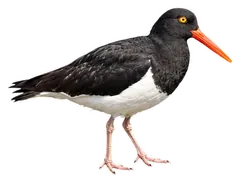 Magellanic OystercatcherHaematopus leucopodus
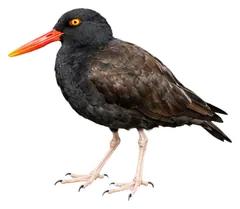 Blackish OystercatcherHaematopus ater
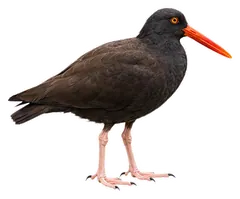 Black OystercatcherHaematopus bachmani
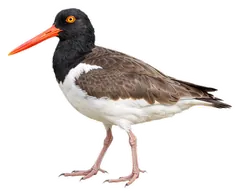 American OystercatcherHaematopus palliatus
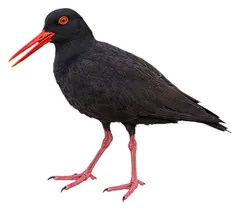 African OystercatcherHaematopus moquini
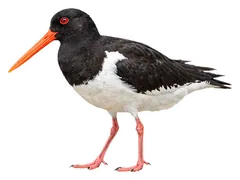 Eurasian OystercatcherHaematopus ostralegus
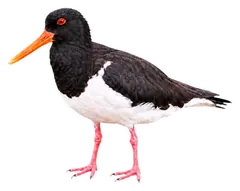 Pied OystercatcherHaematopus longirostris
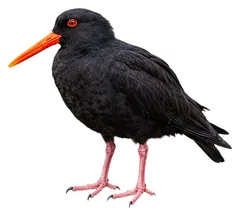 Variable OystercatcherHaematopus unicolor
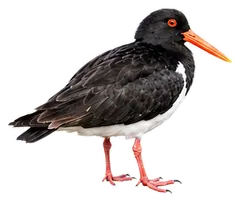 Chatham Islands OystercatcherHaematopus chathamensis
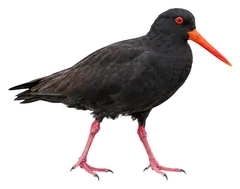 Sooty OystercatcherHaematopus fuliginosus
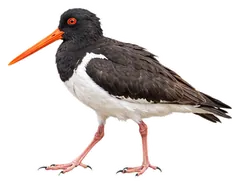
Download illustration
Free to use with credit: “Illustration: Bird Album (birdalbum.com)”. Drawn by AI from a reference photo by Tony Palliser. ↗
Heard it but can't see it? Mingji identifies birds by sound and photo, on your phone.
In other languages
- EnglishSouth Island Oystercatcher
- 简体中文南岛斑蛎鹬
- 繁體中文南島蠣鴴
- 日本語ミナミミヤコドリ
- DeutschSüdinsel-Austernfischer
- FrançaisHuîtrier de Finsch
- EspañolOstrero de Finsch
- Portuguêsostraceiro-do-sul
- ItalianoBeccaccia di mare di South Island
- NederlandsFinsch' Scholekster
- РусскийНовозеландский кулик-сорока
- Svenskasydöstrandskata
- DanskSydø Strandskade
- Polskiostrygojad nowozelandzki