 Bird Album
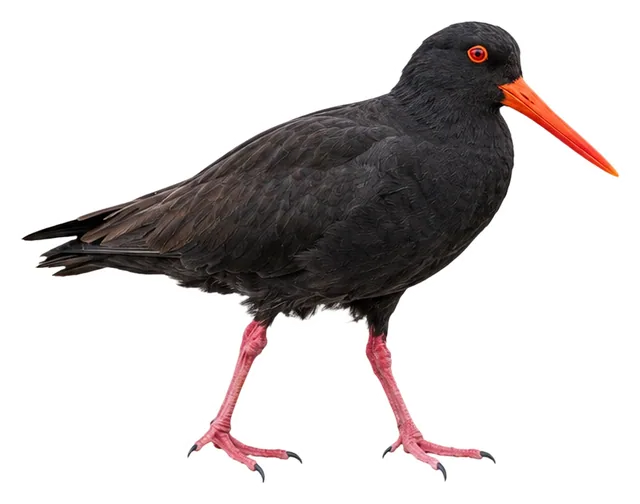
Sooty Oystercatcher
Haematopus fuliginosus Gould, 1845
819 gWeight
The sooty oystercatcher (Haematopus fuliginosus) is a species of oystercatcher.
Busiest months: February–March · Most records: Australia
Where and when it's recorded

Sooty Oystercatcher has been recorded at 41 of the 8,171 birding hotspots we track, in 1 country or region.
Records by month Southern Hemisphere
Where it's recorded most
- Long Reef Aquatic ReserveAustralia1,307 records
- Jawbone Flora and Fauna ReserveAustralia375 records
- Eaglehawk Neck Pelagic TripAustralia323 records
More places
- Stockyard PointAustralia257 records
- Western Treatment PlantAustralia243 records
- Ricketts PointAustralia240 records
- Kakadu BeachAustralia161 records
- Hunter Wetlands National Park – Stockton SandspitAustralia110 records
- Toorbul High Tide RoostAustralia106 records
- Buffalo CreekAustralia96 records
Countries and regions with the most records
eBird records via GBIF up to 2024-12-31. A record means someone listed it; more records partly mean more birders, not more birds.
About
The sooty oystercatcher (Haematopus fuliginosus) is a species of oystercatcher. It is a wading bird endemic to Australia and commonly found on its coastline. It prefers rocky coastlines, but will occasionally live in estuaries.
Excerpt from Wikipedia, CC BY-SA 4.0 · authors · Read more on Wikipedia
Questions
How big is the Sooty Oystercatcher?
The Sooty Oystercatcher weighs around 819 g.
Where does the Sooty Oystercatcher live?
Its breeding range: Australasia: coastal Australia and Tasmania. It is most often recorded in Australia.
When is the best time to see the Sooty Oystercatcher?
At the hotspots we track, it is recorded most in February and March (Southern Hemisphere).
Is the Sooty Oystercatcher endangered?
The IUCN Red List classifies the Sooty Oystercatcher as Least Concern.
What does the Sooty Oystercatcher eat?
Main food: Fish, shrimp & shellfish.
What family is the Sooty Oystercatcher in?
It belongs to the family Oystercatchers (Haematopodidae), order Charadriiformes.
At a glance
- Weight
- 819 g
- Habitat
- Coast & tidal flats
- Diet
- Fish, shrimp & shellfish
- Lifestyle
- Active on the ground
- Migration
- Resident (barely migrates)
- Conservation
- Least Concern
More measurements
- Wing
- 283 mm
- Tail
- 118 mm
- Bill
- 81 mm
- Tarsus
- 52 mm
Averages from the AVONET dataset; length from field guides where available.
Range
Australasia: coastal Australia and Tasmania
Breeding range, IOC World Bird List 15.2
Classification
- Order
- Charadriiformes
- Family
- Oystercatchers Haematopodidae
- Genus
- Haematopus
Other birds in the genus Haematopus
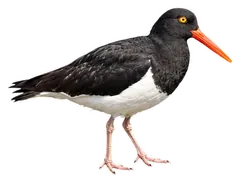 Magellanic OystercatcherHaematopus leucopodus
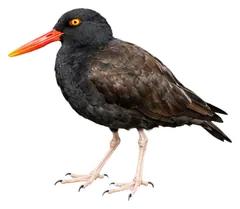 Blackish OystercatcherHaematopus ater
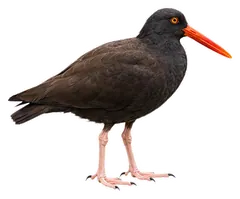 Black OystercatcherHaematopus bachmani
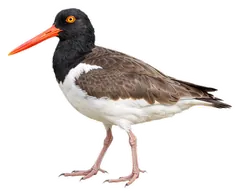 American OystercatcherHaematopus palliatus
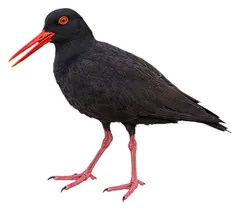 African OystercatcherHaematopus moquini
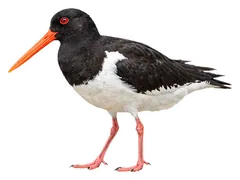 Eurasian OystercatcherHaematopus ostralegus
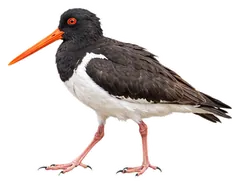 South Island OystercatcherHaematopus finschi
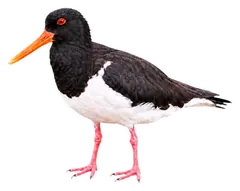 Pied OystercatcherHaematopus longirostris
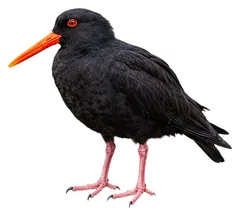 Variable OystercatcherHaematopus unicolor
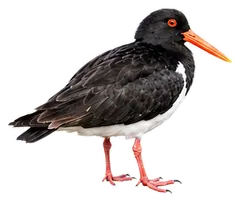 Chatham Islands OystercatcherHaematopus chathamensis
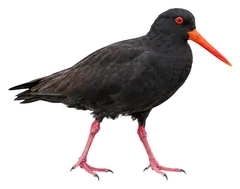
Download illustration
Free to use with credit: “Illustration: Bird Album (birdalbum.com)”. Drawn by AI from a reference photo by Adam Fry. ↗
Heard it but can't see it? Mingji identifies birds by sound and photo, on your phone.
In other languages
- EnglishSooty Oystercatcher
- 简体中文澳洲黑蛎鹬
- 繁體中文烏蠣鴴
- 日本語オーストラリアクロミヤコドリ
- DeutschRußausternfischer
- FrançaisHuîtrier fuligineux
- EspañolOstrero negro australiano
- Portuguêsostraceiro-fuliginoso
- ItalianoBeccaccia di mare fuligginosa
- NederlandsAustralische Zwarte Scholekster
- РусскийАвстралийский кулик-сорока
- Svenskasotstrandskata
- DanskSodfarvet Strandskade
- Polskiostrygojad australijski