 Bird Album
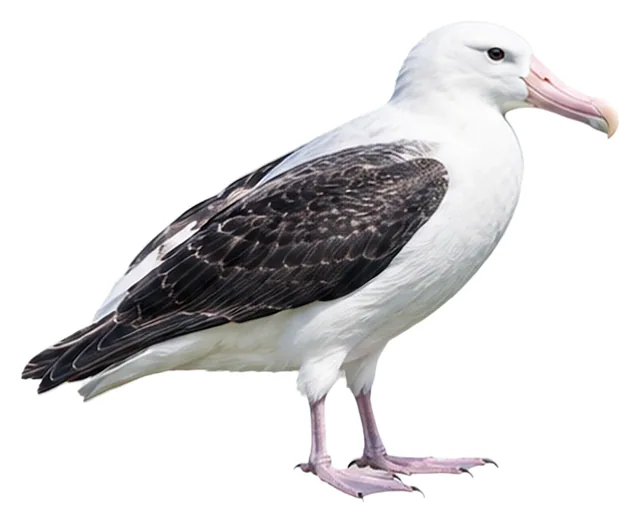
Antipodean Albatross
Diomedea antipodensis Robertson, CJR & Warham, 1992
110 cmLength7 kgWeight
The Antipodean albatross (Diomedea antipodensis) (Māori: Toroa) is a large seabird in the albatross family.
Busiest months: January–February and November · Most records: New Zealand, Australia, Chile
Where and when it's recorded

Antipodean Albatross has been recorded at 19 of the 8,171 birding hotspots we track, in 5 countries and regions.
Records by month Southern Hemisphere
Where it's recorded most
- Kaikoura – offshore – Albatross Encounter pelagicNew Zealand5,871 records
- Eaglehawk Neck Pelagic TripAustralia1,618 records
- Poor Knights Shelf AreaNew Zealand197 records
More places
- Cook Strait FerryNew Zealand50 records
- Kaikoura – Point Kean Seal ColonyNew Zealand43 records
- Quintero – PelágicoChile28 records
- Stewart Island – east coast pelagic watersNew Zealand15 records
- Valparaíso – PelágicoChile15 records
- Kaikoura – South Bay ReserveNew Zealand8 records
- Foveaux StraitNew Zealand8 records
Countries and regions with the most records
eBird records via GBIF up to 2024-12-31. A record means someone listed it; more records partly mean more birders, not more birds.
About
The Antipodean albatross (Diomedea antipodensis) (Māori: Toroa) is a large seabird in the albatross family. Its recognition as more than a subspecies of the wandering albatross is relatively recent, and still not accepted by all authorities. Antipodean albatrosses are smaller than other former wandering albatrosses, now called snowy albatrosses, and breed in predominantly brown plumage, but are otherwise difficult to distinguish from young snowy albatrosses (snowy albatrosses grow lighter in color with age, while the Antipodean stays darker).
Excerpt from Wikipedia, CC BY-SA 4.0 · authors · Read more on Wikipedia
Questions
How big is the Antipodean Albatross?
The Antipodean Albatross is about 110 cm long and weighs around 7 kg.
Where does the Antipodean Albatross live?
Its breeding range: Pacific Ocean: Chatham, Antipodes, Auckland and Campbell islands (eastern, south of South Island; New Zealand). It is most often recorded in New Zealand, Australia and Chile.
When is the best time to see the Antipodean Albatross?
At the hotspots we track, it is recorded most in January, February and November (Southern Hemisphere).
Is the Antipodean Albatross endangered?
The IUCN Red List classifies the Antipodean Albatross as Endangered.
What does the Antipodean Albatross eat?
Main food: Fish, shrimp & shellfish.
What family is the Antipodean Albatross in?
It belongs to the family Albatrosses (Diomedeidae), order Procellariiformes.
At a glance
- Length
- 110 cm
- Weight
- 7 kg
- Diet
- Fish, shrimp & shellfish
- Lifestyle
- On the water surface
- Migration
- Migratory
- Conservation
- Endangered
More measurements
- Wing
- 628 mm
- Tail
- 176 mm
- Bill
- 151 mm
- Tarsus
- 112 mm
Averages from the AVONET dataset; length from field guides where available.
Range
Pacific Ocean: Chatham, Antipodes, Auckland and Campbell islands (eastern, south of South Island; New Zealand)
Breeding range, IOC World Bird List 15.2
Classification
- Order
- Procellariiformes
- Family
- Albatrosses Diomedeidae
- Genus
- Diomedea
Other birds in the genus Diomedea
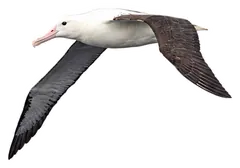 Northern Royal AlbatrossDiomedea sanfordi
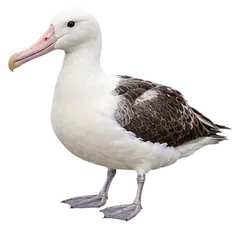 Southern Royal AlbatrossDiomedea epomophora
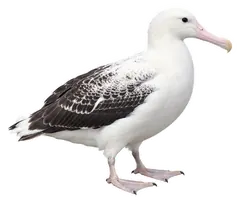 Snowy AlbatrossDiomedea exulans
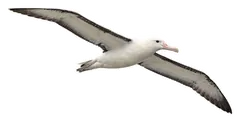 Tristan AlbatrossDiomedea dabbenena
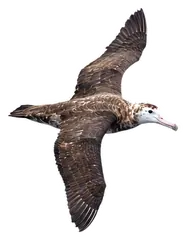 Amsterdam AlbatrossDiomedea amsterdamensis
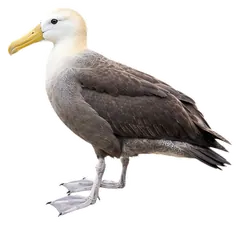 Waved AlbatrossPhoebastria irrorata
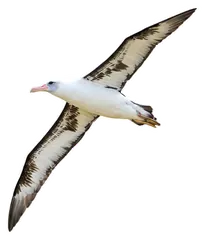 Laysan AlbatrossPhoebastria immutabilis
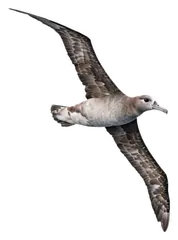 Black-footed AlbatrossPhoebastria nigripes
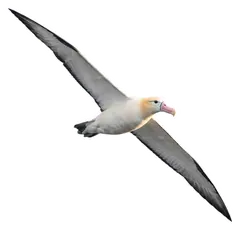 Short-tailed AlbatrossPhoebastria albatrus
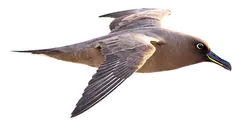 Sooty AlbatrossPhoebetria fusca
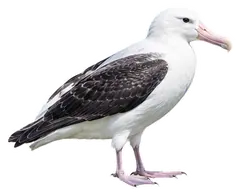
Download illustration
Free to use with credit: “Illustration: Bird Album (birdalbum.com)”. Drawn by AI from a reference photo by Sandy Thomas. ↗
Heard it but can't see it? Mingji identifies birds by sound and photo, on your phone.
In other languages
- EnglishAntipodean Albatross
- 简体中文安岛信天翁
- 繁體中文對蹠群島信天翁
- 日本語アンティポデスアホウドリ
- DeutschAntipodenalbatros
- FrançaisAlbatros des Antipodes
- EspañolAlbatros de las Antípodas
- Portuguêsalbatroz-das-antípodas
- ItalianoAlbatros degli Antipodi
- NederlandsAntipodenalbatros
- РусскийАнтиподов альбатрос
- Svenskaantipodalbatross
- DanskAntipodesalbatros
- Polskialbatros różowodzioby