 Bird Album
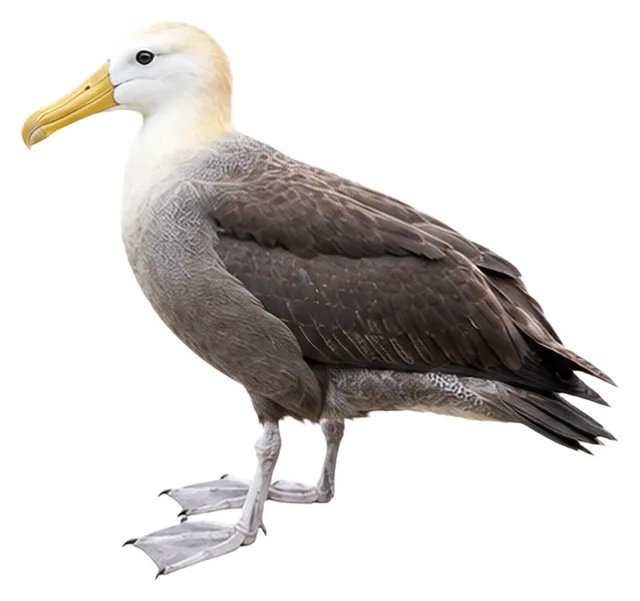
Waved Albatross
Phoebastria irrorata (Salvin, 1883)
3.4 kgWeight
The waved albatross (Phoebastria irrorata), also known as Galapagos albatross, is one of three species of the family Diomedeidae that occur in the tropics.
Busiest months: June–July · Most records: Ecuador, Chile, Peru
Where and when it's recorded

Waved Albatross has been recorded at 6 of the 8,171 birding hotspots we track, in 3 countries and regions.
Records by month Southern Hemisphere
Where it's recorded most
- Española – Punta SuárezEcuador1,415 records
- Quintero – PelágicoChile40 records
- Valparaíso – PelágicoChile5 records
More places
- Salinas – Lagunas de EcuasalEcuador2 records
- Refugio de Vida Silvestre Los Pantanos de VillaPeru1 record
- Ayampe – Ruta del ColibríEcuador1 record
Countries and regions with the most records
eBird records via GBIF up to 2024-12-31. A record means someone listed it; more records partly mean more birders, not more birds.
About
The waved albatross (Phoebastria irrorata), also known as Galapagos albatross, is one of three species of the family Diomedeidae that occur in the tropics. When they forage, they follow a straight path to a single site off the coast of Peru, about 1,000 km (620 mi) to the east. During the non-breeding season, these birds reside primarily on the Ecuadorian and Peruvian coasts.
Excerpt from Wikipedia, CC BY-SA 4.0 · authors · Read more on Wikipedia
Questions
How big is the Waved Albatross?
The Waved Albatross weighs around 3.4 kg.
Where does the Waved Albatross live?
Its breeding range: Pacific Ocean: Hood (=Espanola, southeastern Galápagos) and Island La Plata (off coastal Ecuador). It is most often recorded in Ecuador, Chile and Peru.
When is the best time to see the Waved Albatross?
At the hotspots we track, it is recorded most in June and July (Southern Hemisphere).
Is the Waved Albatross endangered?
The IUCN Red List classifies the Waved Albatross as Critically Endangered.
What does the Waved Albatross eat?
Main food: Fish, shrimp & shellfish.
What family is the Waved Albatross in?
It belongs to the family Albatrosses (Diomedeidae), order Procellariiformes.
At a glance
- Weight
- 3.4 kg
- Habitat
- Ocean
- Diet
- Fish, shrimp & shellfish
- Lifestyle
- Varied
- Migration
- Partial migrant
- Conservation
- Critically Endangered
More measurements
- Wing
- 534 mm
- Tail
- 138 mm
- Bill
- 151 mm
- Tarsus
- 101 mm
Averages from the AVONET dataset; length from field guides where available.
Range
Pacific Ocean: Hood (=Espanola, southeastern Galápagos) and Island La Plata (off coastal Ecuador)
Breeding range, IOC World Bird List 15.2
Classification
- Order
- Procellariiformes
- Family
- Albatrosses Diomedeidae
- Genus
- Phoebastria
Other birds in the genus Phoebastria
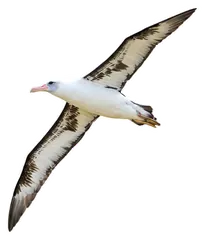 Laysan AlbatrossPhoebastria immutabilis
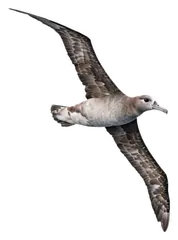 Black-footed AlbatrossPhoebastria nigripes
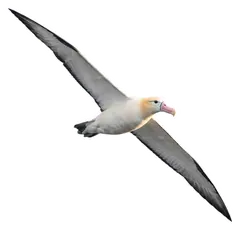 Short-tailed AlbatrossPhoebastria albatrus
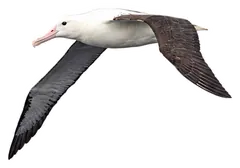 Northern Royal AlbatrossDiomedea sanfordi
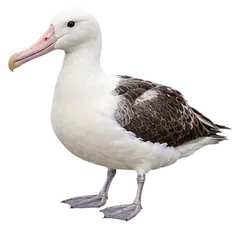 Southern Royal AlbatrossDiomedea epomophora
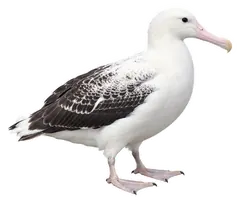 Snowy AlbatrossDiomedea exulans
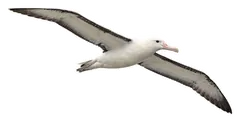 Tristan AlbatrossDiomedea dabbenena
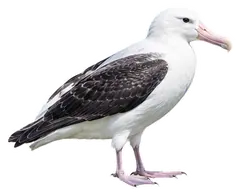 Antipodean AlbatrossDiomedea antipodensis
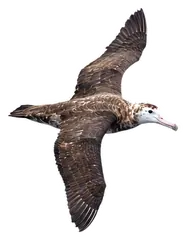 Amsterdam AlbatrossDiomedea amsterdamensis
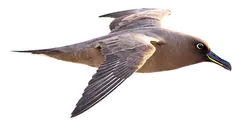 Sooty AlbatrossPhoebetria fusca
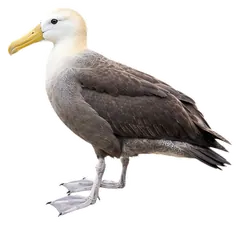
Download illustration
Free to use with credit: “Illustration: Bird Album (birdalbum.com)”. Drawn by AI from a reference photo by Douglas J. Long. ↗
Heard it but can't see it? Mingji identifies birds by sound and photo, on your phone.
In other languages
- EnglishWaved Albatross
- 简体中文加岛信天翁
- 繁體中文加拉巴哥信天翁
- 日本語ガラパゴスアホウドリ
- DeutschGalápagosalbatros
- FrançaisAlbatros des Galapagos
- EspañolAlbatros de Galápagos
- Portuguêsalbatroz-das-galápagos
- ItalianoAlbatros vermicolato
- NederlandsGalápagosalbatros
- РусскийГалапагосский альбатрос
- Svenskagalápagosalbatross
- DanskGalápagos Albatros
- Polskialbatros galapagoski