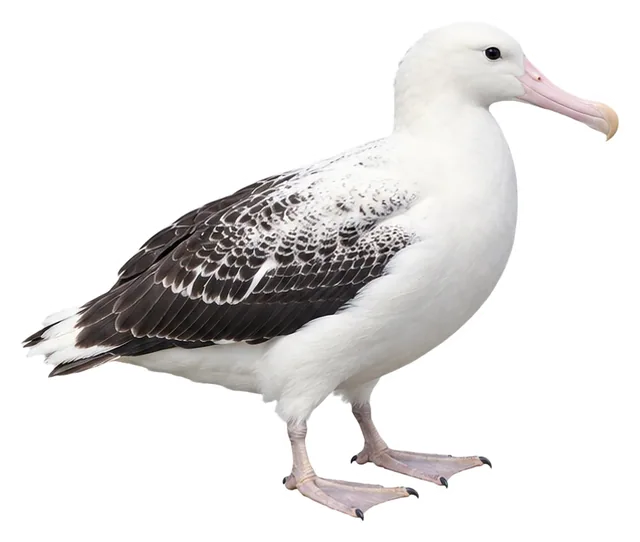
Snowy Albatross
Diomedea exulans Linnaeus, 1758
107–135 cmLength7 kgWeight
The snowy albatross (Diomedea exulans), also known as the wandering albatross, white-winged albatross, or goonie, is a large seabird from the family Diomedeidae; they have a circumpolar range in the Southern Ocean.
Busiest months: January, May, September and November · Most records: Australia, South Georgia & South Sandwich Islands, New Zealand
Where and when it's recorded
Busiest months: January, May, September and November · Most records: Australia, South Georgia & South Sandwich Islands, New Zealand

Snowy Albatross has been recorded at 35 of the 8,276 birding hotspots we track, in 9 countries and regions.
Records by month Southern Hemisphere
Where it's recorded most
- Eaglehawk Neck Pelagic TripAustralia998 records
- Prion IslandSouth Georgia & South Sandwich Islands92 records
- Kaikoura – offshore – Albatross Encounter pelagicNew Zealand90 records
More places
- Drake PassageAntarctica68 records
- ElsehulSouth Georgia & South Sandwich Islands35 records
- Cap RatmanoffFrench Southern Territories30 records
- Salisbury PlainSouth Georgia & South Sandwich Islands27 records
- Fortuna BaySouth Georgia & South Sandwich Islands19 records
- Hercules BaySouth Georgia & South Sandwich Islands17 records
- Cooper BaySouth Georgia & South Sandwich Islands12 records
Countries and regions with the most records
eBird records via GBIF up to 2024-12-31. A record means someone listed it; more records partly mean more birders, not more birds.
About
The snowy albatross (Diomedea exulans), also known as the wandering albatross, white-winged albatross, or goonie, is a large seabird from the family Diomedeidae; they have a circumpolar range in the Southern Ocean. It is the largest species of albatross and was long considered to be the same species as the Tristan albatross and the Antipodean albatross. Together with the Amsterdam albatross, it forms the wandering albatross species complex, which some began referring to more recently as "snowy".
Excerpt from Wikipedia, CC BY-SA 4.0 · authors · Read more on Wikipedia
Questions
How big is the Snowy Albatross?
The Snowy Albatross is about 107–135 cm long and weighs around 7 kg.
Where does the Snowy Albatross live?
Its breeding range: Southern Ocean: high-latitude islands of South Georgia, Prince Edward (south of South Africa, southwestern South Atlantic Ocean), Crozet (south of Madagascar), Heard and Kerguelen (southwestern to southeastern Indian Ocean). It is most often recorded in Australia, South Georgia & South Sandwich Islands and New Zealand.
When is the best time to see the Snowy Albatross?
At the hotspots we track, it is recorded most in January, May, September and November (Southern Hemisphere).
Is the Snowy Albatross endangered?
The IUCN Red List classifies the Snowy Albatross as Vulnerable.
What does the Snowy Albatross eat?
Main food: Fish, shrimp & shellfish.
What family is the Snowy Albatross in?
It belongs to the family Albatrosses (Diomedeidae), order Procellariiformes.
At a glance
- Length
- 107–135 cm
- Weight
- 7 kg
- Habitat
- Ocean
- Diet
- Fish, shrimp & shellfish
- Lifestyle
- On the water surface
- Migration
- Partial migrant
- Conservation
- Vulnerable
More measurements
- Wing
- 634 mm
- Tail
- 211 mm
- Bill
- 158 mm
- Tarsus
- 111 mm
Averages from the AVONET dataset; length from field guides where available.
Range
Southern Ocean: high-latitude islands of South Georgia, Prince Edward (south of South Africa, southwestern South Atlantic Ocean), Crozet (south of Madagascar), Heard and Kerguelen (southwestern to southeastern Indian Ocean)
Breeding range, IOC World Bird List 15.2
Classification
- Order
- Procellariiformes
- Family
- Albatrosses Diomedeidae
- Genus
- Diomedea
Other birds in the genus Diomedea
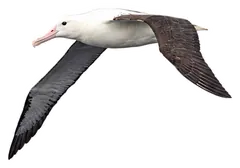 Northern Royal AlbatrossDiomedea sanfordi
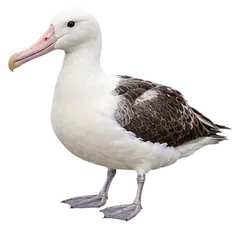 Southern Royal AlbatrossDiomedea epomophora
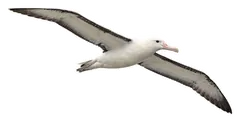 Tristan AlbatrossDiomedea dabbenena
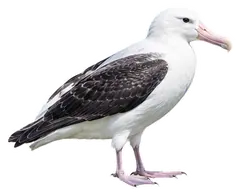 Antipodean AlbatrossDiomedea antipodensis
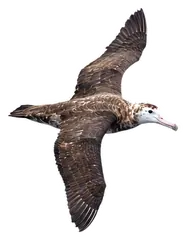 Amsterdam AlbatrossDiomedea amsterdamensis
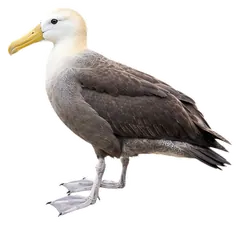 Waved AlbatrossPhoebastria irrorata
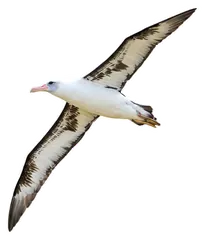 Laysan AlbatrossPhoebastria immutabilis
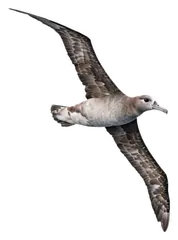 Black-footed AlbatrossPhoebastria nigripes
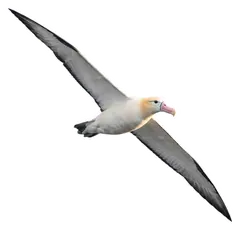 Short-tailed AlbatrossPhoebastria albatrus
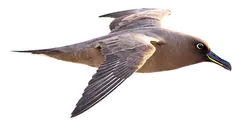 Sooty AlbatrossPhoebetria fusca
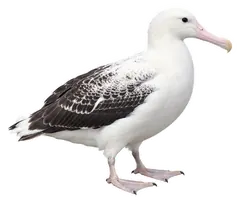
Download illustration
Free to use with credit: “Illustration: Bird Album (birdalbum.com)”. Drawn by AI from reference photos. ↗
Heard it but can't see it? Mingji identifies birds by sound and photo, on your phone.