 Bird Album
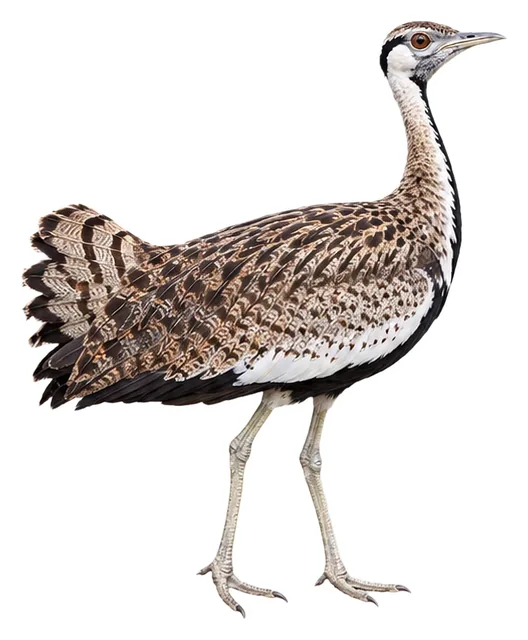
Black-bellied Bustard
Lissotis melanogaster (Rüppell, 1835)
58–65 cmLength1.2 kgWeight
The black-bellied bustard (Lissotis melanogaster), also known as the black-bellied korhaan, is an African ground-dwelling bird in the bustard family.
Busiest months: November · Most records: Kenya, Tanzania, South Africa
Where and when it's recorded

Black-bellied Bustard has been recorded at 249 of the 8,171 birding hotspots we track, in 29 countries and regions.
Records by month Southern Hemisphere
Where it's recorded most
- Ngorongoro Conservation Area – Ngorongoro CraterTanzania630 records
- Maasai Mara NR – Mara TriangleKenya546 records
- Maasai Mara NRKenya398 records
More places
- Serengeti NPTanzania358 records
- Mkhuze GRSouth Africa232 records
- Murchison Falls NP – North sideUganda216 records
- Nairobi NPKenya210 records
- Lake Mburo NPUganda199 records
- Maasai Mara NR – Central sectionKenya166 records
- Lake Nakuru NPKenya166 records
Countries and regions with the most records
eBird records via GBIF up to 2024-12-31. A record means someone listed it; more records partly mean more birders, not more birds.
About
The black-bellied bustard (Lissotis melanogaster), also known as the black-bellied korhaan, is an African ground-dwelling bird in the bustard family.
Excerpt from Wikipedia, CC BY-SA 4.0 · authors · Read more on Wikipedia
Questions
How big is the Black-bellied Bustard?
The Black-bellied Bustard is about 58–65 cm long and weighs around 1.2 kg.
Where does the Black-bellied Bustard live?
Its breeding range: Africa: widespread. It is most often recorded in Kenya, Tanzania and South Africa.
When is the best time to see the Black-bellied Bustard?
At the hotspots we track, it is recorded most in November (Southern Hemisphere).
Is the Black-bellied Bustard endangered?
The IUCN Red List classifies the Black-bellied Bustard as Least Concern.
What does the Black-bellied Bustard eat?
Main food: Insects & other invertebrates.
What family is the Black-bellied Bustard in?
It belongs to the family Bustards (Otididae), order Otidiformes.
At a glance
- Length
- 58–65 cm
- Weight
- 1.2 kg
- Habitat
- Grassland
- Diet
- Insects & other invertebrates
- Lifestyle
- Active on the ground
- Migration
- Resident (barely migrates)
- Conservation
- Least Concern
More measurements
- Wing
- 332 mm
- Tail
- 170 mm
- Bill
- 47 mm
- Tarsus
- 134 mm
Averages from the AVONET dataset; length from field guides where available.
Range
Africa: widespread
Breeding range, IOC World Bird List 15.2
Classification
- Order
- Otidiformes
- Family
- Bustards Otididae
- Genus
- Lissotis
Other birds in the genus Lissotis
 Hartlaub's BustardLissotis hartlaubii
 Great BustardOtis tarda
 Arabian BustardArdeotis arabs
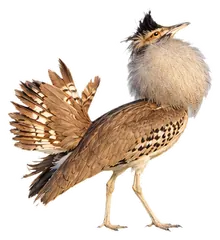 Kori BustardArdeotis kori
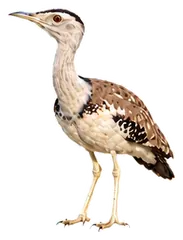 Great Indian BustardArdeotis nigriceps
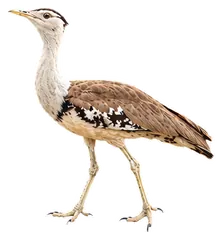 Australian BustardArdeotis australis
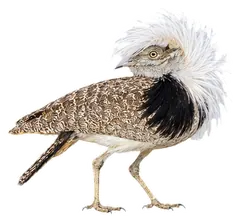 African HoubaraChlamydotis undulata
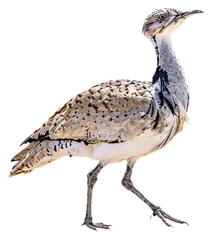 Asian HoubaraChlamydotis macqueenii
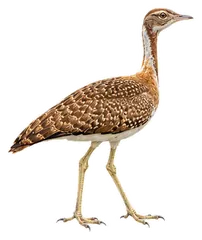 Ludwig's BustardNeotis ludwigii
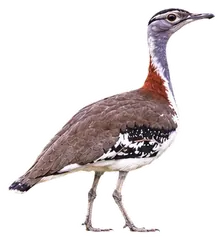 Denham's BustardNeotis denhami
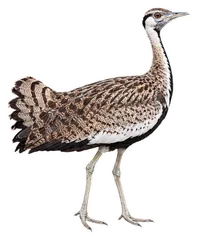
Download illustration
Free to use with credit: “Illustration: Bird Album (birdalbum.com)”. Drawn by AI from reference photos. ↗
Heard it but can't see it? Mingji identifies birds by sound and photo, on your phone.
In other languages
- EnglishBlack-bellied Bustard
- 简体中文褐黑腹鸨
- 繁體中文黑腹鴇
- 日本語クロハラチュウノガン
- DeutschSchwarzbauchtrappe
- FrançaisOutarde à ventre noir
- EspañolSisón ventrinegro común
- Portuguêsabetarda-de-barriga-preta
- ItalianoOtarda pancianera
- NederlandsZwartbuiktrap
- РусскийЧернобрюхий корхан
- Svenskasvartbukig trapp
- DanskSortbuget Trappe
- Polskidropik czarnobrzuchy