 Bird Album
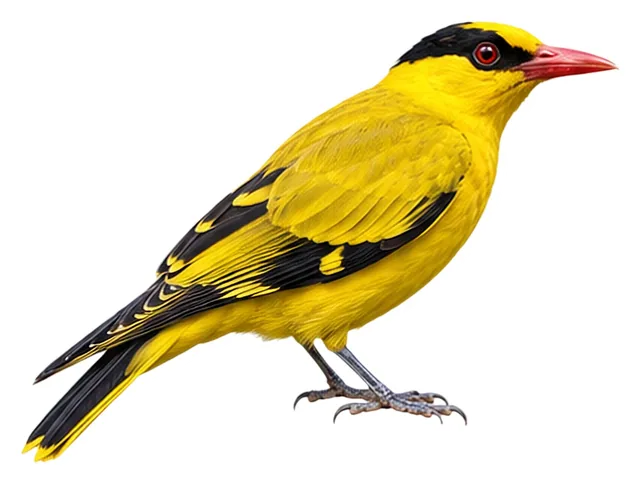
Black-naped Oriole
Oriolus chinensis Linnaeus, 1766
23–28 cmLength83 gWeight
This bird is mostly golden-yellow overall, with a broad black eyestripe extending around the nape to form a ring.
Busiest months: October–March · Most records: Singapore, Thailand, China
Looks like Indian Golden Oriole, Eurasian Golden Oriole
How to identify
Field marks
- Body feathers mostly golden-yellow
- Broad black eyestripe joining around the nape to form a ring
- Bill pink, thick and powerful
- Both wings and tail feathers with black markings
Male, female and young
Sexes very similar; female has greener underwing coverts; juvenile has stripes on the underparts.
Voice
Usual call nasal, like “niee” or “myaa”; song of the East Asian subspecies is a fluty “iwee wee wee-leeow”.
Similar species
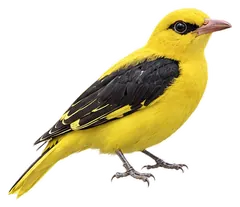
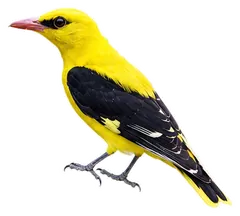
Where and when it's recorded

Black-naped Oriole has been recorded at 1,239 of the 8,171 birding hotspots we track, in 18 countries and regions.
Records by month Northern Hemisphere
Where it's recorded most
- Singapore Botanic GardensSingapore3,243 records
- Sungei Buloh Wetland ReserveSingapore3,001 records
- Dairy Farm Nature ParkSingapore1,786 records
More places
- Jurong Lake GardensSingapore1,742 records
- Pasir Ris ParkSingapore1,556 records
- Kranji MarshSingapore1,340 records
- Chidyatapu Biological ParkIndia1,241 records
- Marina EastSingapore1,223 records
- Gardens by the BaySingapore1,087 records
- Pingtung – Pingtung University of Science and TechnologyTaiwan (China)1,060 records
Countries and regions with the most records
eBird records via GBIF up to 2024-12-31. A record means someone listed it; more records partly mean more birders, not more birds.
About
The black-naped oriole (Oriolus chinensis) is a passerine bird in the oriole family that is found in many parts of Asia. There are several distinctive populations within the wide distribution range of this species and in the past the slender-billed oriole (Oriolus tenuirostris) was included as a subspecies. Males and females are very similar although the wing lining of the female is more greenish.
Excerpt from Wikipedia, CC BY-SA 4.0 · authors · Read more on Wikipedia
Questions
How big is the Black-naped Oriole?
The Black-naped Oriole is about 23–28 cm long and weighs around 83 g.
Where does the Black-naped Oriole live?
Its breeding range: Oriental, Australasia: widespread. It is most often recorded in Singapore, Thailand and China.
When is the best time to see the Black-naped Oriole?
At the hotspots we track, it is recorded most in January, February, March, October, November and December (Northern Hemisphere).
Is the Black-naped Oriole endangered?
The IUCN Red List classifies the Black-naped Oriole as Least Concern.
What does the Black-naped Oriole eat?
Main food: Fruit.
What family is the Black-naped Oriole in?
It belongs to the family Figbirds, Old World Orioles, Piopios (Oriolidae), order Passerines (Passeriformes).
At a glance
- Length
- 23–28 cm
- Weight
- 83 g
- Habitat
- Forest
- Diet
- Fruit
- Lifestyle
- Perches in trees
- Migration
- Partial migrant
- Conservation
- Least Concern
More measurements
- Wing
- 151 mm
- Tail
- 99 mm
- Bill
- 36 mm
- Tarsus
- 27 mm
Averages from the AVONET dataset; length from field guides where available.
Range
Oriental, Australasia: widespread
Breeding range, IOC World Bird List 15.2
Classification
- Order
- Passerines Passeriformes
- Family
- Figbirds, Old World Orioles, Piopios Oriolidae
- Genus
- Oriolus
Other birds in the genus Oriolus
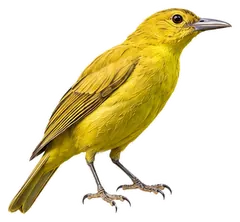 Isabela OrioleOriolus isabellae
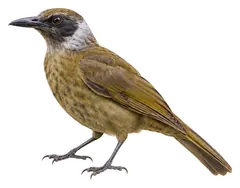 Grey-collared OrioleOriolus forsteni
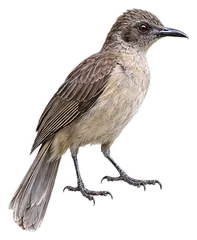 Black-eared OrioleOriolus bouroensis
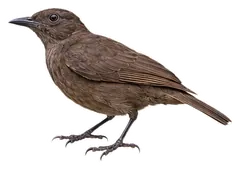 Dusky-brown OrioleOriolus phaeochromus
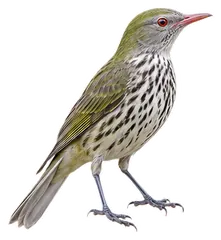 Olive-backed OrioleOriolus sagittatus
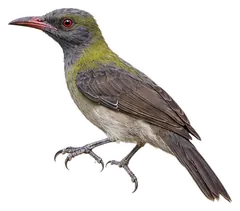 Timor OrioleOriolus melanotis
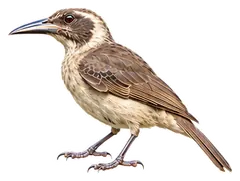 Wetar OrioleOriolus finschi
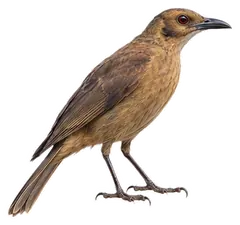 Tanimbar OrioleOriolus decipiens
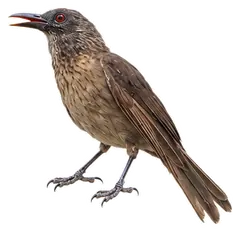 Brown OrioleOriolus szalayi
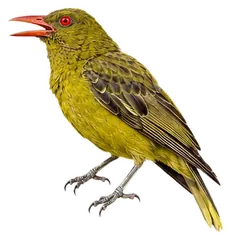 Green OrioleOriolus flavocinctus
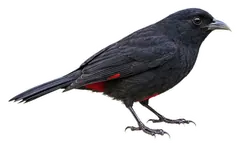 Javan OrioleOriolus cruentus
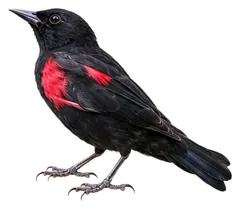 Black-and-crimson OrioleOriolus consanguineus
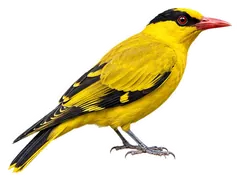
Download illustration
Free to use with credit: “Illustration: Bird Album (birdalbum.com)”. Drawn by AI from a reference photo by J.M.Garg. ↗

Heard it but can't see it? Mingji identifies birds by sound and photo, on your phone.