 Bird Album
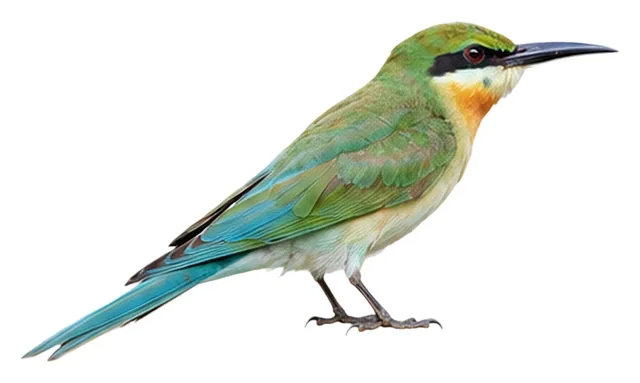
Blue-tailed Bee-eater
Merops philippinus Linnaeus, 1767
25–28 cmLength34 gWeight
It has a bright blue tail and a chestnut throat, and pursues flying insects near water.
Busiest months: October–February · Most records: India, Thailand, Singapore
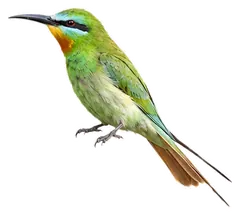
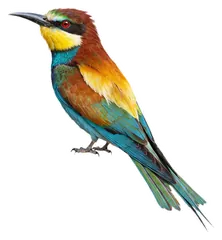
Looks like Blue-cheeked Bee-eater, European Bee-eater
How to identify
Field marks
- Rump and tail bright blue
- Chin bright yellow; throat chestnut
- Black eyestripe; narrow blue patches on sides of face
- Bill black, slender, and slightly curved; central tail feathers elongated
Male, female and young
Sexes similar in appearance; male is slightly larger, with longer ornamental tail feathers; juvenile has a weaker metallic gloss and shorter central tail feathers.
Voice
A metallic trill given twice, or a rapid call given three times.
Similar species
Where and when it's recorded

Blue-tailed Bee-eater has been recorded at 843 of the 8,171 birding hotspots we track, in 19 countries and regions.
Records by month Northern Hemisphere
Where it's recorded most
- Changaram Wetlands – EzhupunnaIndia2,056 records
- KattampallyIndia1,832 records
- Madayi ParaIndia1,501 records
More places
- Krishnampathi Lake, SeeranaickenpalayamIndia1,353 records
- IIT MadrasIndia1,277 records
- Vellayani – Punchakkari WetlandsIndia1,173 records
- Sholinganallur/Perumbakkam MarshlandsIndia1,114 records
- ChemmattamvayalIndia956 records
- Marina EastSingapore903 records
- Yala National ParkSri Lanka888 records
Countries and regions with the most records
eBird records via GBIF up to 2024-12-31. A record means someone listed it; more records partly mean more birders, not more birds.
About
The blue-tailed bee-eater (Merops philippinus) is a bee-eater species mostly seen in open habitats close to water. It is widely distributed across South and Southeast Asia where many populations are strongly migratory, and seen seasonally in many parts but breeding colonially in small areas across their range, mostly in river valleys, where they nest by tunneling into loamy sand banks.
Excerpt from Wikipedia, CC BY-SA 4.0 · authors · Read more on Wikipedia
Questions
How big is the Blue-tailed Bee-eater?
The Blue-tailed Bee-eater is about 25–28 cm long and weighs around 34 g.
Where does the Blue-tailed Bee-eater live?
Its breeding range: Oriental, Australasia: India and Sri Lanka to southern China, Southeast Asia, Philippines, Sulawesi, Lombok to Timor (Lesser Sundas), coastal northeastern, southern, southeastern New Guinea and New Britain group (southeastern Bismarck Archipelago). It is most often recorded in India, Thailand and Singapore.
When is the best time to see the Blue-tailed Bee-eater?
At the hotspots we track, it is recorded most in January, February, October, November and December (Northern Hemisphere).
Is the Blue-tailed Bee-eater endangered?
The IUCN Red List classifies the Blue-tailed Bee-eater as Least Concern.
What does the Blue-tailed Bee-eater eat?
Main food: Insects & other invertebrates.
What family is the Blue-tailed Bee-eater in?
It belongs to the family Bee-eaters (Meropidae), order Coraciiformes.
At a glance
- Length
- 25–28 cm
- Weight
- 34 g
- Habitat
- Wetland
- Diet
- Insects & other invertebrates
- Lifestyle
- Perches in trees
- Migration
- Migratory
- Conservation
- Least Concern
More measurements
- Wing
- 130 mm
- Tail
- 106 mm
- Bill
- 42 mm
- Tarsus
- 13 mm
Averages from the AVONET dataset; length from field guides where available.
Range
Oriental, Australasia: India and Sri Lanka to southern China, Southeast Asia, Philippines, Sulawesi, Lombok to Timor (Lesser Sundas), coastal northeastern, southern, southeastern New Guinea and New Britain group (southeastern Bismarck Archipelago)
Breeding range, IOC World Bird List 15.2
Classification
- Order
- Coraciiformes
- Family
- Bee-eaters Meropidae
- Genus
- Merops
Other birds in the genus Merops
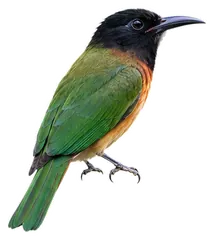 Black-headed Bee-eaterMerops breweri
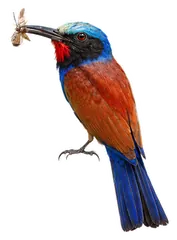 Blue-headed Bee-eaterMerops muelleri
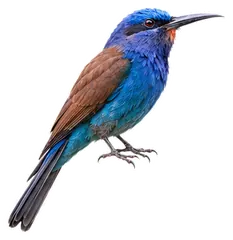 Blue-moustached Bee-eaterMerops mentalis
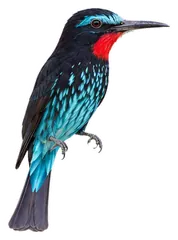 Black Bee-eaterMerops gularis
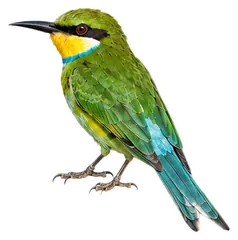 Swallow-tailed Bee-eaterMerops hirundineus
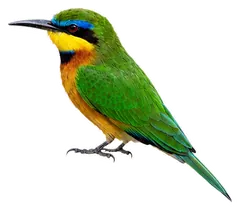 Little Bee-eaterMerops pusillus
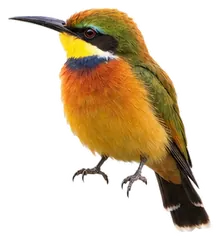 Blue-breasted Bee-eaterMerops variegatus
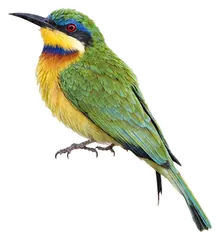 Ethiopian Bee-eaterMerops lafresnayii
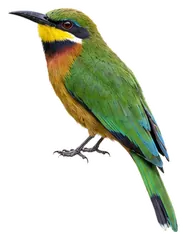 Cinnamon-chested Bee-eaterMerops oreobates
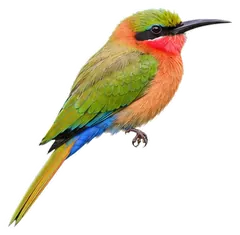 Red-throated Bee-eaterMerops bulocki
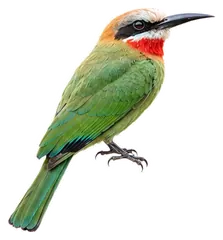 White-fronted Bee-eaterMerops bullockoides
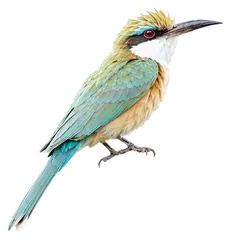 Somali Bee-eaterMerops revoilii
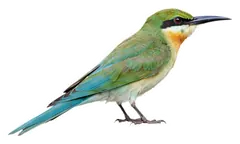
Download illustration
Free to use with credit: “Illustration: Bird Album (birdalbum.com)”. Drawn by AI from a reference photo by Tisha Mukherjee. ↗

Heard it but can't see it? Mingji identifies birds by sound and photo, on your phone.
In other languages
- EnglishBlue-tailed Bee-eater
- 简体中文栗喉蜂虎
- 繁體中文栗喉蜂虎
- 日本語ルリオハチクイ
- DeutschBlauschwanzspint
- FrançaisGuêpier à queue d’azur
- EspañolAbejaruco coliazul
- Portuguêsabelharuco-de-cauda-azul
- ItalianoGruccione codazzurra
- NederlandsBlauwstaartbijeneter
- РусскийСинехвостая щурка
- Svenskablåstjärtad biätare
- DanskBlåhalet Biæder
- Polskiżołna modrosterna