 Bird Album
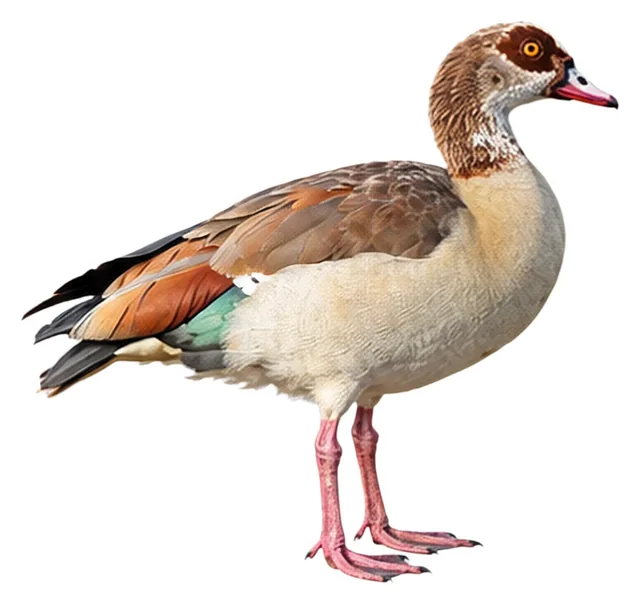
Egyptian Goose
Alopochen aegyptiaca (Linnaeus, 1766)
63–73 cmLength144 cmWingspan1.9 kgWeight
The adult has large white areas on its wings, displayed when alarmed or fighting.
Busiest months: April–May · Most records: United Kingdom, United States, South Africa
How to identify
Field marks
- Adult wings have large white areas
- Back reddish-brown
- Looks heavy in flight, more like a goose
Male, female and young
Sexes alike in plumage, male usually slightly larger.
Voice
Male gives harsh, low, weak quacking calls, also a series of panting calls like a steam engine; female’s quacking is noisier.
Where and when it's recorded
Busiest months: April–May · Most records: United Kingdom, United States, South Africa

Egyptian Goose has been recorded at 1,078 of the 8,276 birding hotspots we track, in 78 countries and regions.
Records by month Northern Hemisphere
Where it's recorded most
- IRWD San Joaquin Marsh & Wildlife Sanctuary, IrvineUnited States5,338 records
- Mile Square Regional Park, Fountain ValleyUnited States4,346 records
- Walthamstow WetlandsUnited Kingdom3,317 records
More places
- Private estate near Green MubazzarahUnited Arab Emirates3,276 records
- Amwell HMWT NRUnited Kingdom3,275 records
- Rutland WaterUnited Kingdom3,269 records
- Irvine Regional ParkUnited States3,095 records
- Plantation PreserveUnited States3,094 records
- Huntington Central Park – EastUnited States3,066 records
- Kirstenbosch Botanical GardenSouth Africa2,859 records
Countries and regions with the most records
eBird records via GBIF up to 2024-12-31. A record means someone listed it; more records partly mean more birders, not more birds.
About
The Egyptian goose (Alopochen aegyptiaca) is an African member of the Anatidae family including ducks, geese, and swans. Because of its popularity chiefly as an ornamental bird, the species has also been introduced to Europe, the United States, and elsewhere outside its natural range. Egyptian geese were regularly represented in ancient Egyptian art.
Excerpt from Wikipedia, CC BY-SA 4.0 · authors · Read more on Wikipedia
Questions
How big is the Egyptian Goose?
The Egyptian Goose is about 63–73 cm long, with a wingspan of 144 cm and weighs around 1.9 kg.
Where does the Egyptian Goose live?
Its breeding range: Africa: southern Mauritania to southern Egypt and Ethiopia south to South Africa. It is most often recorded in United Kingdom, United States and South Africa.
When is the best time to see the Egyptian Goose?
At the hotspots we track, it is recorded most in April and May (Northern Hemisphere).
Is the Egyptian Goose endangered?
The IUCN Red List classifies the Egyptian Goose as Least Concern.
What does the Egyptian Goose eat?
Main food: Omnivore.
What family is the Egyptian Goose in?
It belongs to the family Ducks, Geese, Swans (Anatidae), order Anseriformes.
At a glance
- Length
- 63–73 cm
- Wingspan
- 144 cm
- Weight
- 1.9 kg
- Habitat
- Wetland
- Diet
- Omnivore
- Lifestyle
- Varied
- Migration
- Partial migrant
- Conservation
- Least Concern
More measurements
- Wing
- 356 mm
- Tail
- 129 mm
- Bill
- 52 mm
- Tarsus
- 76 mm
Averages from the AVONET dataset; length from field guides where available.
Range
Africa: southern Mauritania to southern Egypt and Ethiopia south to South Africa
Breeding range, IOC World Bird List 15.2
Classification
- Order
- Anseriformes
- Family
- Ducks, Geese, Swans Anatidae
- Genus
- Alopochen
More from the family Ducks, Geese, Swans
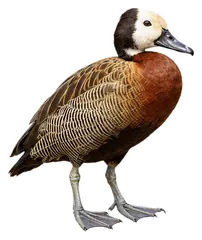 White-faced Whistling DuckDendrocygna viduata
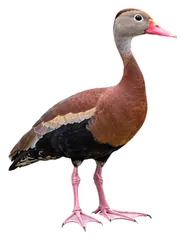 Black-bellied Whistling DuckDendrocygna autumnalis
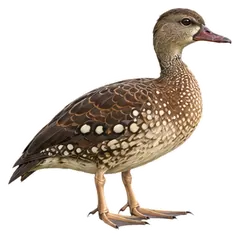 Spotted Whistling DuckDendrocygna guttata
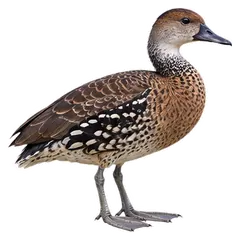 West Indian Whistling DuckDendrocygna arborea
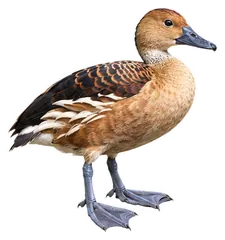 Fulvous Whistling DuckDendrocygna bicolor
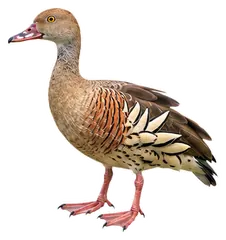 Plumed Whistling DuckDendrocygna eytoni
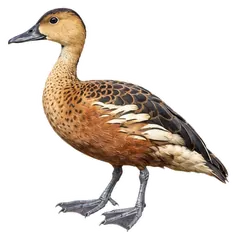 Wandering Whistling DuckDendrocygna arcuata
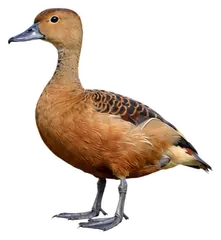 Lesser Whistling DuckDendrocygna javanica
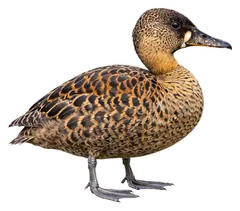 White-backed DuckThalassornis leuconotus
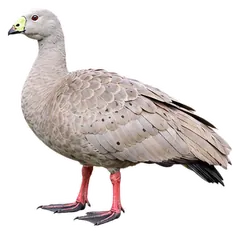 Cape Barren GooseCereopsis novaehollandiae
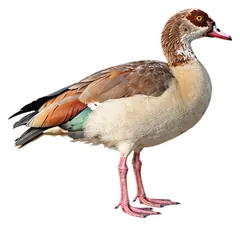
Download illustration
Free to use with credit: “Illustration: Bird Album (birdalbum.com)”. Drawn by AI from a reference photo by Charles J. Sharp. ↗

Heard it but can't see it? Mingji identifies birds by sound and photo, on your phone.