 Bird Album
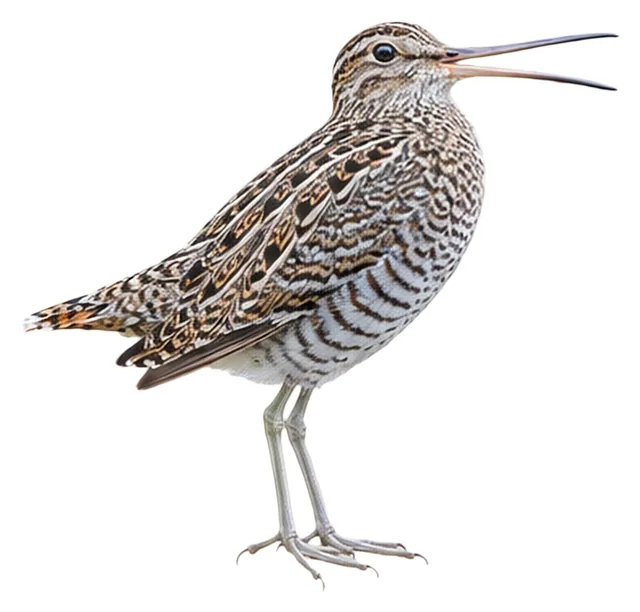
Great Snipe
Gallinago media (Latham, 1787)
170 gWeight
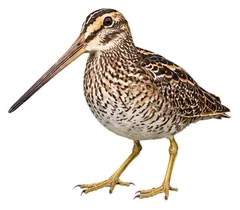
The great snipe (Gallinago media) is a small stocky wader in the genus Gallinago.
Busiest months: April–May · Most records: Türkiye, Sweden, United Kingdom
Where and when it's recorded
Busiest months: April–May · Most records: Türkiye, Sweden, United Kingdom

Great Snipe has been recorded at 206 of the 8,276 birding hotspots we track, in 60 countries and regions.
Records by month Northern Hemisphere
Where it's recorded most
- Aras Kuş Halkalama İstasyonuTürkiye151 records
- Vinogradovo FloodplainsRussia36 records
- NPP Žehuňský rybníkCzechia35 records
More places
- Sausgalviai Meadows Botanical-Zoological PreserveLithuania29 records
- Fair IsleUnited Kingdom28 records
- Hjälstaviken NRSweden25 records
- Spurn Bird Observatory Recording AreaUnited Kingdom24 records
- Lagoa dos SalgadosPortugal22 records
- Årike FyrisSweden21 records
- Spata fieldsGreece20 records
Countries and regions with the most records
eBird records via GBIF up to 2024-12-31. A record means someone listed it; more records partly mean more birders, not more birds.
About
The great snipe (Gallinago media) is a small stocky wader in the genus Gallinago. This bird's breeding habitat is marshes and wet meadows with short vegetation in northeastern Europe and northern Asia, from Scandinavia and Poland east across northern Russia to western Siberia, and south to northern Kazakhstan. Great snipe are migratory, wintering in tropical Africa.
Excerpt from Wikipedia, CC BY-SA 4.0 · authors · Read more on Wikipedia
Questions
How big is the Great Snipe?
The Great Snipe weighs around 170 g.
Where does the Great Snipe live?
Its breeding range: Palearctic: subarctic to temperate meadows of northwestern Palearctic: western, northern Scandinavia and eastern Poland through western Russia to Yenisei River (western Siberia). It is most often recorded in Türkiye, Sweden and United Kingdom.
When is the best time to see the Great Snipe?
At the hotspots we track, it is recorded most in April and May (Northern Hemisphere).
Is the Great Snipe endangered?
The IUCN Red List classifies the Great Snipe as Near Threatened.
What does the Great Snipe eat?
Main food: Fish, shrimp & shellfish.
What family is the Great Snipe in?
It belongs to the family Sandpipers, Snipes (Scolopacidae), order Charadriiformes.
At a glance
- Weight
- 170 g
- Habitat
- Wetland
- Diet
- Fish, shrimp & shellfish
- Lifestyle
- Active on the ground
- Migration
- Migratory
- Conservation
- Near Threatened
More measurements
- Wing
- 141 mm
- Tail
- 53 mm
- Bill
- 66 mm
- Tarsus
- 36 mm
Averages from the AVONET dataset; length from field guides where available.
Range
Palearctic: subarctic to temperate meadows of northwestern Palearctic: western, northern Scandinavia and eastern Poland through western Russia to Yenisei River (western Siberia)
Breeding range, IOC World Bird List 15.2
Classification
- Order
- Charadriiformes
- Family
- Sandpipers, Snipes Scolopacidae
- Genus
- Gallinago
Other birds in the genus Gallinago
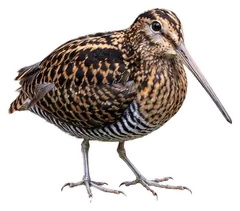 Imperial SnipeGallinago imperialis
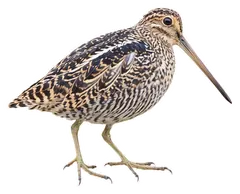 Jameson's SnipeGallinago jamesoni
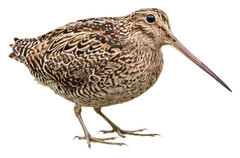 Fuegian SnipeGallinago stricklandii
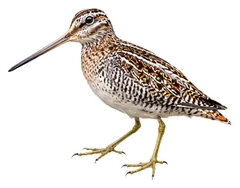 Solitary SnipeGallinago solitaria
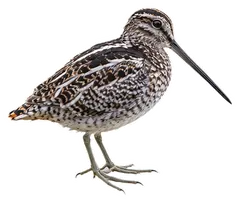 Wood SnipeGallinago nemoricola
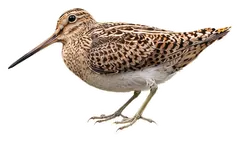 Swinhoe's SnipeGallinago megala
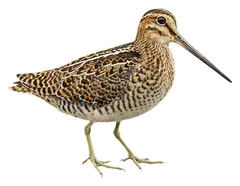 Pin-tailed SnipeGallinago stenura
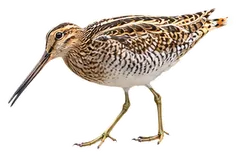 Latham's SnipeGallinago hardwickii
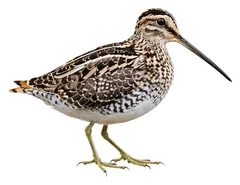 African SnipeGallinago nigripennis
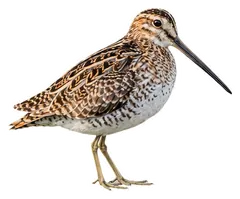 Common SnipeGallinago gallinago
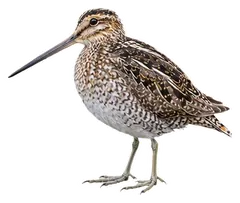 Wilson's SnipeGallinago delicata
 Giant SnipeGallinago undulata
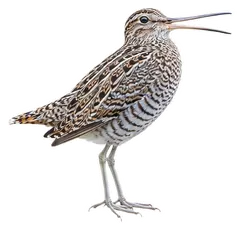
Download illustration
Free to use with credit: “Illustration: Bird Album (birdalbum.com)”. Drawn by AI from a reference photo by Christoph Moning. ↗
Heard it but can't see it? Mingji identifies birds by sound and photo, on your phone.