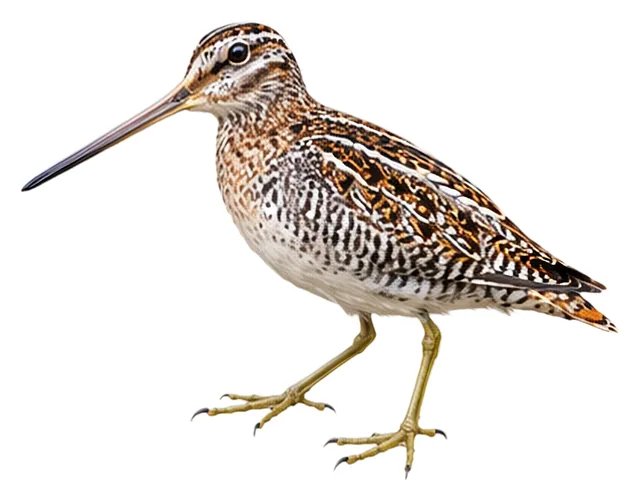
Solitary Snipe
Gallinago solitaria Hodgson, 1831
≈32 cmLength54 cmWingspan140 gWeight
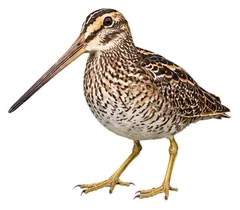
This stocky, low-slung snipe probes into mud with its long, straight bill.
Busiest months: January–February · Most records: China, South Korea, Japan
How to identify
Field marks
- Bill long, straight and rufous-black
- Face whitish
- Breast ginger-rufous; belly white
- Flanks with rufous barring
Male, female and young
Sexes similar in plumage; female averages larger.
Voice
Gives a harsh “kensh” on take-off and a far-carrying “chok-a-chok-a” during display.
Where and when it's recorded
Busiest months: January–February · Most records: China, South Korea, Japan

Solitary Snipe has been recorded at 82 of the 8,276 birding hotspots we track, in 10 countries and regions.
Records by month Northern Hemisphere
Where it's recorded most
- Pocheon – Korea National Arboretum/Gwangneung ForestSouth Korea194 records
- Nakashibetsu – Yoroushi Hot SpringJapan103 records
- Juli VillageChina59 records
More places
- JieguChina34 records
- Thimpu Sewage LagoonsBhutan33 records
- JilakouChina22 records
- [Dushanbe – Karamov Bridge over Varzob River]Tajikistan19 records
- ZhujiawanChina15 records
- St. Paul IslandUnited States14 records
- PelelaBhutan13 records
Countries and regions with the most records
eBird records via GBIF up to 2024-12-31. A record means someone listed it; more records partly mean more birders, not more birds.
About
The solitary snipe (Gallinago solitaria) is a stocky wader. It is found in the Palearctic from northeast Iran to Korea and Japan.
Excerpt from Wikipedia, CC BY-SA 4.0 · authors · Read more on Wikipedia
Questions
How big is the Solitary Snipe?
The Solitary Snipe is about ≈32 cm long, with a wingspan of 54 cm and weighs around 140 g.
Where does the Solitary Snipe live?
Its breeding range: Palearctic: montane wetlands of central, eastern Palearctic: Altai and Tien Shan mountains from south-central Russia, northeastern Kazakhstan, northwestern Xinjiang and northern Mongolia east to Kamchatka and northeastern China. It is most often recorded in China, South Korea and Japan.
When is the best time to see the Solitary Snipe?
At the hotspots we track, it is recorded most in January and February (Northern Hemisphere).
Is the Solitary Snipe endangered?
The IUCN Red List classifies the Solitary Snipe as Least Concern.
What does the Solitary Snipe eat?
Main food: Fish, shrimp & shellfish.
What family is the Solitary Snipe in?
It belongs to the family Sandpipers, Snipes (Scolopacidae), order Charadriiformes.
At a glance
- Length
- ≈32 cm
- Wingspan
- 54 cm
- Weight
- 140 g
- Habitat
- Wetland
- Diet
- Fish, shrimp & shellfish
- Lifestyle
- Active on the ground
- Migration
- Migratory
- Conservation
- Least Concern
More measurements
- Wing
- 160 mm
- Tail
- 64 mm
- Bill
- 76 mm
- Tarsus
- 33 mm
Averages from the AVONET dataset; length from field guides where available.
Range
Palearctic: montane wetlands of central, eastern Palearctic: Altai and Tien Shan mountains from south-central Russia, northeastern Kazakhstan, northwestern Xinjiang and northern Mongolia east to Kamchatka and northeastern China
Breeding range, IOC World Bird List 15.2
Subspecies · 2
- Gallinago solitaria solitaria Altai and Tien Shan mts. from sc Russia, ne Kazakhstan, nw Xinjiang and n Mongolia | non-breeding: montane e Kazakhstan to e Afghanistan, Himalayas, n se Asia and wc China
- Gallinago solitaria japonica ne China to Kamchatka | non-breeding: se China, Korean Pen., n, c Japan and Sakhalin and Amurland (se Russia)
Classification
- Order
- Charadriiformes
- Family
- Sandpipers, Snipes Scolopacidae
- Genus
- Gallinago
Other birds in the genus Gallinago
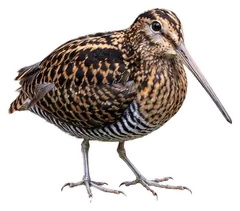 Imperial SnipeGallinago imperialis
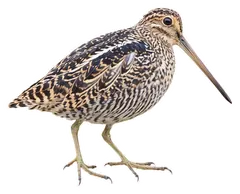 Jameson's SnipeGallinago jamesoni
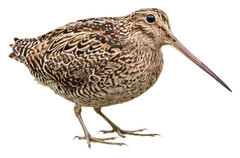 Fuegian SnipeGallinago stricklandii
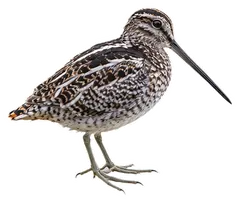 Wood SnipeGallinago nemoricola
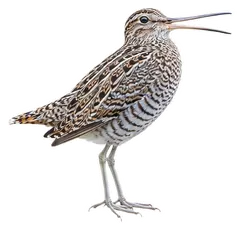 Great SnipeGallinago media
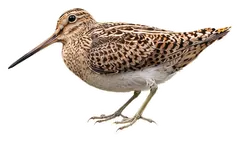 Swinhoe's SnipeGallinago megala
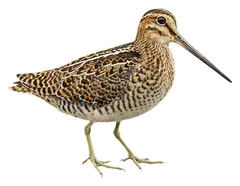 Pin-tailed SnipeGallinago stenura
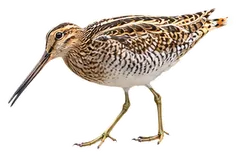 Latham's SnipeGallinago hardwickii
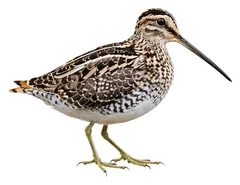 African SnipeGallinago nigripennis
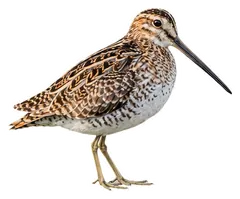 Common SnipeGallinago gallinago
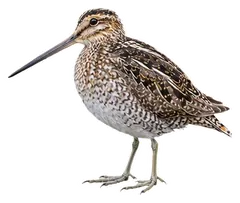 Wilson's SnipeGallinago delicata
 Giant SnipeGallinago undulata
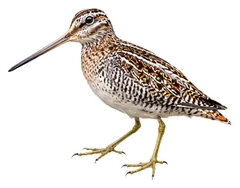
Download illustration
Free to use with credit: “Illustration: Bird Album (birdalbum.com)”. Drawn by AI from a reference photo by Nickel. ↗
Heard it but can't see it? Mingji identifies birds by sound and photo, on your phone.