 Bird Album
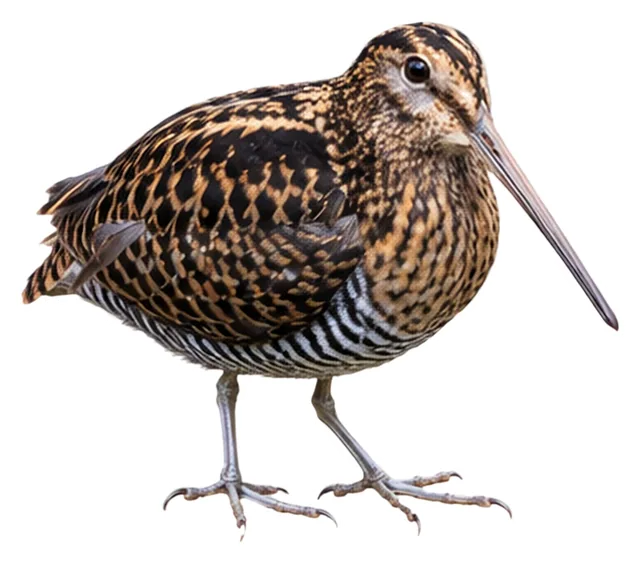
Imperial Snipe
Gallinago imperialis Sclater, PL & Salvin, 1869
29–31 cmLength252 gWeight
The imperial snipe (Gallinago imperialis) is a small stocky wader which breeds in the Andes.
Busiest months: December · Most records: Ecuador, Peru
Where and when it's recorded
Busiest months: December · Most records: Ecuador, Peru

Imperial Snipe has been recorded at 5 of the 8,276 birding hotspots we track, in 2 countries and regions.
Records by month Southern Hemisphere
Where it's recorded most
- Reserva YanacochaEcuador191 records
- Bosque Unchog (Valqui D5.3)Peru4 records
- ACP Abra Málaga Thastayoc Royal CinclodesPeru3 records
More places
- Papallacta – hot springs and road to Cayambe-CocaEcuador3 records
- Reserva Tapichalaca y Casa SimpsonEcuador1 record
Countries and regions with the most records
eBird records via GBIF up to 2024-12-31. A record means someone listed it; more records partly mean more birders, not more birds.
About
The imperial snipe (Gallinago imperialis) is a small stocky wader which breeds in the Andes. For a century it was known only from two specimens collected near Bogotá, Colombia, and was presumed extinct, but it was rediscovered in Peru in 1967 and Ecuador in 1988. It is not known if it is migratory.
Excerpt from Wikipedia, CC BY-SA 4.0 · authors · Read more on Wikipedia
Questions
How big is the Imperial Snipe?
The Imperial Snipe is about 29–31 cm long and weighs around 252 g.
Where does the Imperial Snipe live?
Its breeding range: South America: elfin forest montane bogs of northwestern South America: Ecuador to Peru (old records Colombia). It is most often recorded in Ecuador and Peru.
When is the best time to see the Imperial Snipe?
At the hotspots we track, it is recorded most in December (Southern Hemisphere).
Is the Imperial Snipe endangered?
The IUCN Red List classifies the Imperial Snipe as Near Threatened.
What does the Imperial Snipe eat?
Main food: Fish, shrimp & shellfish.
What family is the Imperial Snipe in?
It belongs to the family Sandpipers, Snipes (Scolopacidae), order Charadriiformes.
At a glance
- Length
- 29–31 cm
- Weight
- 252 g
- Habitat
- Forest
- Diet
- Fish, shrimp & shellfish
- Lifestyle
- Active on the ground
- Migration
- Resident (barely migrates)
- Conservation
- Near Threatened
More measurements
- Wing
- 153 mm
- Tail
- 55 mm
- Bill
- 84 mm
- Tarsus
- 36 mm
Averages from the AVONET dataset; length from field guides where available.
Range
South America: elfin forest montane bogs of northwestern South America: Ecuador to Peru (old records Colombia)
Breeding range, IOC World Bird List 15.2
Classification
- Order
- Charadriiformes
- Family
- Sandpipers, Snipes Scolopacidae
- Genus
- Gallinago
Other birds in the genus Gallinago
 Jameson's SnipeGallinago jamesoni
 Fuegian SnipeGallinago stricklandii
 Solitary SnipeGallinago solitaria
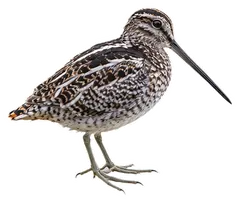 Wood SnipeGallinago nemoricola
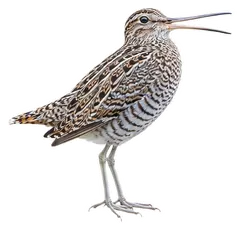 Great SnipeGallinago media
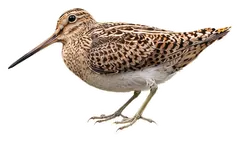 Swinhoe's SnipeGallinago megala
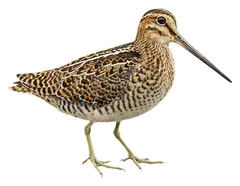 Pin-tailed SnipeGallinago stenura
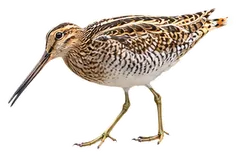 Latham's SnipeGallinago hardwickii
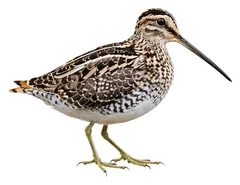 African SnipeGallinago nigripennis
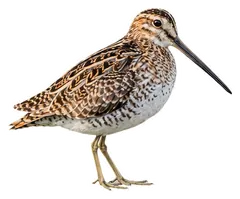 Common SnipeGallinago gallinago
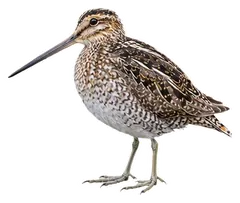 Wilson's SnipeGallinago delicata
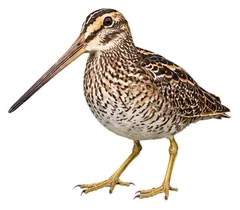 Giant SnipeGallinago undulata
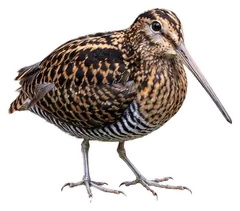
Download illustration
Free to use with credit: “Illustration: Bird Album (birdalbum.com)”. Drawn by AI from a reference photo by Edison Ocaña. ↗
Heard it but can't see it? Mingji identifies birds by sound and photo, on your phone.