 Bird Album
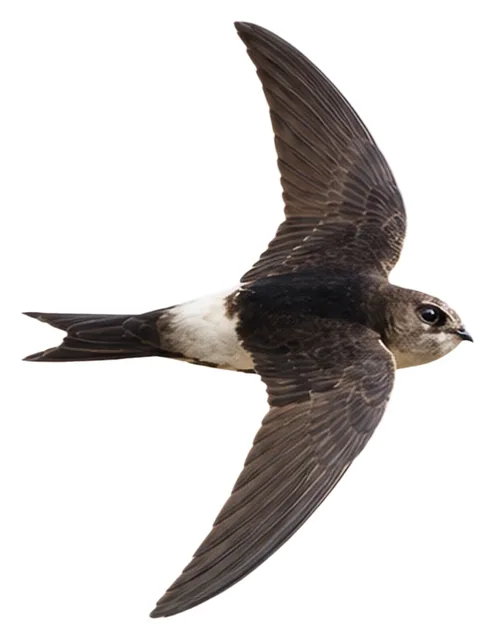
Horus Swift
Apus horus (Heuglin, 1869)
13–15 cmLength28 gWeight
The Horus swift (Apus horus) is a small bird in the swift family Apodidae that is found in sub-Saharan Africa.
Busiest months: November · Most records: South Africa, Tanzania, Kenya
Where and when it's recorded
Busiest months: November · Most records: South Africa, Tanzania, Kenya

Horus Swift has been recorded at 209 of the 8,276 birding hotspots we track, in 19 countries and regions.
Records by month Southern Hemisphere
Where it's recorded most
- Lake Nakuru NPKenya129 records
- Marievale Bird SanctuarySouth Africa94 records
- Aga Khan University – Loilenok Hills and FieldsTanzania88 records
More places
- Arusha NPTanzania80 records
- De Hoop Nature ReserveSouth Africa70 records
- Tarangire NPTanzania66 records
- Sani Pass (ZA) – low elevationSouth Africa66 records
- Maasai Mara NR – Mara TriangleKenya57 records
- Amboseli NPKenya48 records
- South Luangwa NPZambia46 records
Countries and regions with the most records
eBird records via GBIF up to 2024-12-31. A record means someone listed it; more records partly mean more birders, not more birds.
About
The Horus swift (Apus horus) is a small bird in the swift family Apodidae that is found in sub-Saharan Africa. Horus, whose name this bird commemorates, was the ancient Egyptian god of the sun, son of Osiris and Isis.
Excerpt from Wikipedia, CC BY-SA 4.0 · authors · Read more on Wikipedia
Questions
How big is the Horus Swift?
The Horus Swift is about 13–15 cm long and weighs around 28 g.
Where does the Horus Swift live?
Its breeding range: Africa: Nigeria and Cameroon to Ethiopia through eastern DR Congo and Zambia to South Africa. Also southwestern Angola.. It is most often recorded in South Africa, Tanzania and Kenya.
When is the best time to see the Horus Swift?
At the hotspots we track, it is recorded most in November (Southern Hemisphere).
Is the Horus Swift endangered?
The IUCN Red List classifies the Horus Swift as Least Concern.
What does the Horus Swift eat?
Main food: Insects & other invertebrates.
What family is the Horus Swift in?
It belongs to the family Swifts (Apodidae), order Apodiformes.
At a glance
- Length
- 13–15 cm
- Weight
- 28 g
- Habitat
- Shrubland
- Diet
- Insects & other invertebrates
- Lifestyle
- Feeds in the air
- Migration
- Partial migrant
- Conservation
- Least Concern
More measurements
- Wing
- 150 mm
- Tail
- 57 mm
- Bill
- 10 mm
- Tarsus
- 10 mm
Averages from the AVONET dataset; length from field guides where available.
Range
Africa: Nigeria and Cameroon to Ethiopia through eastern DR Congo and Zambia to South Africa. Also southwestern Angola.
Breeding range, IOC World Bird List 15.2
Classification
- Order
- Apodiformes
- Family
- Swifts Apodidae
- Genus
- Apus
Other birds in the genus Apus
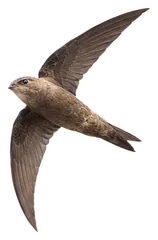 Cape Verde SwiftApus alexandri
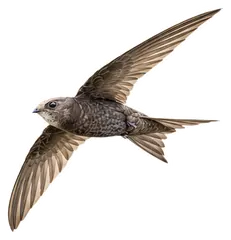 Common SwiftApus apus
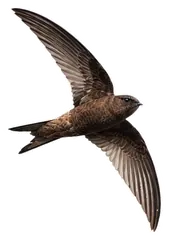 Plain SwiftApus unicolor
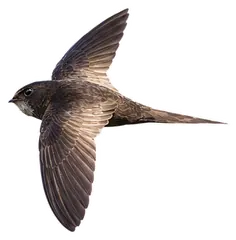 Nyanza SwiftApus niansae
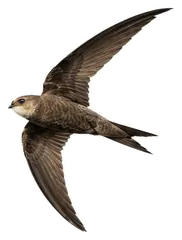 Pallid SwiftApus pallidus
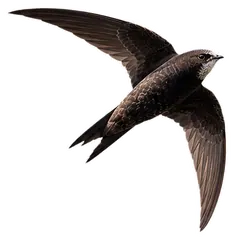 African Black SwiftApus barbatus
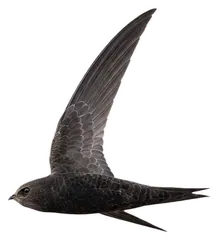 Malagasy Black SwiftApus balstoni
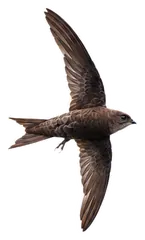 Forbes-Watson's SwiftApus berliozi
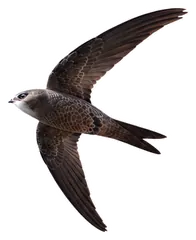 Bradfield's SwiftApus bradfieldi
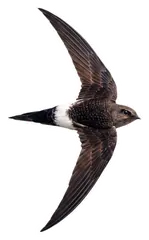 Pacific SwiftApus pacificus
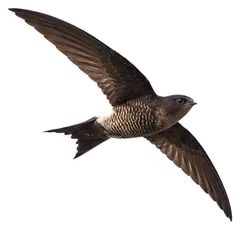 Blyth's SwiftApus leuconyx
 Cook's SwiftApus cooki
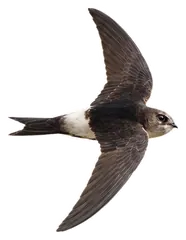
Download illustration
Free to use with credit: “Illustration: Bird Album (birdalbum.com)”. Drawn by AI from a reference photo by Nik Borrow. ↗
Heard it but can't see it? Mingji identifies birds by sound and photo, on your phone.