 Bird Album
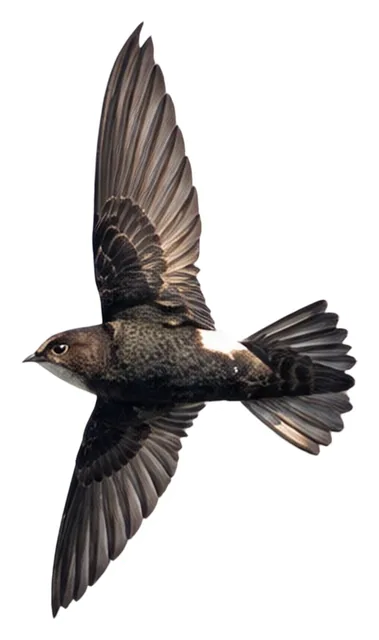
House Swift
Apus nipalensis (Hodgson, 1837)
14–16 cmLength12–14 cmWingspan30 gWeight
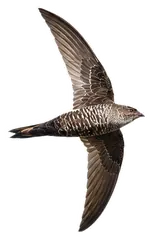
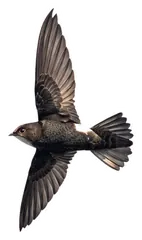
This black swift has a white rump band, a white throat patch and a slightly forked tail.
Busiest months: April, October and December · Most records: China, Thailand, Malaysia
How to identify
Field marks
- A single white band across the rump
- A white patch on the throat
- Black feathers, darker than those of close relatives
- Dark, slightly forked tail
Voice
“ti-ti-ti-tititrrrrrr”, along with many other calls.
Where and when it's recorded
Busiest months: April, October and December · Most records: China, Thailand, Malaysia

House Swift has been recorded at 1,295 of the 8,276 birding hotspots we track, in 19 countries and regions.
Records by month Northern Hemisphere
Where it's recorded most
- Taipei – Tianliaoyang WetlandTaiwan (China)2,644 records
- Kenting NP – Sheding Lingxiao Pavilion (Raptors Observation Spot)Taiwan (China)1,668 records
- Mai Po Nature ReserveHong Kong (China)1,655 records
More places
- Nantou – Puli Tzuchi FoundationTaiwan (China)1,262 records
- Nantou – Jiji Endemic Species Research InstituteTaiwan (China)1,033 records
- Bukit FraserMalaysia829 records
- Long ValleyHong Kong (China)775 records
- Aogu Wetland IBATaiwan (China)640 records
- San TinHong Kong (China)606 records
- Taipei – Beitou Guizikeng Drainage CanalTaiwan (China)595 records
Countries and regions with the most records
eBird records via GBIF up to 2024-12-31. A record means someone listed it; more records partly mean more birders, not more birds.
About
The house swift (Apus affinis nipalensis) is a subspecies of the little swift in the family Apodidae. It is found in Japan, Nepal, and Southeast Asia. It is capable of flying long distances by alternately shutting off hemispheres of its brain in-flight.
Excerpt from Wikipedia, CC BY-SA 4.0 · authors · Read more on Wikipedia
Questions
How big is the House Swift?
The House Swift is about 14–16 cm long, with a wingspan of 12–14 cm and weighs around 30 g.
Where does the House Swift live?
Its breeding range: Oriental: also southern Japan. It is most often recorded in China, Thailand and Malaysia.
When is the best time to see the House Swift?
At the hotspots we track, it is recorded most in April, October and December (Northern Hemisphere).
Is the House Swift endangered?
The IUCN Red List classifies the House Swift as Least Concern.
What does the House Swift eat?
Main food: Insects & other invertebrates.
What family is the House Swift in?
It belongs to the family Swifts (Apodidae), order Apodiformes.
At a glance
- Length
- 14–16 cm
- Wingspan
- 12–14 cm
- Weight
- 30 g
- Habitat
- Towns & farmland
- Diet
- Insects & other invertebrates
- Lifestyle
- Feeds in the air
- Migration
- Migratory
- Conservation
- Least Concern
More measurements
- Wing
- 130 mm
- Tail
- 48 mm
- Bill
- 9 mm
- Tarsus
- 11 mm
Averages from the AVONET dataset; length from field guides where available.
Range
Oriental: also southern Japan
Breeding range, IOC World Bird List 15.2
Subspecies · 2
- Apus nipalensis nipalensis Himalayas to Japan and se China s to Myanmar, se Asia and Philippines
- Apus nipalensis kuntzi Taiwan (China)
Classification
- Order
- Apodiformes
- Family
- Swifts Apodidae
- Genus
- Apus
Other birds in the genus Apus
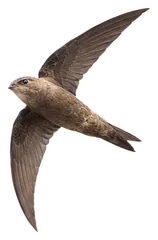 Cape Verde SwiftApus alexandri
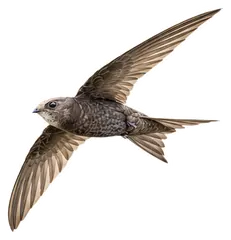 Common SwiftApus apus
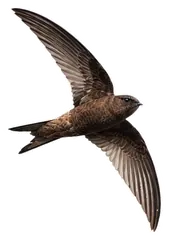 Plain SwiftApus unicolor
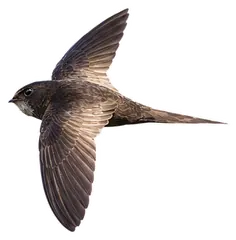 Nyanza SwiftApus niansae
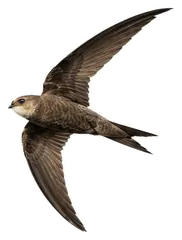 Pallid SwiftApus pallidus
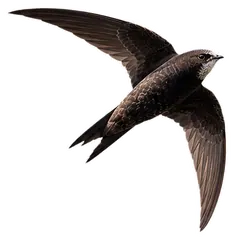 African Black SwiftApus barbatus
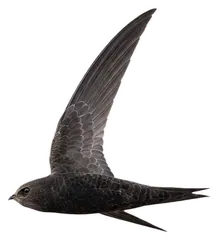 Malagasy Black SwiftApus balstoni
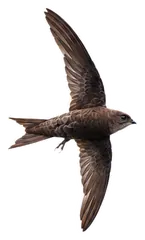 Forbes-Watson's SwiftApus berliozi
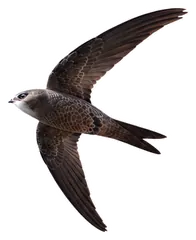 Bradfield's SwiftApus bradfieldi
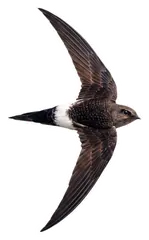 Pacific SwiftApus pacificus
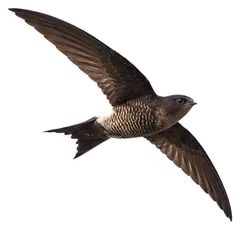 Blyth's SwiftApus leuconyx
 Cook's SwiftApus cooki
Download illustration
Free to use with credit: “Illustration: Bird Album (birdalbum.com)”. Drawn by AI from a reference photo by Prasan Shrestha. ↗

Heard it but can't see it? Mingji identifies birds by sound and photo, on your phone.